







A First for Tamil Nadu
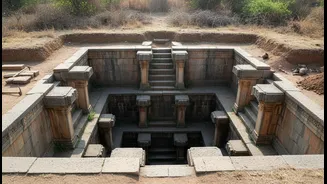
Archaeologists from the Tamil Nadu state department of archaeology have made a groundbreaking discovery in Karivalamvandanallur, a site near Tenkasi. They have excavated a square-shaped brick stepwell, a structure they believe dates back an astonishing
2,500 years to the Sangam Age. This is being hailed as the first-ever brick stepwell from this early historic period to be unearthed in the state, marking a significant moment for South Indian archaeology. The excavation, which has been ongoing for three months near the Vaiparu riverbed, is one of eight sites being explored by the state this year. The discovery adds a new layer to a location already known for yielding historical treasures, including Roman gold coins found in the 1930s.
Architectural Clues to the Past
The structure itself is a marvel of ancient engineering. Measuring four by four metres, the well features stone steps descending into its depths. The walls are constructed from large bricks, each measuring 40cm by 20cm with a thickness of 7cm. Archaeologists note that the size and style of these bricks are consistent with those found at other famous Sangam Age sites like Keeladi, Alagankulam, and Poompuhar, providing strong evidence for its age. The builders used a sophisticated interlocking technique for the brick walls and clay as a binding material to ensure strength. The noticeable wear and tear on the stone steps suggest that the well was in use for a very long period, serving as a vital community resource.
More Than Just a Well
Stepwells, known as 'baori' or 'vav' in other parts of India, were far more than just utilitarian water sources. They were often the heart of a community—places for social gathering, religious rituals, and a cool respite from the heat. This Tenkasi well offers a fascinating window into the water management systems of ancient Tamils. Excavation director V. P. Yathees Kumar noted that water stains on the inner walls indicate a high water table in the past, suggesting the stepwell was a reliable source of water, especially during dry summer months. The well was strategically built on a paleochannel (an ancient, inactive riverbed) to maximize water access. The discovery expands our knowledge beyond temples and settlements, revealing the sophisticated infrastructure that supported daily life.
Connecting to Ancient Trade Routes
The location of the stepwell is as significant as the structure itself. According to K. Rajan, an advisor to the state archaeology department, the site is situated on an ancient trade route. This route connected the powerful city of Madurai to the west coast through the Shencottah pass, a crucial corridor for commerce. The discovery of Roman coins in the area decades ago already pointed to its importance in long-distance trade networks. This stepwell would have been a critical piece of infrastructure for travelling merchants and their caravans, providing essential water and a place to rest. The find helps archaeologists piece together a more detailed map of ancient Tamil Nadu, one that includes not just major cities but also the vital support systems that connected them.
Rewriting the History Books
The unearthing of a Sangam Age brick stepwell is a game-changer. Until now, such structures from this period were unknown in Tamil Nadu's archaeological record. This discovery proves that the architectural knowledge and social organisation required to build such complex water systems existed in the region much earlier than previously demonstrated. Along with the well, excavators have also found Iron Age pottery, terracotta figurines, glass beads, and microlithic tools, painting a rich picture of a thriving settlement. Some experts are suggesting that the finds at Karivalamvandanallur could make Tenkasi the 'next Keeladi', another site that revolutionised our understanding of urbanism in ancient Tamil Nadu. This single well has opened a new chapter, promising more revelations as excavations continue.