





Pineapple and pear are both delicious, readily available fruits that find their way into our fruit bowls. But as we become more conscious of what we eat, it's worth asking: how do they stack up against each other, especially on fibre?
The Tropical Powerhouse: Pineapple
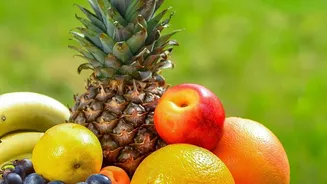
Pineapple is a tropical
favourite known for its sweet, tangy flavour. Beyond its taste, it is a nutritional standout, primarily because of two key components: Vitamin C and a unique enzyme called bromelain. Per 100 grams, pineapple provides a significant amount of your daily Vitamin C needs, an antioxidant that helps boost the immune system and protect cells from damage. In fact, a single cup can deliver over 100% of your daily requirement. But its real claim to fame is bromelain. This enzyme complex is known for its anti-inflammatory properties and its ability to aid in protein digestion. Studies suggest bromelain can help reduce swelling and bruising after injuries or surgery and may even ease symptoms of sinusitis. Pineapple is also a good source of manganese, a mineral essential for bone health and metabolism.
The Humble Hero: Pear
Pears are often celebrated for their gentle sweetness and juicy, soft texture. Nutritionally, their biggest strength lies in their impressive fibre content. A medium-sized pear contains about 6 grams of dietary fibre, which is roughly a quarter of the daily recommended intake for adults. This fibre is a mix of both soluble and insoluble types. Insoluble fibre adds bulk to stool, promoting regular bowel movements and helping prevent constipation. Soluble fibre, including a type called pectin, helps feed beneficial gut bacteria and can assist in managing cholesterol levels. Pears are also a source of Vitamin K, potassium, and various antioxidants like flavonoids, which contribute to heart health and may have anti-inflammatory effects.
The Fibre Face-Off
When it comes to the headline act—fibre—the pear is the clear winner. On a gram-for-gram basis, pear contains more than double the dietary fibre of pineapple. A 100-gram serving of pear offers around 3.1 grams of fibre, while the same amount of pineapple provides about 1.4 grams. For anyone looking specifically to increase their fibre intake for better digestive health, regularity, or to feel fuller for longer, the pear is the more potent choice. The high fibre in pears helps to soften and bulk up stool, making it an excellent choice for maintaining a healthy digestive system.
Beyond Fibre: A Nutrient Clash
While pear wins on fibre, pineapple dominates in other areas. Its Vitamin C content is vastly superior; pineapple provides about ten times more Vitamin C than pear per 100 grams. This makes pineapple a go_to fruit for immune support, especially during cold and flu season. Pineapple is also a much richer source of manganese, which is crucial for forming strong bones and connective tissue. On the other hand, pears provide more Vitamin K, a nutrient important for blood clotting and bone health, though neither fruit is a primary source. Both fruits contain antioxidants, but of different kinds. Pears contain lutein and zeaxanthin, which are beneficial for eye health, while pineapple's strength lies in its unique bromelain content and high levels of Vitamin C.
Calories, Sugar, and Blood Sugar Impact
In terms of calories and sugar, the two fruits are quite similar. Per 100 grams, pineapple contains around 50 calories, while pear has about 57. They also have nearly identical amounts of natural sugar. However, their effect on blood sugar levels differs significantly due to their Glycemic Index (GI). The GI measures how quickly a food raises blood glucose. Pear has a low GI of around 38, meaning it causes a slower, more gradual rise in blood sugar. Pineapple has a medium GI, typically cited between 59 and 66, which means it can raise blood sugar more quickly. For individuals managing blood sugar levels, such as those with diabetes, the pear is the more suitable choice.
The Verdict: Which Fruit Is Right for You?
Neither fruit is 'better' overall; the right choice depends entirely on your health goals. Choose pears if your priority is: Increasing your daily fibre intake for better digestion and regularity. Managing your blood sugar levels, due to its low Glycemic Index. A gentle fruit that is easy on the digestive system. Choose pineapple if your priority is: Boosting your immune system with a powerful dose of Vitamin C. Reducing inflammation or aiding protein digestion, thanks to its bromelain content. Getting more of the mineral manganese for bone health.