



Prioritise Pure Water
The single most important habit for a healthy monsoon is ensuring your drinking water is safe. Heavy rainfall can contaminate municipal water sources and pipelines with sewage and floodwater. The simplest method to purify water at home is to bring it to a rolling
boil for at least one full minute. This kills most harmful bacteria, viruses, and parasites. If boiling isn't feasible, a well-maintained water purifier with RO (Reverse Osmosis) or UV (Ultraviolet) technology is a reliable alternative. Always carry your own water bottle when leaving home and steadfastly refuse ice from unknown sources, as it's often made with untreated tap water.
Handle Produce with Extra Care
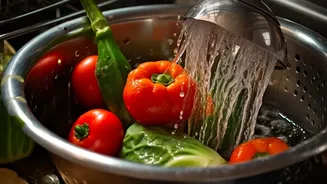
Fresh fruits and vegetables are vital, but they require more attention during the rainy season. Rainwater can splash contaminated soil onto produce, and high humidity encourages fungal growth. It is crucial to wash all fruits and vegetables thoroughly under clean, running water. For leafy greens like spinach and cabbage, which can harbour hidden dirt and germs, consider soaking them in a saltwater solution before a final rinse. Health experts often advise steaming or cooking vegetables instead of consuming them raw in salads. When it comes to fruit, choose those with peels you can remove yourself, like bananas and pomegranates, and eat them immediately after cutting.
Rethink Your Street Food Cravings
The allure of hot pakoras or chaat on a rainy day is undeniable, but street food carries a significantly higher risk during the monsoon. The primary concerns are contaminated water used in items like pani puri, and raw chutneys or vegetables that can harbour bacteria. High humidity accelerates bacterial growth on any food left exposed. If you decide to indulge, choose vendors who maintain visible hygiene and cook food to order. Opt for items that are served piping hot, as high temperatures kill most germs. It's safest to avoid raw chutneys, pre-cut salads, and fresh juices, as these are common sources of infections like typhoid and gastroenteritis.
Fortify Your Kitchen Hygiene
Your kitchen is your first line of defence. Simple habits can prevent cross-contamination and food spoilage, which happens faster in humid weather. Always wash your hands with soap and water before handling food. Use separate cutting boards for raw meat and vegetables to prevent the spread of bacteria like Salmonella and E. coli. Store leftovers in the refrigerator as soon as they cool down and ensure they are reheated thoroughly before consumption. Keep perishable items like dairy and meat in the coldest part of your fridge and check expiry dates regularly. Finally, keep kitchen surfaces and utensils clean and dry to prevent mould and bacterial growth.
Boost Immunity from Within
While external precautions are key, strengthening your body's natural defences is an equally important habit. A balanced diet supports your immune system, making you less susceptible to common monsoon illnesses. Incorporate immunity-boosting ingredients like ginger, garlic, and turmeric into your daily cooking. Seasonal fruits such as jamun, pears, and pomegranates are excellent choices, as they are packed with vitamins and antioxidants. Probiotic-rich foods like curd and buttermilk can support gut health, which plays a crucial role in overall immunity. Eating freshly prepared, warm meals is not just comforting but also aids digestion, which can become sluggish during this season.