




The High Cost of Sitting Still
Prolonged sitting is more than just a bad habit; it's a significant occupational health challenge. When you're inactive for hours, your metabolism slows, your muscles can weaken, and your circulation may be affected. This can lead to a cascade of issues,
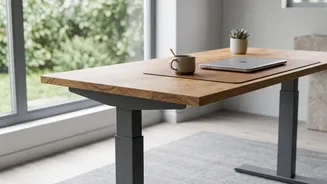
including back pain, stiff joints, poor posture, and general fatigue. Over time, a sedentary lifestyle is linked to an increased risk of more serious health conditions. While a well-designed ergonomic chair helps, it doesn't eliminate the fundamental problem: our bodies are designed to move. The solution isn't necessarily a complete overhaul of your workday but rather the introduction of small, consistent 'movement snacks'. These brief interruptions to your sedentary time can make a world of difference.
Your Two-Minute Turnaround: The Torso Twist
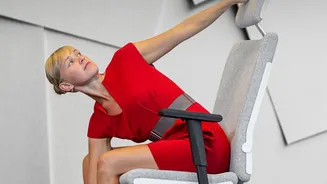
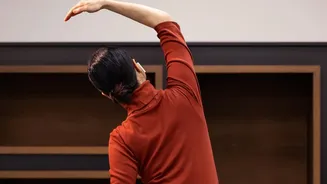
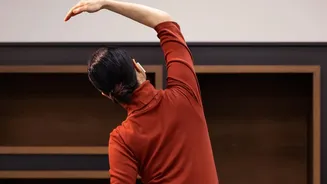
The standing torso twist is a perfect micro-break exercise because it's simple, requires no equipment, and can be done right at your desk. This movement primarily targets the oblique muscles along the sides of your core, but its benefits are far-reaching. By rotating your spine, you help to improve its mobility, relieve tension, and increase blood flow to the spinal nerves. This gentle twisting action can also help counteract the forward-flexed posture many of us adopt while working at a computer, promoting better alignment and reducing stiffness in the back and shoulders.
How to Perform the Perfect Twist
Getting the form right is key to maximizing benefits and staying safe. Follow these simple steps: 1. Stand with your feet shoulder-width apart and your knees slightly bent. This 'soft knee' or 'athletic' stance provides a stable base and protects your joints. 2. Engage your core muscles as if you're about to be lightly punched in the stomach. This helps stabilize your spine. 3. Raise your arms. You can either cross them over your chest, bend your elbows to 90 degrees, or extend them straight out in front of you. 4. Slowly and smoothly rotate your torso from one side to the other. The movement should come from your core, not from swinging your arms. It's common to let your feet pivot slightly as you twist to allow the motion to flow naturally through your hips. 5. Breathe throughout the movement. A good pattern is to exhale as you twist and inhale as you return to the center.
Common Mistakes to Avoid
To get the most out of your twist without risking injury, be mindful of these common errors: • Twisting Too Fast: Avoid using momentum. The goal is a controlled muscular action, not a rapid, jerky movement. • Over-rotating: Don't force the twist beyond a comfortable range of motion. The lower back (lumbar spine) has limited rotational capacity, so pushing it too far can cause strain. • Forgetting Your Hips: Some experts suggest keeping your hips square to the front, while others recommend letting them move with the twist. The safest approach for a general workplace stretch is to allow a natural, gentle pivot through your hips and feet rather than isolating the twist entirely in your spine. • Holding Your Breath: Remember to breathe steadily to keep your muscles oxygenated and relaxed.
More Than Just Your Back
While the spinal benefits are clear, standing torso twists offer more. The twisting motion stimulates your abdominal organs, which can aid in digestion. Taking a moment to stand and move also increases blood flow throughout the body, delivering a fresh supply of oxygen to your brain and helping to combat mental fatigue. These short breaks can reduce stress, improve focus, and even spark creativity. Research shows that micro-breaks of even a few minutes can significantly boost energy levels and performance throughout the day.
Making Movement a Daily Habit
The hardest part of any new routine is sticking with it. To make movement breaks a natural part of your workday, try these strategies: • Set a Timer: Use your phone or computer to set a reminder to get up and move every 30 to 60 minutes. • Link it to a Task: Develop a habit of doing a few torso twists every time you finish a specific task, like sending an email or ending a phone call. • Stand Up for Calls: If you don't need to be on video, take phone calls or listen in on meetings while standing or walking around. • Start Small: Don't feel pressured to do a full workout. Just one or two short movement breaks a day is a fantastic start. Even one set of 10-15 twists can make a difference.