





What is This 'New Climate Reality'?
The new reality isn't a single event but a gradual, persistent shift in environmental conditions. Scientists point to a combination of rising average temperatures, increasingly erratic monsoon patterns, and a higher frequency of extreme weather events
like prolonged droughts and intense rainfall. This altered climate is creating a fundamental mismatch. The forests that have evolved over centuries under a stable climate now find themselves in an environment they are not suited for. Models based on this data project that these pressures could lead to significant 'vegetation-type shifts,' where a moist, dense forest might slowly transition into a drier, more open woodland over the coming decades. Studies suggest a significant portion of India’s forest grids—some estimate over 45%—are vulnerable to these kinds of changes by mid-century.
The Vulnerable Frontiers
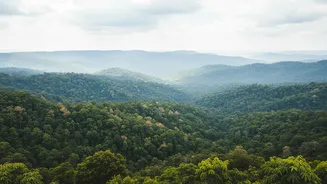
While no forest is entirely immune, some of India's most iconic and ecologically sensitive regions are at the forefront of this change. The upper Himalayan stretches and the Western Ghats, both celebrated as global biodiversity hotspots, are flagged as particularly vulnerable. These mountainous ecosystems are highly sensitive to shifts in temperature and rainfall. A recent study on the Panchmarhi Biosphere Reserve in central India revealed a 13% loss in forest cover over nearly five decades, driven by a mix of climate shifts and human pressures. The research linked warming temperatures and lower precipitation to an increased risk of forest fires, one of the most visible consequences of this new, drier reality. Similarly, forests in the drier landscapes of the Deccan Peninsula are considered highly susceptible to alterations from significant changes in climate patterns.
More Than Just Trees
The implications of this climate-driven transformation extend far beyond the trees themselves. India’s forests are not just collections of flora; they are the bedrock of the nation's ecological and water security. They act as colossal carbon sinks, absorbing greenhouse gases from the atmosphere. While some studies project that overall carbon storage might increase in certain regions due to a 'fertilisation effect' from higher CO2, others warn that forest health and efficiency are declining. A study from IIT Kharagpur noted that while forests may appear greener, their actual ability to absorb carbon has weakened in key areas like the Eastern Himalayas and Western Ghats. These ecosystems are also the headwaters for most of India's major rivers, meaning any change in forest health directly impacts water availability for millions of people downstream. Furthermore, countless communities depend directly on forests for their livelihoods, and a shift in vegetation could disrupt their way of life and even lead to the extinction of endemic species.
Adapting to an Inevitable Future
The scientific consensus is not one of panic, but of urgency. The changes are complex, and in some cases, may already be in motion. The key takeaway from researchers is the critical need for adaptation. This doesn't just mean planting more trees, but implementing smarter, evidence-based forest management. Strategies include protecting large, undisturbed core forest areas, which are naturally more resilient, and establishing corridors that allow plant and animal species to migrate to more suitable climates. Minimising human disturbances like unregulated tree felling and encroachment can significantly reduce a forest's overall vulnerability. For areas already showing signs of degradation, experts recommend adaptive management aimed at restoration to build long-term resilience against the climatic shifts that are projected to continue for the foreseeable future.