





The Refrigerator Cold War
Living with others—whether roommates, family, or in a co-living space—is a balancing act. And nowhere is that act more precarious than in the shared kitchen refrigerator. It’s a landscape of mystery Tupperware, someone’s half-eaten dahi vada, and three
identical but separate bottles of ketchup. The unspoken conflict over shelf space, unidentified food items, and things that have started to resemble science experiments can turn a home into a cold war zone. The central issue is often a lack of clear communication and agreed-upon rules. Everyone has a different tolerance for clutter, a different standard of cleanliness, and a different idea of when that carton of milk officially becomes a public health risk. Establishing some basic etiquette can prevent arguments and make life more pleasant for everyone.
Decoding the Dates in India
A major source of confusion is the array of dates printed on packaged goods. Understanding what they mean is the first step to fridge harmony. According to the Food Safety and Standards Authority of India (FSSAI), there's a key difference between quality and safety. The 'Best Before' date is about quality. Food past this date might lose some flavour or crispness, but it's generally still safe to eat if stored correctly and the package is intact. The 'Use By' or 'Expiry' date, however, is a safety deadline. FSSAI is clear: food should not be consumed after this date, as it could be harmful. Knowing this distinction is vital. It allows you to make informed decisions and prevents perfectly good food from being wasted just because it’s a day past its ‘Best Before’ date.
The 'Is This Yours?' System
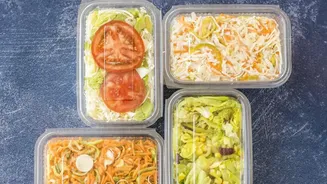
Beyond the printed dates, a household system needs two more pieces of information: who owns it and when was it opened or cooked? For packaged goods, once you break the seal, the 'Best Before' date is no longer a reliable guide. For homemade food and leftovers, there's no date at all. The solution is simple but requires discipline: a marker pen and some masking tape kept near the fridge. Create a house rule: all personal items and leftovers must be labelled with your initials and the date it was cooked or opened. This instantly clarifies ownership and gives everyone an idea of how fresh something is. No more wondering if that container of paneer butter masala is from last night or last week.
Establishing Clear Fridge Zones
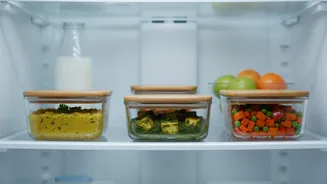
To reduce daily friction, consider dividing the fridge into logical zones. This can be done by assigning a shelf or a drawer to each person. This creates personal responsibility for your space and the food within it. If there isn’t enough space for individual shelves, use storage bins to keep your items together. An alternative approach is to have communal zones. The door shelves are perfect for shared staples like condiments, butter, and milk, preventing multiple open containers of the same item. Another great idea is a designated 'Eat Me Soon' or 'Free For All' box. This is where you can put items nearing their date that you know you won’t finish, offering them up to your housemates and preventing food waste.
Drafting Your Household's Fridge Charter
This doesn't need to be a formal legal document, but having a conversation and writing down a few simple rules can save countless future headaches. Sit down with your housemates and agree on the basics. Key points to cover include: The labelling system (name and date). A weekly or bi-weekly clean-out schedule to dispose of expired and unclaimed items. Rules for leftovers (e.g., must be consumed or tossed within three days). Guidelines for sharing common items. What to do with food left behind when someone goes on holiday. The goal isn't to be overly strict but to create a system that everyone agrees is fair and reasonable. It’s about mutual respect for a shared space.