






Our Disappearing Connection to the Night
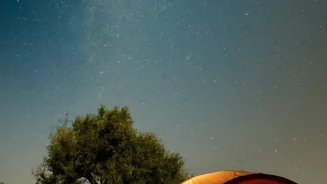
For most of human history, a brilliant, star-filled sky was a universal human experience. It was our first calendar, our original storybook, and a nightly reminder of our place in the cosmos. Today, for a vast majority of the world's population, this
cosmic canopy is almost entirely gone, washed out by the persistent glow of artificial light. This light pollution does more than just obscure the stars; it disrupts our natural rhythms and severs a connection to a profound source of wonder. Research indicates that excessive exposure to artificial light at night can interfere with sleep patterns and even contribute to increased stress and mood disorders. The simple act of travelling to a place untouched by this glow is an act of reclaiming a lost, and vital, part of the human experience.
The Psychology of Cosmic Awe
Standing under a sky brimming with thousands of stars triggers a powerful emotion: awe. Psychologists describe awe as the feeling we get in the presence of something vast that challenges our understanding of the world. This experience has tangible benefits for our mental health. Studies have shown that feeling awe can reduce stress, quiet our inner critic, and make our own anxieties feel smaller and more manageable. It shifts our perspective from self-focused worry to a broader sense of connection with the universe. This is not just a fleeting feeling; it can lead to increased generosity, a clearer mind, and a more positive outlook on life, acting as a mental reset button that our brightly lit, urban environments rarely allow us to press.
A Digital Detox and Mindful Moment
Astrotourism, the practice of travelling for celestial views, is inherently a mindful activity. It requires you to be present. You cannot multitask while trying to spot a faint constellation or trace the path of the Milky Way. The experience encourages a natural slowing down, a focus on the here and now that is the very essence of mindfulness. In a dark, quiet environment, away from the constant ping of notifications, your nervous system gets a chance to unwind from its state of high alert. This practice of simply observing the sky, noticing the subtle shifts in light and the sheer scale of it all, can lower stress hormone levels and promote a sense of deep calm, much like a guided meditation session.
Finding Your Unbroken Canopy
You don't need to be an expert astronomer to reap these benefits. The journey is about finding darkness. This emerging form of eco-conscious travel, often called dark sky tourism, is gaining momentum as people seek out authentic, restorative experiences. In India, this has led to the establishment of the country's first official Dark Sky Reserve in Hanle, Ladakh. Located at a high altitude with clear, dry air, Hanle offers some of the most pristine night skies in the world. But you don't have to travel to the Himalayas. Other regions like Spiti Valley, the Rann of Kutch, and parts of Coorg and the Andaman Islands also provide incredible opportunities for stargazing. The goal is to escape the city's luminous haze and find a spot where the cosmos can reveal itself in its full, uninterrupted glory.