



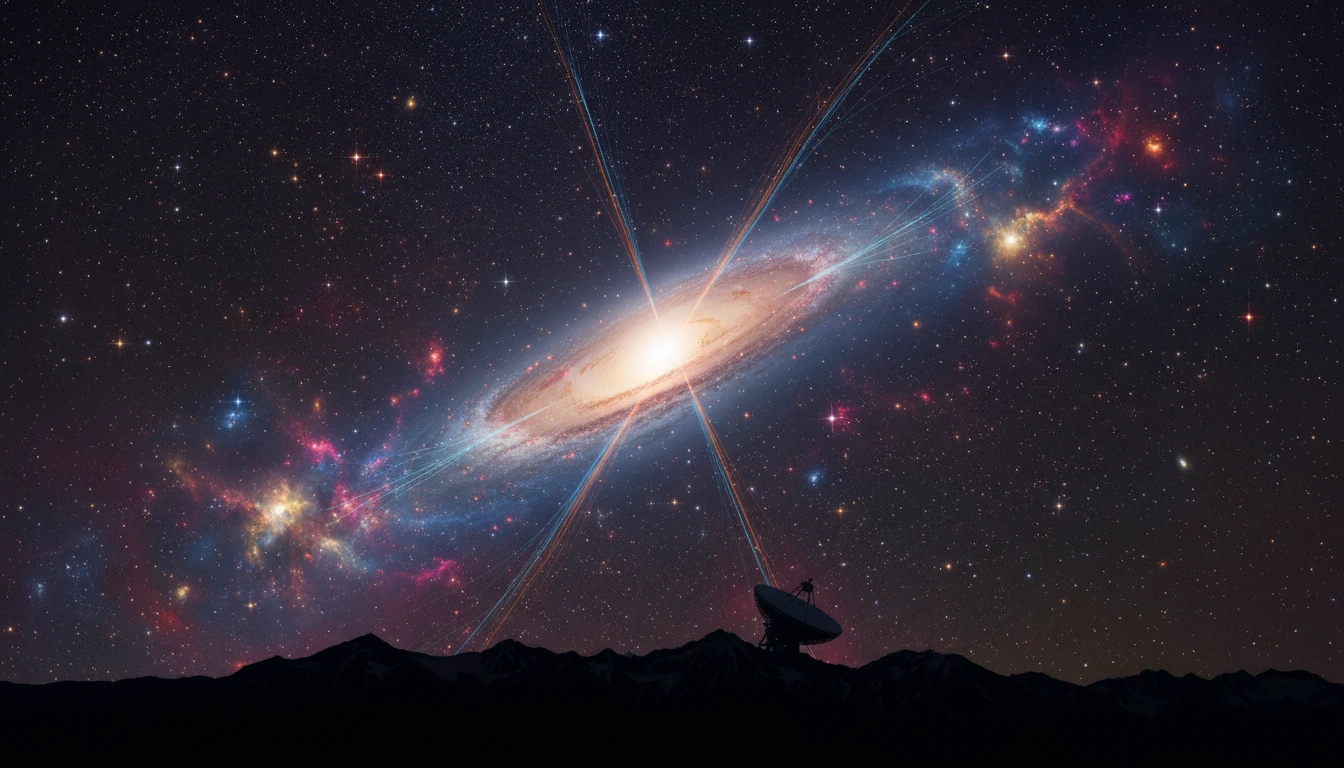


A Cosmic Alarm Clock Goes Off
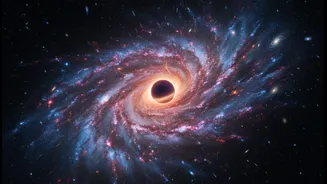
Deep in the Virgo constellation, about 300 million light-years away, lies a galaxy known as SDSS1335+0728. For years, it was just another quiet spot in the vast cosmic expanse. But in late 2019, something changed. Astronomers using the Zwicky Transient
Facility, an automated sky survey in California, noticed the galaxy’s core suddenly started getting dramatically brighter. This wasn't a flicker; it was a sustained surge in luminosity that has continued for more than four years. The galaxy's brightness has doubled in the mid-infrared, quadrupled in the ultraviolet, and become ten times brighter in X-rays. After years of careful observation, scientists have concluded they are witnessing a 'real-time activation' — a massive black hole waking from its slumber.
What Defines 'Activation'?
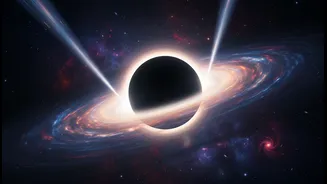
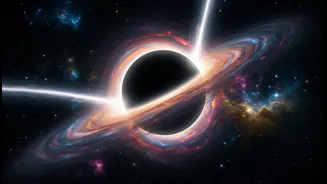
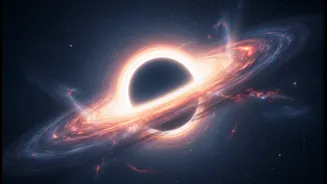
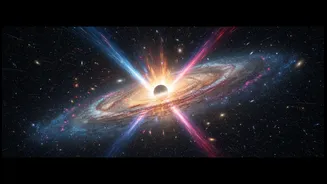
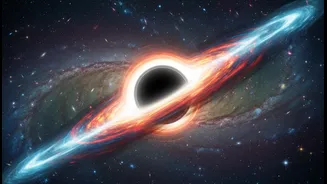
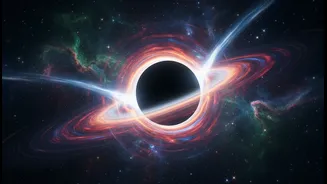
Most large galaxies, including our own Milky Way, have a supermassive black hole at their center. These cosmic giants are often 'dormant' or 'sleeping', meaning they aren't actively pulling in large amounts of matter. When they are 'active', however, they feast on surrounding gas and dust. This material doesn't fall straight in; it forms a swirling, superheated disc around the black hole called an accretion disk. The intense friction and gravity heat this disk to millions of degrees, causing it to glow brilliantly across the entire light spectrum. This intensely bright region is called an Active Galactic Nucleus, or AGN. The key definition for the 'activation phase' observed in SDSS1335+0728 is the transition from a quiet, inactive state to a bright, sustained AGN state. The event's longevity is what makes it so unique and rules out more common, short-lived cosmic flashes.
Not a Supernova, Not a Typical Snack
Astronomers first had to rule out other possibilities. Could it be a supernova, the explosion of a massive star? No, because supernovas brighten and then fade over a few months. This event is still getting brighter years later. Another candidate was a Tidal Disruption Event (TDE), where a star gets too close to a black hole and is shredded like spaghetti. While dramatic, most TDEs also peak and fade within a few hundred days. Because the brightening of SDSS1335+0728 has lasted for so long, the most compelling explanation is that its central black hole, estimated to be a million times the mass of our sun, has begun a long-term feeding frenzy, officially turning its AGN 'on'.
Why This Awakening Matters
This discovery is a watershed moment for astronomy. It's the first time scientists have observed the process of a black hole's activation as it happens. Previously, they had only seen galaxies that were already active or fully dormant. It’s like the difference between finding a fossil and watching a dinosaur hatch. Observing this transition offers unprecedented insight into how these behemoths grow and how their activity shapes the galaxies around them. The immense energy released by an AGN can influence star formation across an entire galaxy. This real-time laboratory will allow scientists to test and refine their models of galaxy evolution. Such discoveries highlight the importance of global collaboration, including contributions from facilities like India's upgraded Giant Metrewave Radio Telescope (uGMRT), which has been involved in studying the behaviour of other active black holes.