






A Cosmic Broadband Upgrade
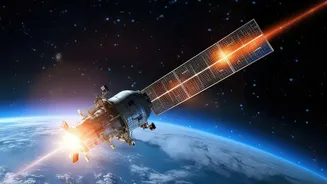
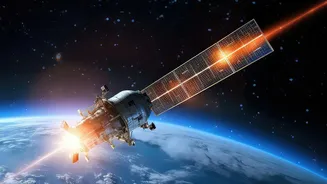
For decades, space exploration has relied on radio frequency (RF) systems to send data back to Earth. Think of it as the cosmic equivalent of dial-up internet—reliable, but slow. Now, a new technology called Deep Space Optical Communications, or DSOC,
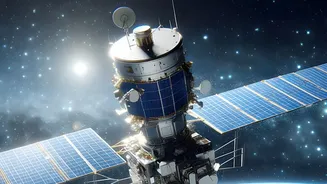
is changing the game. This system, riding aboard NASA's Psyche spacecraft, uses near-infrared lasers to transmit information, offering data rates 10 to 100 times greater than the best radio systems. It’s a pivotal shift from radio waves to light beams, essentially upgrading our interplanetary network to high-speed broadband.
The 19-Million-Mile Cat Video
To prove the system's capability, NASA conducted a memorable test. They streamed a 15-second, ultra-high-definition video of a cat named Taters from the Psyche spacecraft when it was nearly 19 million miles from Earth. The adorable video of the tabby chasing a laser beam was transmitted at a maximum rate of 267 megabits per second (Mbps)—a speed comparable to a typical home internet connection. The signal took just 101 seconds to travel that vast distance and was successfully received by the Hale Telescope at Caltech's Palomar Observatory in California. This historic test wasn't just for fun; it demonstrated that high-bandwidth data, including HD video, could be successfully sent across immense interplanetary distances.
Why Faster Is Better for Space Exploration
The massive increase in bandwidth is more than just a convenience; it's a necessity for the future of space exploration. Current missions often have to be selective about the data they send back due to the slow speeds of RF communication. With optical communications, scientists can receive far more data, including complex instrument readings and high-resolution imagery, in a fraction of the time. For example, transmitting a complete map of Mars could take nine days with laser communications, compared to nine weeks with traditional radio systems. This efficiency accelerates the pace of scientific discovery.
Paving the Way for Humans on Mars
Beyond robotic missions, this technology is critical for sending humans to Mars. Astronauts will require reliable, high-speed communication for everything from mission operations and safety checks to connecting with loved ones back on Earth. Laser communications could finally make real-time, high-definition video calls from the Red Planet a reality. The DSOC experiment has already shown it can work in tandem with the spacecraft's existing radio frequency system, offering a robust, hybrid approach to mission communications. The system has successfully transmitted data from as far as 240 million miles away, proving its viability for deep space missions.
Overcoming The Pointing Challenge
Transmitting a laser beam across millions of miles is an incredible feat of precision. The system must aim the laser at a target that is constantly in motion. It's the equivalent of hitting a moving dime from a mile away. The DSOC system uses advanced pointing technology and a powerful uplink beacon from Earth to lock onto its target, overcoming the immense distances and the relative motion between the spacecraft and our planet. While challenging, the narrowness of the laser beam also provides an added benefit: enhanced security, as the signal is much harder to intercept than a broad radio wave.