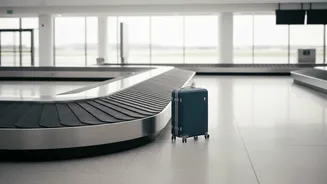








A Ruling That Empowers Passengers
A recent ruling by a Kerala district consumer commission has brought the issue of delayed baggage into sharp focus. In the order, an airline was held liable for a three-day delay in delivering a passenger's luggage and was directed to pay over ₹50,000
in compensation and costs. The passenger had to purchase essential clothing worth nearly ₹9,000 while waiting for his bag. The commission noted the airline's failure to compensate the passenger as per the Ministry of Civil Aviation's Passenger Charter, despite repeated complaints, was a clear “deficiency in service”. This case is a powerful reminder that passenger rights are not just guidelines; they are enforceable, especially when the traveller has meticulously documented their losses and communication.
Your Paper Trail: The Ultimate Lifesaver
The success of the Kerala case hinged on evidence. The passenger had a Property Irregularity Report (PIR) filed at the airport, receipts for his essential purchases, and a record of his complaints. This “paper trail” is precisely what airlines and consumer courts look for. Without it, a claim becomes a case of your word against theirs. The rules are clear: for domestic flights in India, airline liability for lost or delayed baggage is capped at ₹20,000 per passenger. For most international flights, the Montreal Convention sets the limit at approximately 1,288 Special Drawing Rights (SDRs), which is a significant amount. However, to claim any of this, you must prove your case, and that starts with documentation.
Before You Leave Home: Pre-emptive Proof
The best paper trail starts before your trip does. First, take clear photos of your checked luggage from multiple angles. Second, take a photo of the contents of your packed bag. This creates a visual inventory that is hard to dispute. If you are carrying high-value items, it's wise to have receipts, even if they are digital copies stored in your email or cloud. While airlines have limited liability for valuables in checked baggage, this documentation is essential for any potential insurance claim or if you have to escalate a dispute to a consumer forum. Some airlines also allow you to declare excess value on your baggage for a fee at check-in, which increases their liability cap.
At The Airport: The Critical First Step
The moment you realise your bag hasn't arrived, do not leave the baggage claim area. Go directly to the airline’s baggage service counter. Here, you will file a Property Irregularity Report (PIR). This is the single most important document in any baggage claim. Without a PIR, airlines can and often will deny your claim. The PIR creates an official record of the incident, complete with a unique reference number that you will use to track your bag and your case. Keep the physical copy of the PIR, your boarding pass, and the baggage claim sticker given to you at check-in. These are the foundational documents for your paper trail.
The Follow-Up: Building Your Case
Once the PIR is filed, your job is to keep a record of every interaction. If your bag is delayed, you are often entitled to reimbursement for essential items like toiletries and basic clothing. Keep every single receipt. Communicate with the airline primarily through email so there is a written record of your correspondence. If you call them, follow up with an email summarising the conversation. Note the date, time, and name of the person you spoke with. If your bag has not been found within 21 days, it is officially considered lost. At this point, you can file a claim for the value of the bag and its contents, using the photos and receipts you gathered before your trip as evidence.