


How to Sail on Sunlight
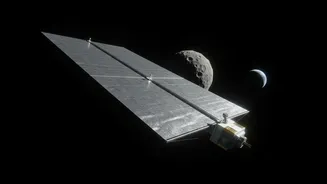
At its heart, a solar sail is a simple, elegant concept. It is a vast, ultra-thin, and highly reflective sheet—essentially a giant mirror in space. Sunlight is made up of countless energetic particles called photons. While photons have no mass, they possess
momentum. When these particles strike the reflective surface of the sail and bounce off, they transfer a tiny amount of that momentum, giving the spacecraft a gentle but continuous push. Unlike a conventional rocket that burns through its fuel in minutes, a solar sail accelerates slowly and constantly. In the frictionless environment of space, this persistent nudge adds up over weeks and months, eventually allowing the craft to reach tremendous speeds without carrying a single drop of propellant.
The Breakthroughs in Control and Materials
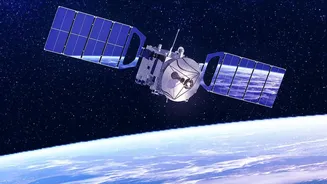
The true breakthrough isn't just the concept, but the demonstrated ability to control it and build better sails. The Planetary Society's LightSail 2 mission, which concluded in 2022, was a landmark success. It proved for the first time that a small satellite, or CubeSat, could use a solar sail to actively change its orbit around Earth, effectively steering with sunlight. More recently, NASA has been testing next-generation materials. The Advanced Composite Solar Sail System (ACS3), launched in April 2024, is testing novel lightweight booms made of carbon fiber. These new booms are designed to unfurl and support sails far larger than previous missions, a critical step toward building more powerful and efficient solar sailing craft.
The Perfect Tool for Chasing Asteroids
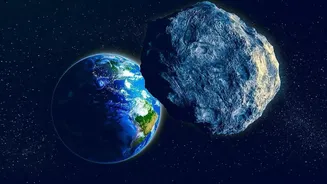
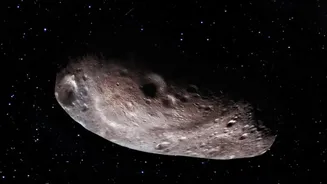
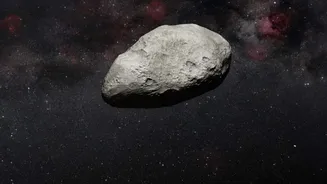
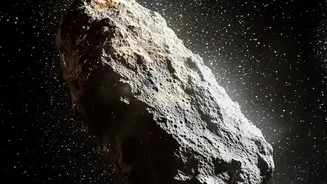
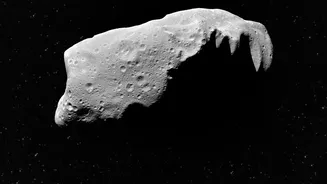
This technology is uniquely suited for studying near-Earth asteroids. These small, fast-moving bodies are difficult targets for conventional rockets, which would need to burn enormous amounts of fuel to match their velocity. A solar sail, with its low-thrust, long-duration propulsion, can patiently adjust its trajectory over months or years to gracefully sidle up to an asteroid. This was the goal of NASA's NEA Scout mission. Launched in 2022, the small probe was intended to ride a solar sail to perform the slowest-ever flyby of an asteroid, allowing its camera to capture incredibly detailed images. Though contact with the spacecraft was unfortunately lost after launch, the mission's design highlighted the immense potential of solar sails for this exact purpose.
From Setbacks to Supersized Sails
Despite the challenge with NEA Scout, confidence in solar sailing is higher than ever. The lessons learned from missions like LightSail 2 and ACS3 have convinced space agencies to go bigger. In April 2026, NASA awarded a $10.2 million contract to the company Opterus to engineer the deployment system for a future solar sail spanning 1,600 square meters—roughly the size of a hockey rink and twenty times the area of the ACS3 sail. Furthermore, in July 2026, NASA awarded new innovation grants for futuristic concepts like stackable solar sails for high-velocity missions. These developments show a clear commitment, not just to continue the technology, but to scale it up dramatically for ambitious deep-space exploration.