

The Undiscovered Jewel of Hadoti
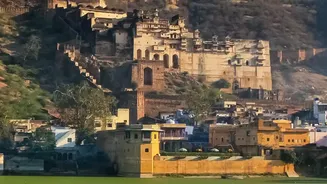
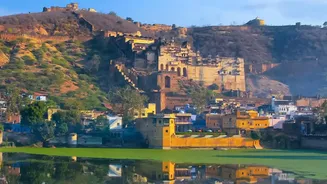
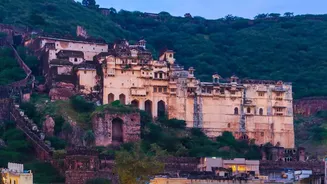
For decades, travellers have whispered about Bundi. It’s a town that seems to exist in a different era, a stark contrast to the bustling, heavily-trafficked hubs of Rajasthan's Golden Triangle. Bundi’s appeal is subtle yet profound. Its crown jewel, the Garh
Palace, tumbles down a hillside in a fashion so fantastical that Rudyard Kipling suggested it was “the work of goblins rather than of men.” Inside, the Chitrashala gallery holds some of the world's most exquisite miniature murals, with pigments of turquoise and gold still telling ancient stories. But the town’s true character is found at street level and below. Known as the “City of Stepwells,” Bundi is home to dozens of these architectural marvels, most famously the intricately carved Raniji ki Baori. These structures, along with its quiet, Brahmin-blue houses and decaying havelis, offer a glimpse of a Rajasthan that is authentic, unhurried, and deeply atmospheric.
A Deliberate Pivot in Tourism Strategy
For years, Rajasthan's tourism engine was powered by a handful of star cities. Now, the state government is making a conscious effort to rewrite that script. Recognizing the risks of over-tourism in popular spots and the need to distribute economic benefits more widely, officials are actively promoting what they call “emerging destinations.” In a recent statement, Rajasthan's Tourism Secretary Suchi Tyagi explicitly named Bundi, alongside regions like Shekhawati and Banswara, as central to this new strategy. The goal is to diversify the state’s offerings beyond its world-famous forts and palaces, creating new circuits and encouraging travellers to explore lesser-known regions. This push aims to make Rajasthan a year-round destination and build resilience against global travel uncertainties by strengthening the domestic tourism market.
Bundi as the Ultimate Test Case
This official promotion places Bundi in a precarious position: it is both a beneficiary and a test subject. The town embodies the immense potential of Rajasthan’s new strategy, but it also magnifies all the underlying challenges. For all its charm, Bundi has long struggled with significant hurdles. Observers and residents point to persistent problems with infrastructure, including sanitation and the upkeep of its priceless, yet decaying, heritage sites. While popular with a niche of foreign backpackers, the town has yet to fully capture the Indian domestic travel market, partly due to a lack of professional hospitality training and effective marketing. Turning Bundi into a successful mainstream destination requires more than just adding it to a brochure; it demands serious investment in conservation, connectivity, and community-level development to manage a new influx of visitors sustainably.
The High-Stakes Gamble on Authenticity
How Bundi navigates this transition could create a blueprint for the future of heritage tourism in India. If the government and private sector succeed in upgrading infrastructure and amenities without sacrificing the town's quiet, authentic character, it could prove a replicable model for dozens of other historically rich but overlooked towns across the state. Success would mean creating sustainable livelihoods, preserving heritage through well-funded conservation, and offering travellers a deeper, more meaningful experience. However, if the push leads to unchecked commercialization, strained resources, and the erosion of local culture, it will serve as a cautionary tale. The risk is turning a place loved for being off the beaten path into just another crowded stop on the tourist trail, thereby destroying the very magic that made it special in the first place.