




Why Venus? The Planet of Extremes
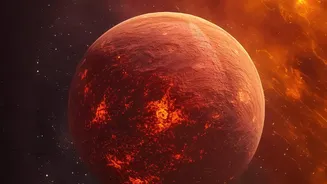
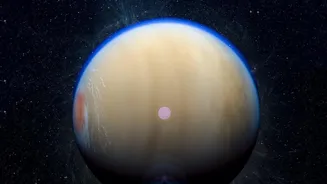
Venus may be our neighbour, but it’s anything but hospitable. It’s the hottest planet in our solar system, with a surface temperature that can melt lead. Its atmosphere is a runaway greenhouse effect in action, composed mainly of carbon dioxide with thick
clouds of sulfuric acid. For scientists, this makes Venus a crucial natural laboratory. Understanding how Venus became this scorching, toxic world could offer vital clues about planetary evolution and climate change, serving as a cautionary tale for Earth's own future. It’s this combination of being both Earth-like and catastrophically different that makes it such a compelling target for exploration.
The Mission to Uncover Venus's Secrets
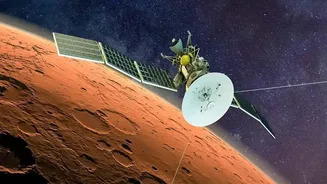
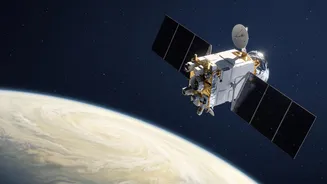
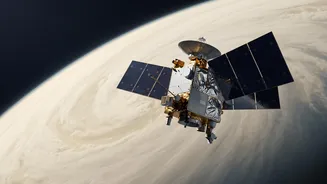
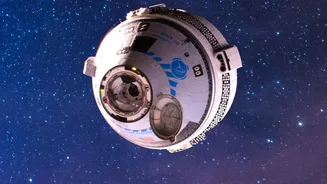
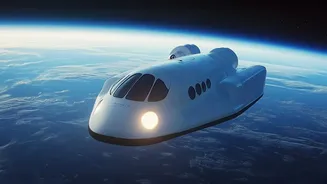
Shukrayaan, deriving its name from the Sanskrit words for Venus (Shukra) and craft (Yaana), is India's first dedicated mission to the second planet from the Sun. After the government's approval, the Indian Space Research Organisation (ISRO) is targeting a launch date of March 29, 2028. The primary goal is to conduct a detailed investigation of Venus from orbit. The orbiter will be placed in a large elliptical orbit, allowing it to study the planet’s surface, its complex atmospheric dynamics, its geological processes, and how it interacts with the solar wind. After its successful Mars Orbiter Mission (Mangalyaan), Shukrayaan represents India's next great leap in interplanetary exploration.
A Toolkit for a Hostile World
To peer through Venus's thick, opaque cloud cover, you need special equipment. Shukrayaan will carry a payload of about 100 kg, featuring a suite of advanced sensors. A key instrument is a high-resolution Synthetic Aperture Radar (SAR), which has the remarkable ability to pierce through the dense clouds and map the planet’s surface in detail, looking for signs of active volcanoes and other geological features. This is crucial because visual cameras are useless against the thick Venusian haze. The mission will also carry a ground-penetrating radar, a first for any Venus mission, designed to study the planet's shallow subsurface. The payload includes contributions from international partners, including Russia, Sweden, and Germany, making it a global scientific effort.
Hunting the 'Unknown Absorber'
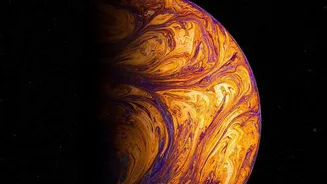
One of the most enduring mysteries of Venus lies within its clouds. For about a century, astronomers have observed dark patches in ultraviolet light that are swept along by the planet's super-rotating winds. The substance causing these patches, often called the 'unknown absorber,' has never been identified. It absorbs a huge amount of solar energy, playing a major role in Venus's climate. Shukrayaan’s instruments are perfectly suited to tackle this puzzle. The mission will carry thermal cameras, spectrometers, and other sensors to analyse the composition and chemistry of the atmosphere. Instruments like the Venus Thermal Camera (VTC) will map thermal emissions, while others will analyse atmospheric gases. By studying the chemical makeup and dynamics of the clouds in detail, Shukrayaan could finally provide the data needed to identify this mysterious substance.
India's Growing Ambition in Space
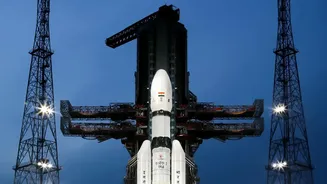
Shukrayaan is more than just a single mission; it’s a statement of India's growing capabilities and ambition as a major player in space exploration. Following the historic landing of Chandrayaan-3 on the Moon's south pole and the Aditya-L1 solar observatory, ISRO is methodically expanding its focus across the solar system. Exploring Venus presents immense technical challenges, including designing a spacecraft that can withstand the planet’s harsh radiation and thermal environment. The mission will use techniques like aerobraking—using the drag of the upper atmosphere to slow down and adjust its orbit—to manage fuel and extend its operational life. Success with Shukrayaan will not only yield groundbreaking science but also solidify India’s position among the elite group of space agencies that have explored the inner planets.