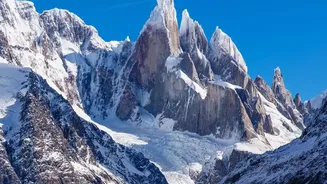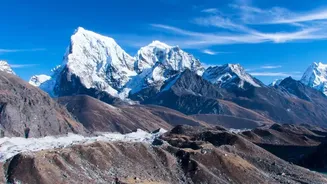




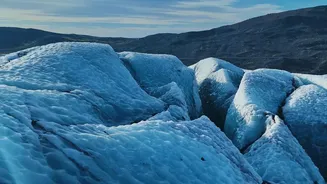
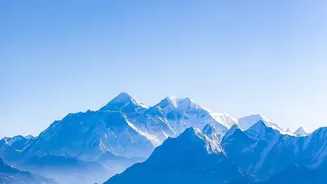
The majestic Himalayas, often called the 'Third Pole', are a lifeline for nearly two billion people. But new reports released ahead of the COP31 climate summit warn that this frozen frontier is warming at an alarming rate, creating a silent, deadly threat.
The Ticking Time Bombs in the Mountains
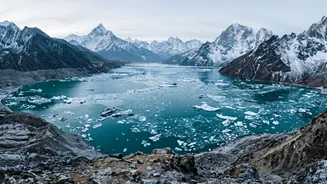
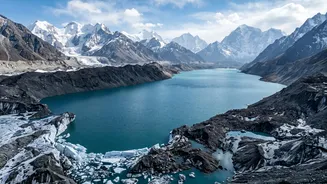
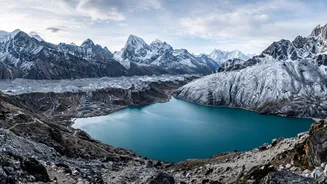
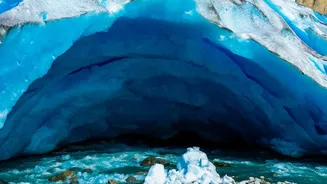
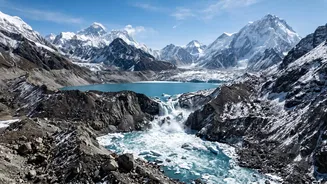
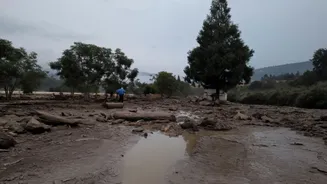
The primary danger is a phenomenon known as a Glacial Lake Outburst Flood, or GLOF. As global temperatures rise—with the Hindu Kush Himalaya region warming up to 2.2°C even if global warming is limited to 1.5°C—glaciers are melting at an unprecedented pace. This meltwater doesn't just disappear; it pools into vast lakes, often dammed by unstable walls of loose rock and ice called moraines. These natural dams can fail with little warning, triggered by anything from an avalanche to an earthquake, or simply the pressure of the ever-growing lake. When they burst, they unleash a terrifying wall of water, mud, and boulders that scours entire valleys, destroying everything in its path. The frequency of these events has increased dramatically, from an average of seven per decade before 1950 to nearly 38 per decade in recent years.
What the Latest UN-Backed Reports Reveal
Two reports released on November 2, 2026—'Overshoot and the Cryosphere' and 'State of the Cryosphere 2026'—paint a grim picture. They highlight that glaciers in the Himalayas are now losing mass 65% faster than they were a decade ago. The reports warn that exceeding the 1.5°C global warming threshold could trigger irreversible ice loss across the world's frozen regions. This isn't a distant threat; a separate, pre-publication UN-led study titled 'Glacial Lake Outburst Flood Risks, Response Strategies and Adaptation Gaps in the Hindu Kush Himalaya Region' found that India has suffered the highest number of deaths from GLOFs in the region. Between 1835 and 2025, India recorded 6,119 deaths, a stark reminder of the human cost of this crisis.
The Human Face of an Unfolding Crisis
For the millions living downstream in states like Sikkim, Himachal Pradesh, and Uttarakhand, this is not a theoretical danger. The 2023 GLOF in Sikkim, which killed over 100 people, and the 2013 Uttarakhand disaster that claimed nearly 5,000 lives, are tragic precedents. A recent assessment identified 189 high-risk glacial lakes in India, with 56 of them classified as 'very high risk'. Entire villages, crucial roads, bridges, and hydropower projects that are vital for the region's economy are exposed. The threat is also transboundary. A GLOF event in Bhutan on October 29, 2026, from Sintaphu Lake triggered flood alerts in West Bengal and Assam, forcing the evacuation of over 10,000 people in one district alone. This highlights how a disaster in one country can have immediate and severe consequences for its neighbours.
A Race Against a Melting Clock
The challenge is immense, but not insurmountable. The reports call for urgent, coordinated action on two fronts: drastically cutting global emissions to slow the warming and investing heavily in adaptation measures. In the Himalayas, this means expanding early warning systems to monitor high-risk lakes in realtime. Some projects, supported by international collaboration, are already underway to install automatic weather and water monitoring stations. Other solutions involve structural interventions, such as carefully draining dangerous lakes to reduce water levels and building flood defence infrastructure in vulnerable valleys. However, experts warn that monitoring remains weak across the vast region, and a more integrated, cross border approach is essential to protect communities from a threat that respects no borders.