




The Concrete Jungle's Fever
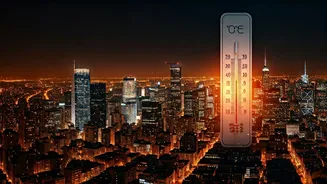
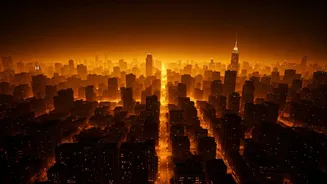
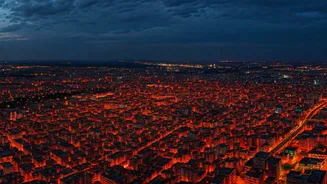
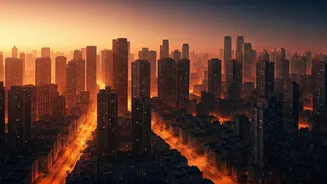
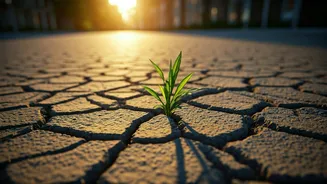
This phenomenon is called the Urban Heat Island (UHI) effect. In simple terms, cities are significantly warmer than their surrounding rural areas. The main culprits are the materials that build our modern world: concrete, asphalt, and brick. During the day,
these dark, dense surfaces absorb and store huge amounts of solar radiation. While a village or forest would start to cool rapidly after sunset, a city full of these materials does the opposite. It slowly radiates all the accumulated heat back into the air throughout the night, preventing any real relief. Research shows this effect can make urban neighbourhoods up to 10°C warmer than nearby vegetated areas.
Nature’s Air Conditioners
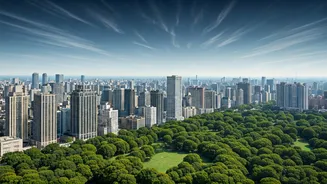
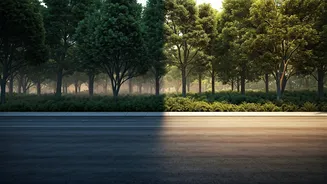
This is where trees come in. They are far more than just decoration; they are critical urban infrastructure. Trees fight heat in two primary ways. The first is obvious: shade. A dense tree canopy can block a significant amount of direct sunlight from hitting the ground and buildings, reducing surface temperatures by as much as 11-25°C. The second method is a process called evapotranspiration. Trees pull water from the ground through their roots and release it as water vapour through their leaves. This process has a powerful cooling effect on the surrounding air, much like how sweating cools our bodies. A single large tree can transpire hundreds of litres of water a day, providing a cooling effect equivalent to multiple air conditioners.
The Night-Time Heat Trap
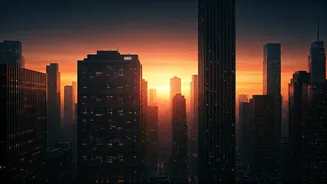
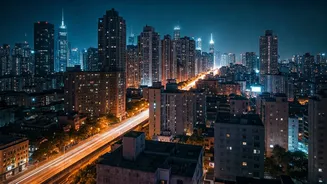
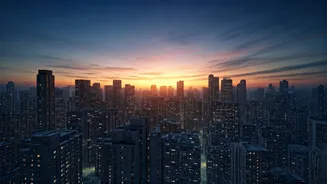
The lack of trees creates a double-whammy effect at night. Not only do we lose the active cooling from evapotranspiration during the day, but the unshaded concrete and asphalt have spent hours baking in the sun. As night falls, this stored heat is released, but it has nowhere to go. In dense urban areas, tall buildings can trap the radiated heat, preventing it from escaping into the upper atmosphere. This is why night-time temperatures in many Indian cities are rising almost twice as fast as daytime temperatures. What should be a period of recovery for our bodies from daytime heat stress is becoming a prolonged period of exposure, with indoor temperatures in some homes remaining above 32°C all night.
The Indian Context
This isn't a theoretical problem; it's a lived reality in India. Rapid urbanisation has come at the cost of green cover. Mumbai lost over 2,000 hectares of green space in just five years, while Ahmedabad's green cover was nearly halved over a decade. A study of 141 Indian cities found that night-time warming averaged 0.53°C per decade, a rate far exceeding the background warming. This heat has severe consequences, from public health emergencies to strained power grids. The India Meteorological Department (IMD) has even started issuing 'warm night' advisories, a clear sign that the lack of night-time cooling is now a recognized hazard.
A Vicious Cycle of Heat and Energy
The hotter it gets, the more we rely on air conditioning. This creates a vicious cycle. AC units pump hot air out into the streets, further contributing to the Urban Heat Island effect. They also consume enormous amounts of electricity, placing a heavy burden on the power grid and, depending on the energy source, increasing greenhouse gas emissions that fuel further climate change. The loss of trees, therefore, isn't just an environmental issue; it's an economic one, driving up energy costs for millions and increasing the risk of power outages during heatwaves when they are needed most.
The Path to Cooler Nights
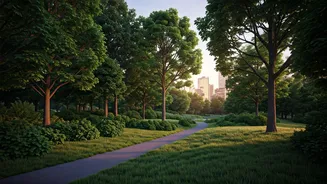
The solution, while challenging, is straightforward: bring nature back into our cities. This involves more than just planting a few saplings. It requires strategic urban forestry, choosing the right native species for the right places to maximize cooling without trapping heat. Initiatives like Ahmedabad's Heat Action Plan, which incorporates urban greening, serve as a model. Other solutions include building with cooler, more reflective materials (cool roofs and pavements), designing cities to allow for better airflow, and creating more green spaces like parks and green corridors. By re-integrating trees and green infrastructure into our urban planning, we can begin to break the cycle and reclaim our cool, restorative nights.