

A Solution for Sun and Soil
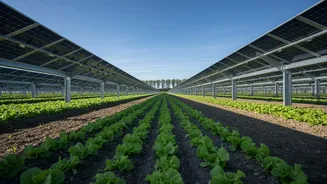
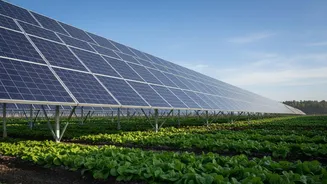
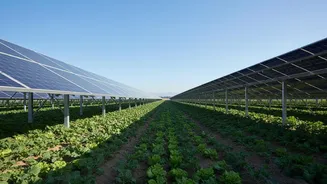
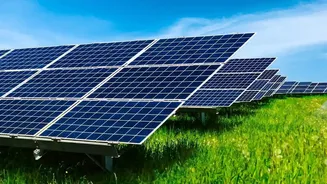
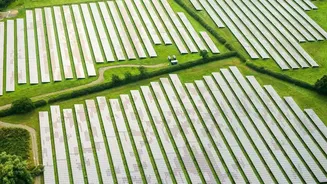
Agrivoltaics, or Agri-PV, is the practice of using the same piece of land for both agriculture and solar power generation. Solar panels are mounted on structures high enough for crops to be cultivated underneath. This dual-use model is gaining traction
as a solution to the competing demands for land for food and energy production. In India, where agriculture supports nearly 60% of the workforce, this innovation offers a way to optimize land use, improve water efficiency by reducing evaporation, and create a more resilient agricultural sector in the face of climate change. Pilot projects have shown that this synergy can be beneficial, as the crops help cool the solar panels, potentially increasing their efficiency, while the panels provide shade that can protect certain crops from excessive heat.
The National Push for a Dual Harvest
The Indian government is actively promoting agrivoltaics as part of its ambitious goal to install 500 GW of non-fossil fuel energy capacity by 2030. Initiatives like the Pradhan Mantri Kisan Urja Suraksha evam Utthan Mahabhiyan (PM-KUSUM) scheme are central to this drive. Launched in 2019, PM-KUSUM provides subsidies of up to 60% to encourage farmers to install solar pumps and small-scale solar plants. The government is also preparing a PM-KUSUM 2.0, which is expected to include a dedicated component for agrivoltaics, aiming to generate 10 GW from such projects. This policy push is designed to transform farmers into energy producers, providing them with a stable, secondary source of income and strengthening India's rural economy.
The Income Calculation Conundrum
While the promise of a 'third crop' in the form of electricity sales is attractive, its integration into farm economics is complex. A farmer's income is no longer just about crop yield and market prices. It now includes revenue from selling surplus electricity to the grid, savings on diesel for irrigation pumps, and potentially even land lease payments if a developer is involved. However, this new model introduces variables that traditional farm accounting does not capture. For instance, the shade from solar panels might slightly reduce the yield of certain crops, an effect that must be balanced against the new energy income. Furthermore, the income from electricity sales could be classified as business income, subjecting it to different tax rules than agricultural income, which is typically exempt.
Why Traditional Metrics Fall Short
Traditionally, farm profitability is measured by metrics like yield per acre and cost of cultivation. These metrics are now insufficient. An agrivoltaic farm's success depends on a combined analysis of agricultural output and energy generation. Policymakers and financial institutions need a new, holistic framework to assess the viability and performance of these integrated farms. Without a standardized method to calculate 'agrivoltaic income', it becomes difficult for a farmer to secure loans, for an insurer to provide coverage, or for the government to design effective and targeted subsidies. The high initial cost of setting up these systems, which can be 15-20% more than conventional solar farms, makes clear financial modeling even more crucial.
Forging a Path to Financial Clarity
Developing a clear and standardized methodology for measuring agrivoltaic income is the next critical step. This requires collaboration between multiple stakeholders, including the Ministry of Agriculture, the Ministry of New and Renewable Energy, agricultural universities, and farmer producer organizations. Research bodies like The Energy and Resources Institute (TERI) are already working on tools and frameworks to guide the responsible scale-up of agrivoltaics. A new metric could combine data on crop yield, energy output, operational savings, and market rates for both crops and electricity. This would provide farmers with a transparent way to evaluate the return on their investment and enable policymakers to create evidence-based policies that truly support this agricultural evolution.