



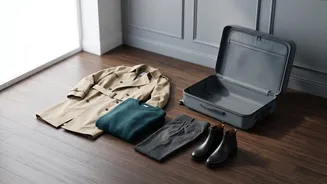


The Capsule Wardrobe Philosophy
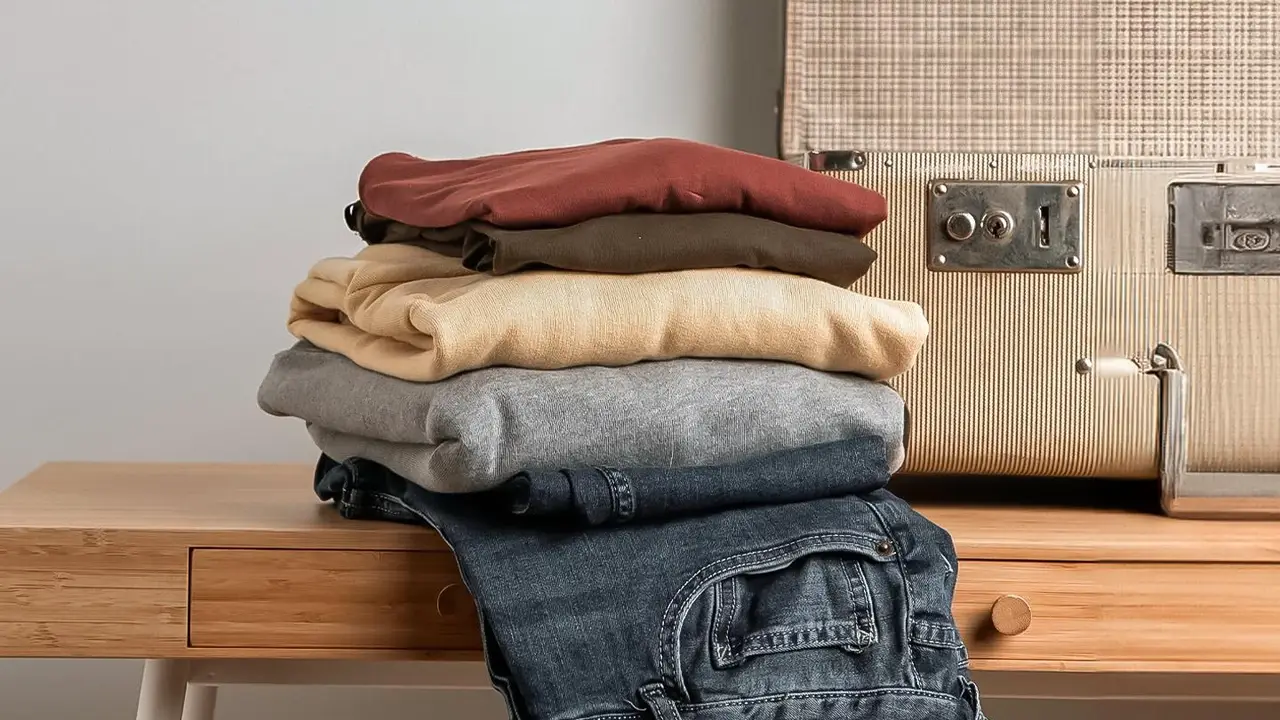
A capsule wardrobe isn't about restriction; it's about strategy. The goal is to pack a small collection of items that can be mixed and matched to create multiple outfits. For a rainy trip, this means choosing a core colour palette (like navy, grey, and a single
accent colour) so that every top works with every bottom. Instead of packing for specific outfits, you're packing versatile pieces that work together in a system. This approach is the key to traveling light without sacrificing options or comfort, even when the weather is unpredictable.
Your 3-Layer Rainy Weather System
Professional travellers swear by a three-layer system to handle changing conditions without bulk. First is your base layer: lightweight tops made from materials that wick moisture away from your skin. Second is your mid-layer for insulation. This is a fleece, a thin cardigan, or a merino wool sweater that provides warmth. Avoid cotton, which gets cold when wet and dries slowly. Finally, your outer layer, or shell, is the most critical: a high-quality, lightweight, and packable waterproof jacket with a hood. This system allows you to add or remove layers as temperatures fluctuate, keeping you comfortable both indoors and out.
Choosing Your Fabrics Wisely
The right fabrics are essential for a packable rainy-weather wardrobe. Merino wool is a top choice for base layers and sweaters because it is naturally odour-resistant, regulates temperature, and stays warm even when damp. For trousers, look for technical or synthetic fabrics, often found in golf or hiking pants, which are water-resistant and dry quickly. Unlike denim, which becomes heavy and takes forever to dry, these modern materials can be ready to wear again soon after a wash or a downpour. These quick-dry properties mean you can pack fewer items overall.
The Art of Strategic Packing
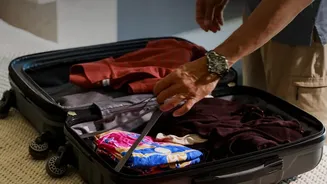
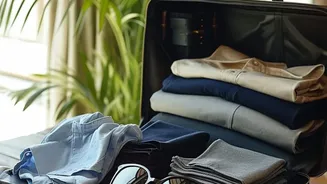
How you pack is as important as what you pack. Rolling your clothes instead of folding them not only saves a significant amount of space but also helps prevent deep-set wrinkles. For maximum efficiency, use packing cubes. These small bags allow you to compress and organize your clothing into categories: one for tops, one for bottoms and sweaters, one for underwear and socks. This compartmentalization makes it easy to find what you need without destroying your neatly packed bag. Always keep your rain jacket near the top of your carry-on for quick access. Consider adding a dedicated pouch for wet items, like a damp umbrella or a rain-soaked hat, to keep them from touching your dry clothes.
Your 4-Day Carry-On Checklist
Here is a sample list of what your rainy-day capsule could include: one waterproof outer jacket, one insulating mid-layer like a fleece or wool sweater, three to four base-layer tops (long or short-sleeved), two pairs of quick-dry trousers, one pair of waterproof boots or shoes (wear these on the plane to save space), one pair of comfortable indoor shoes, five pairs of wool or synthetic socks, and enough underwear for the trip. Accessories could include a warm hat, a scarf, and a compact umbrella. This curated collection provides enough variety for four days while easily fitting into a standard carry-on bag.