




Nature’s Frontline Defence
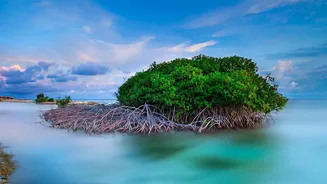
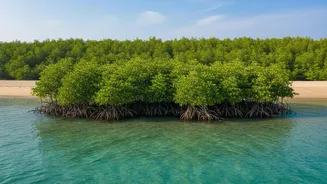
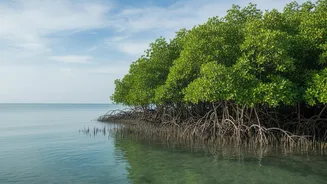
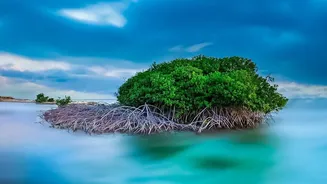
Mangrove forests are more than just coastal vegetation; they are complex ecosystems that serve as a living barrier, or 'bio-shield', against the sea. Their dense, tangled root systems are incredibly effective at dissipating wave energy, which can reduce
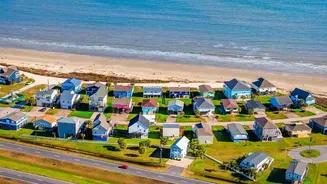
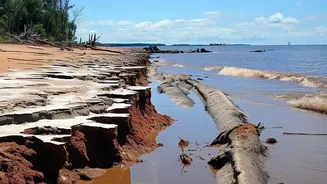
the impact of storm surges by 5 to 50 cm for every kilometre of forest width. This natural engineering holds soil in place, preventing the steady erosion that eats away at coastlines. Studies have shown that during cyclones, villages protected by wide mangrove belts suffer significantly fewer losses. The unique structure of mangrove roots and trunks creates a drag force that slows down water and traps sediment, gradually building up the land and protecting inland communities and agricultural fields.
Momentum from Policy and People
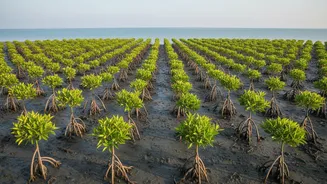
The renewed push for these green walls is being driven from the top down and the bottom up. The national 'Mangrove Initiative for Shoreline Habitats and Tangible Incomes' (MISHTI) scheme, launched in 2023, is a significant catalyst. It aims to restore approximately 540 square kilometres of mangroves across nine coastal states. On the ground, this translates into direct action. In Andhra Pradesh, officials recently announced that nearly 7,000 acres have been restored in the past two years, with plans for an additional 4,000 acres in 2026-27. In Odisha, community-led projects in areas like Balasore and Puri are transforming degraded lands into thriving mangrove forests, with women often taking the lead in planting and protection efforts.
More Than Just a Wall
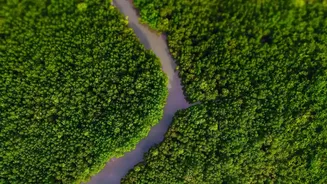
The benefits of mangrove bio-shields extend far beyond coastal protection. These projects are creating a 'mangrove-plus' economy that intertwines ecological health with financial stability for local populations. The restoration work itself provides green jobs, particularly for women and marginalised communities. Furthermore, healthy mangrove ecosystems are vital nurseries for fish, crabs, and prawns, which leads to increased catches and boosts the local 'blue economy'. They support immense biodiversity and are powerful carbon sinks, capturing and storing large amounts of carbon dioxide, which contributes to India's climate goals. This makes mangrove restoration a multi-faceted solution that addresses environmental, social, and economic challenges simultaneously.
The Roots of the Challenge
Despite the growing momentum, the path to restoring India's coastal shield is not without obstacles. Success is not just about planting saplings; it requires a deep understanding of local ecology. Using the right native species and ensuring the site's hydrology is correct are crucial for long-term survival. Many past efforts have failed due to a one-size-fits-all plantation approach rather than holistic ecological restoration. Consistent funding, long-term monitoring, and sustained community involvement are essential to ensure these newly planted forests mature and thrive. Experts stress that success shouldn't be measured by the number of hectares planted, but by survival rates and the recovery of the ecosystem's full functions.