







The Calorie Conundrum
On paper, running often appears to burn more calories in a shorter amount of time. For a given duration and a similar level of effort, running is a high-impact, weight-bearing activity that demands significant energy. Some estimates suggest a person running may
burn roughly 345 calories in 30 minutes, whereas swimming at a moderate pace might burn around 204 calories. However, these numbers don't tell the whole story. The intensity of your swim matters immensely. A vigorous swim session with specific intervals can burn calories at a rate comparable to a strong run. Furthermore, because swimming is a full-body workout that uses the natural resistance of water, it can sometimes be sustained for longer periods than high-impact running, potentially leading to a greater total calorie burn over the entire session.
Heart Rate and Perceived Exertion
Measuring intensity isn't just about calories; it's also about how hard your body feels it's working. Here, the two sports diverge in a fascinating way. Due to the horizontal body position and the cooling effect of the water, an athlete's maximum heart rate is typically lower while swimming than while running—often by about 10 to 15 beats per minute (bpm). This means you can't simply take your running heart rate zones and apply them to the pool; a heart rate of 150 bpm might feel like a tough effort in the water but only a moderate one on a run. This is where the Rate of Perceived Exertion (RPE) scale becomes useful. RPE measures how strenuous an activity feels to you on a scale of 0-10. Even if a swimmer's heart rate is lower, the RPE can be just as high as a runner's because of the full-body muscular recruitment and the effort of breathing.
Muscle Engagement and Joint Impact
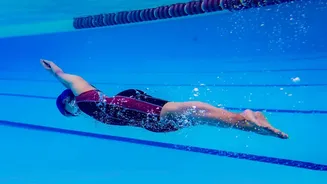
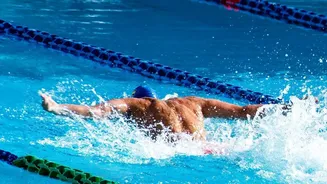
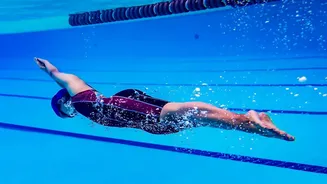
Running is a fantastic workout for the lower body, building powerful quadriceps, hamstrings, glutes, and calves. It's a high-impact activity, which means with every stride, your joints absorb forces equivalent to several times your body weight. This impact is beneficial for building bone density but can be a significant risk factor for injuries like stress fractures and shin splints. Swimming, by contrast, is a full-body workout with near-zero impact. The water's buoyancy supports your weight, making it incredibly gentle on joints, which is ideal for injury recovery or for individuals with arthritis. The resistance of the water engages muscles in your arms, shoulders, back, and core in a way that running does not, leading to a more balanced development of muscle tone across the entire body.
Defining Intensity for Your Goals
So, which exercise is more intense? The answer is that intensity is relative. If your goal is to achieve the highest possible heart rate and burn the most calories in the shortest window, high-intensity running is hard to beat. However, if you define intensity by the number of muscle groups engaged and the ability to sustain a challenging workout without stressing your joints, swimming takes the lead. For triathletes, RPE is a crucial metric, as the fatigue from the swim can affect performance on the bike and run that follow. Ultimately, the most effective and 'intense' workout is the one you can perform consistently and safely. Combining both running and swimming into your routine can offer the best of both worlds: the bone-density benefits of running and the low-impact, full-body conditioning of swimming.