


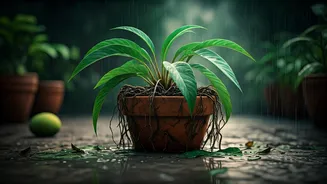



The Upside: How High Humidity Helps Plants
During the humid monsoon months, plants often look their most vibrant, and for good reason. High humidity in the air reduces the rate at which plants lose water through their leaves, a process called transpiration. This means they are less stressed about
hydration and can focus their energy on growth. Some plants can even absorb moisture directly from the atmosphere through their foliage. The rainwater itself is beneficial, as it is naturally soft, slightly acidic, and free from the salts and chemicals found in tap water. It also contains traces of nitrogen, a vital nutrient that acts as a natural fertiliser, encouraging lush, accelerated growth in many species.
The Downside: Common Monsoon-Related Problems
While humidity is beneficial, constant dampness combined with reduced sunlight creates an ideal breeding ground for problems. The biggest threats are fungal diseases like powdery mildew, downy mildew, leaf spot, and root rot. When the soil is perpetually waterlogged, it suffocates the roots, preventing them from absorbing oxygen and leading to decay. This environment is also perfect for pests such as aphids, mealybugs, slugs, and fungus gnats, which thrive in moist conditions and can weaken a plant's immunity.
Water Wisely: Adjust Your Schedule
Overwatering is the most common mistake gardeners make during the monsoon. With frequent rain and high humidity, the soil stays wet for much longer. It's crucial to adapt your watering routine. Before watering, always check the soil's moisture by sticking your finger about an inch deep. If it feels moist, wait another day or two before watering again. For potted plants, especially those on balconies, move them to a spot with partial shade to control their exposure to heavy downpours.
Improve Drainage to Prevent Root Rot
Good drainage is your first line of defence against root rot. Ensure every pot has drainage holes at the bottom so excess water can escape freely. A simple but effective trick is to elevate your pots on bricks or pot feet, which prevents them from sitting in stagnant water. When potting plants, use a well-draining soil mix; adding materials like coarse sand, perlite, or cocopeat can significantly improve aeration and prevent waterlogging. For garden beds, consider creating raised beds to keep plant roots above the soggiest ground.
Ensure Good Air Circulation
Stagnant, humid air around leaves is a major contributor to fungal infections. Improving air circulation is key to keeping foliage dry. Avoid overcrowding your plants; give them enough space to breathe. Regular pruning is also essential during this season. Trim away dead or decaying leaves and branches, and thin out any dense foliage to open up the plant's canopy. This allows air and light to penetrate, drying leaves faster after rain and reducing the risk of disease.
Stay Vigilant Against Pests and Diseases
Inspect your plants regularly, paying close attention to the undersides of leaves and the soil surface for any signs of trouble. Early detection is crucial. Common signs of fungal disease include white powdery patches, yellow or brown spots on leaves, or wilting. If you spot an issue, remove the affected leaves immediately to prevent it from spreading. As a preventive measure, you can spray a natural remedy like neem oil solution (about 5ml per litre of water) every 10-14 days.