






The Ruling That Reaffirmed Passenger Rights
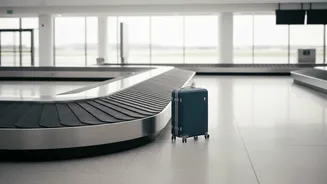
In a significant order dated July 22, 2026, a Kerala district consumer commission held an airline accountable for a three-day delay in delivering a passenger's luggage. The passenger, who had to purchase essential clothing worth ₹8,923 due to the delay,
was awarded a total of ₹53,923 in compensation and litigation costs. The commission noted that despite the passenger filing a Property Irregularity Report (PIR) at the airport and following up via email and the government's INGRAM portal, the airline failed to provide the mandated compensation. The court declared this failure a clear "deficiency in service," reinforcing that airlines cannot simply ignore their obligations under the Ministry of Civil Aviation's Passenger Charter.
Why Your Written Complaint Is Your Strongest Ally
The Kerala ruling is a textbook example of why a verbal complaint is never enough. The passenger’s success was built on a foundation of documented evidence. From the initial PIR filed at the airport to subsequent emails and official portal complaints, each step created a non-refutable timeline of events and the airline's inaction. This paper trail becomes crucial if you need to escalate your case. Without a formal record, your claim can be dismissed as a "he said, she said" situation. A written complaint transforms your grievance from a temporary issue into an official record that the airline is legally obligated to address.
Step 1: The Golden Hour at the Airport
The moment you realise your bag is missing, delayed, or damaged, do not leave the baggage claim area. Your first, most critical action is to locate the airline's baggage service counter and file a Property Irregularity Report (PIR). This document is the official starting point for any baggage claim. The Directorate General of Civil Aviation (DGCA) and international conventions consider the PIR essential. Without it, an airline can argue that the baggage issue did not occur while the bag was in its care. Get a copy of the PIR and keep it safe, along with your boarding pass and baggage tags; you will need the reference number for all future correspondence.
Step 2: The Formal Follow-Up
The PIR is just the beginning. Follow up within a day or two with a formal written complaint via email to the airline's customer service and, if possible, their designated Nodal Officer. Your email should be polite, professional, and factual. Include your full name, flight details, booking reference (PNR), and the PIR number. Clearly state the problem (delayed baggage), the consequences (e.g., had to buy essential items), and what you expect (reimbursement for purchases and compensation for the delay). Attach scanned copies of your PIR, baggage tags, boarding pass, and receipts for any essential items you had to purchase. This creates another layer of documented proof.
Know Your Rights on Compensation
Airlines are liable to compensate you for delayed baggage. For domestic flights in India, the liability is limited to ₹20,000, according to the DGCA's Passenger Charter. For international flights, the Montreal Convention applies, with a liability cap of approximately 1,519 Special Drawing Rights (SDR), which translates to roughly ₹1.72 lakh. It is important to note this is a liability limit, not an automatic payout. The airline will typically reimburse reasonable and essential purchases made during the delay, so keeping receipts is vital.
When the Airline Stays Silent: Escalation
If the airline is unresponsive or refuses your legitimate claim, you have a clear path for escalation. First, write to the airline's designated Appellate Authority, a senior official meant to handle unresolved complaints. If that fails, the next step is to file a grievance on the government's AirSewa portal (airsewa.gov.in). As seen in the Kerala case, complaints filed through official government channels carry significant weight. Your final recourse is to file a case with the District Consumer Disputes Redressal Commission, which can be done online through the E-Daakhil portal.