


Scanning the Skies for Threats
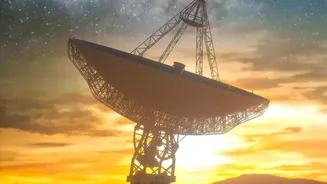
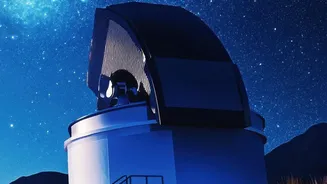
The first step in planetary defense is simply finding the asteroids. Astronomers use powerful ground-based and space telescopes to take multiple pictures of the same patch of sky minutes apart. While stars and galaxies remain fixed, an asteroid will appear
as a moving speck of light. Computer systems automatically flag these moving objects and check them against a database of known bodies. Organizations like NASA's Planetary Defense Coordination Office (PDCO) and the European Space Agency (ESA) then coordinate follow-up observations to calculate the object's path. This global network of observatories, including projects like the Catalina Sky Survey and Pan-STARRS, works to catalogue and track as many objects as possible.
Size: From Fireballs to Extinction Events
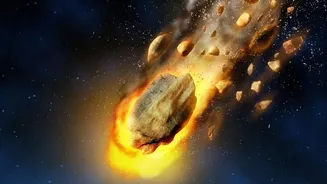
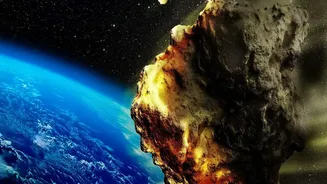
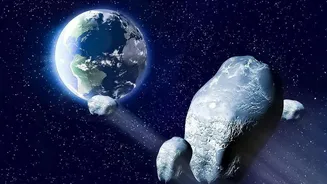
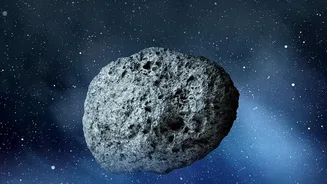
When it comes to an asteroid's potential for destruction, size is the most intuitive factor. The daily bombardment of Earth by dust and sand-sized particles goes unnoticed, and even car-sized asteroids typically burn up harmlessly in the atmosphere. However, an object just 25 meters across can survive entry and cause significant local damage, as seen with the Chelyabinsk meteor in 2013, which injured hundreds. An asteroid 100 to 140 meters in diameter could devastate a city. Anything over a kilometre wide is considered a potential civilization-ending threat, capable of causing worldwide effects like an impact winter, similar to the 10-kilometre asteroid that led to the extinction of the dinosaurs.
Speed: The Energy of Impact
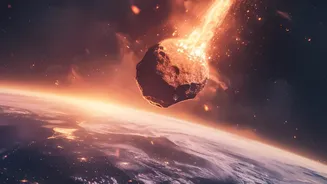
An asteroid's velocity is a crucial component of its destructive potential. The energy released upon impact isn't just about mass; it's about kinetic energy, which increases with the square of the velocity. This means that doubling an asteroid's speed quadruples its impact energy. The minimum speed an asteroid will hit Earth is about 11 kilometres per second, a result of our planet's own gravity. However, most impacts occur at hypervelocities between 15 and 30 km/s. A head-on collision with an asteroid moving in the opposite direction of Earth's orbit could result in an impact speed exceeding 70 km/s. At these incredible speeds, even a relatively small asteroid can release energy comparable to a nuclear explosion.
Direction: The Ultimate Deciding Factor
An asteroid can be enormous and travelling at blistering speeds, but if its orbital path doesn't intersect with Earth's, it poses no threat. This is why determining an object's trajectory is the most critical part of risk assessment. After initial detection, astronomers make further observations to refine an object's orbit and predict its future path. Agencies like the Center for Near-Earth Object Studies (CNEOS) continuously update these orbits as new data comes in. This process can rule out a threat, as was the case with the asteroid Apophis, which was once considered a significant risk but is now known to be safe for at least the next 100 years. However, some asteroids are harder to spot, especially those that approach from the direction of the Sun, which is why missions like the upcoming NEO Surveyor space telescope are designed to look for them in infrared light.
Assessing the Overall Risk
Scientists combine size, speed, and trajectory to calculate an asteroid's overall risk. Tools like the Torino Scale provide a rating from 0 to 10 to communicate the threat level to the public in an understandable way. A rating of 0 means no risk, while a 10 signifies a certain collision with global consequences. Thankfully, nearly all known asteroids are a 0. While astronomers believe they have found over 90% of the kilometre-sized 'civilisation killers,' the hunt is still on for smaller but still dangerous objects. Meanwhile, missions like NASA's Double Asteroid Redirection Test (DART), which successfully altered an asteroid's path in 2022, prove that with enough warning, we have the technology to defend our planet.