
The Golden Rules of Vrat Ka Khana
Navratri fasting, or 'vrat', is a practice of spiritual and physical purification. The diet, known as 'vrat ka khana' or 'phalahari' food, typically excludes grains like wheat and rice, lentils, onions, garlic, and regular table salt. Instead, the focus
shifts to a specific list of ingredients that are considered 'sattvic' or pure. This includes pseudo-grains like buckwheat flour (kuttu ka atta), water chestnut flour (singhare ka atta), and amaranth (rajgira). Barnyard millet (samak ke chawal) often serves as a rice substitute. Rock salt (sendha namak) is used for seasoning, and potatoes, sweet potatoes, pumpkin, and bottle gourd are among the permitted vegetables. This limited pantry, however, doesn't limit creativity; it inspires it.
Northern India: Hearty and Wholesome
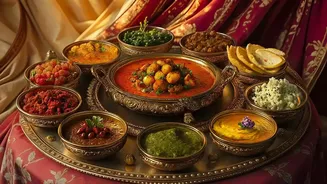
In North India, Navratri fasting is often strict, adhering closely to the grain-free diet. The cooler climate influences a menu of comforting and energy-giving dishes. Kuttu ki puri, a deep-fried bread made from buckwheat flour and often mixed with mashed potatoes, is a staple. It’s typically paired with a simple yet flavourful potato curry, Vrat Wale Aloo Rasedar, made with tomatoes and seasoned with rock salt and black pepper. Other popular dishes include Singhare ka Halwa, a sweet pudding made from water chestnut flour, and Samak ki Khichdi, a light but filling dish made from barnyard millet, often tempered with cumin and green chillies. These meals are designed to be both satisfying and compliant with vrat rules.
Western India: The Reign of Sabudana
Travel west to states like Maharashtra and Gujarat, and sabudana (tapioca pearls) becomes the undisputed star of the Navratri menu. Sabudana Khichdi is a breakfast favourite, a delightful mix of soaked sabudana, roasted peanuts, potatoes, and mild spices. Another beloved snack is the Sabudana Vada, a crispy, deep-fried patty that is crunchy on the outside and soft inside, perfect with a cooling yogurt dip. In Gujarat, barnyard millet, known as moraiyo or samo, is used to make a savory porridge-like dish. Amaranth flour (rajgira) is also widely used to make puris and a sweet, dense sheera (halwa), providing a different flavour profile to the fasting plate.
Southern India: A Different Tradition
In South India, the approach to Navratri food is distinct. While some observe fasts, the more prominent tradition, especially in Tamil Nadu, is the 'Golu'—an elaborate display of dolls. Here, the focus is less on abstaining from all grains and more on preparing 'sattvic' food without onion or garlic. A special offering, or 'prasadam', is prepared each of the nine evenings. This is most famously 'sundal', a simple and protein-rich dish made from different boiled legumes like chickpeas, black-eyed peas, or green gram, tempered with mustard seeds, curry leaves, and fresh coconut. While grains might be avoided by some, rice-based dishes like sweet Pongal and tamarind rice (Puliyogare) are also common offerings.
Sweets and Snacks: The Festive Treats
No festival in India is complete without its share of sweets and snacks, and Navratri is no exception. Makhana (fox nuts) are a versatile snack, either roasted in ghee with rock salt and pepper or turned into a creamy Makhana Kheer. Sweet potato, or shakarkandi, is roasted and served as a chaat with lemon juice and spices, or transformed into a rich kheer. Fruits are, of course, a fasting staple, often enjoyed as a refreshing fruit chaat. These treats provide quick bursts of energy and add a festive touch to the nine-day observance, ensuring that fasting is a period of joyful, mindful eating rather than deprivation.