
First, Find Your Stage
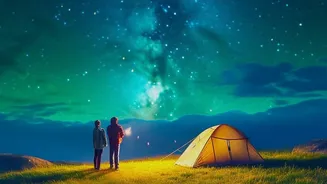
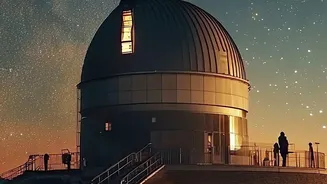
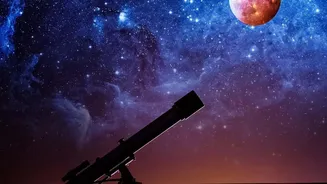
The first step for any great night of stargazing is preparation. The biggest challenge for most observers in India is light pollution. To truly appreciate the cosmos, try to find a location away from the bright lights of major cities. This could be a nearby
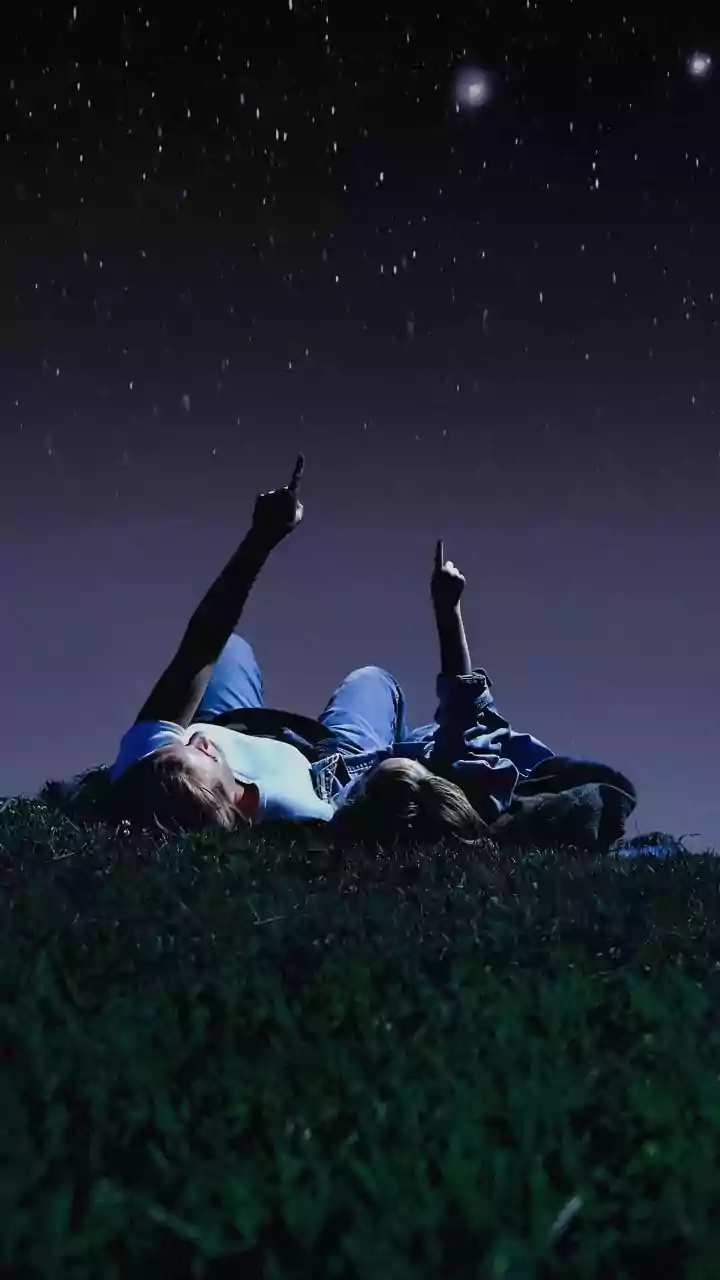
park, a rural area, or even a high-altitude destination. As the monsoon season retreats, many parts of the country will experience clearer, more stable skies. Give your eyes at least 20 minutes to fully adapt to the darkness; this will help you spot fainter objects. While most of September's highlights are visible to the naked eye, a pair of binoculars can dramatically enhance your view, revealing details on the Moon and bringing dimmer star clusters to life. Stargazing apps for your smartphone can also act as an indispensable guide, helping you identify planets and constellations in real-time.
Venus: The Unmissable Evening Star
This September, the planet Venus will be the undisputed queen of the evening sky. Throughout the month, it will appear as a brilliant, unmissable beacon in the west shortly after sunset. Its brightness will culminate on September 22, when it reaches its peak magnitude for the entire year. On this night, it will shine with a dazzling intensity that sets it apart from any star. What's fascinating is that if you were to look at Venus through a telescope around this time, you would see it as a slender crescent, similar to the Moon. It is brightest not when its face is fully lit, but when its proximity to Earth combines with its phase to maximise its apparent size and brilliance. Don’t miss the stunning sight of a crescent Moon passing close to Venus on September 14, an event visible across much of Asia.
The Autumnal Equinox Signals a Change
More of a celestial milestone than a visual event, the autumnal equinox is nevertheless a key moment for skywatchers. On September 23 at 5:35 AM IST, the Sun will shine directly over the Earth's equator. This event marks the official start of autumn in the Northern Hemisphere. For observers, the significance is twofold. First, it's a day of balance, with the length of day and night being nearly equal across the globe. Second, and more practically, it signals the beginning of longer nights ahead, providing more time for stargazing as we move into the cooler, often clearer months of the year. This transition is a welcome change for astronomers and casual observers alike, promising more opportunities to explore the night sky.
The Glow of the Harvest Moon
September’s grand finale is the celebrated Harvest Moon, which reaches its full phase on September 26. This is the full moon that occurs closest to the autumnal equinox. Historically, its bright light provided farmers with extra hours of illumination to bring in their crops before the first frost. What makes the Harvest Moon special is a unique astronomical quirk: for several evenings around the full moon, it rises at nearly the same time—only about 30 minutes later each night, instead of the usual 50. This results in a string of bright, moonlit evenings. Look for it rising in the east around sunset, appearing large and golden on the horizon. The nights of September 25, 26, and 27 will all offer a spectacular view of the full-looking lunar disk.
A Challenge for Telescope Owners
While most of the month's events are easily seen, September 26 offers a treat for those with more powerful equipment. On the same night as the Harvest Moon, the distant planet Neptune will be at opposition. This means Earth will be directly between Neptune and the Sun, placing the ice giant at its closest and brightest point for the year. Even at its best, Neptune is too faint to be seen with the naked eye. You will need a good pair of binoculars, or preferably a telescope, to spot its tiny, blue-tinted disk. It will be visible all night long, appearing in the constellation Pisces, not far from the bright full moon. Finding it can be a rewarding challenge that highlights the vastness of our solar system.