




The Universe’s Great Cities
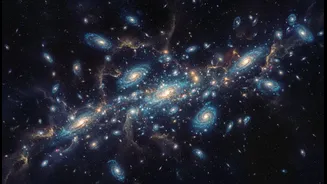
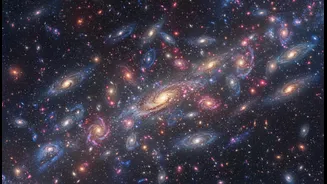
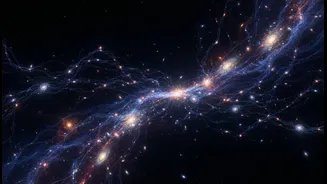
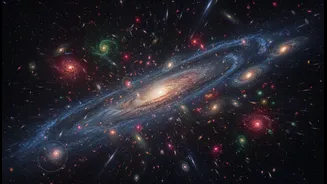
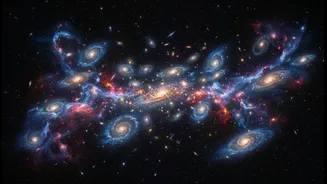
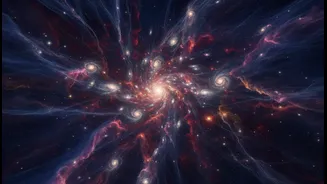
Imagine looking at a map of the universe. It isn’t a random scattering of stars; it’s a grand, web-like structure. The brightest, densest nodes in this cosmic web are galaxy clusters — massive collections of hundreds or even thousands of galaxies, all
bound together by gravity. These clusters are the universe’s most enormous and stable structures, containing not just galaxies but also vast oceans of hot gas and huge amounts of unseen dark matter. Our own Milky Way is part of a smaller gathering called the Local Group, but it sits on the outskirts of the much larger Virgo Supercluster. In a very real sense, these clusters are the 'cities' of the cosmos, and understanding how they were built is key to understanding the universe itself.
A Cosmic Timing Problem
For years, astronomers faced a major puzzle. According to long-held theories, building something as massive as a galaxy cluster should take a very long time. The idea was that smaller clumps of matter slowly came together over billions of years, a process called the 'bottom-up' model. This made sense, but it also created a problem. Observations of the distant universe, which is like looking back in time, kept finding massive, well-developed clusters that were already in place when the universe was surprisingly young—just a few billion years after the Big Bang. How did these cosmic giants grow so big, so fast? It was as if a modern metropolis had sprung up in just a few years. It defied the known rules of cosmic construction.
A Glimpse into the Cosmic Dawn
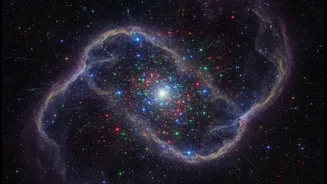
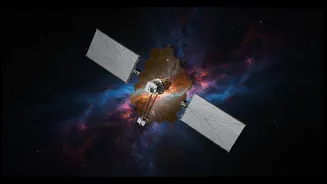
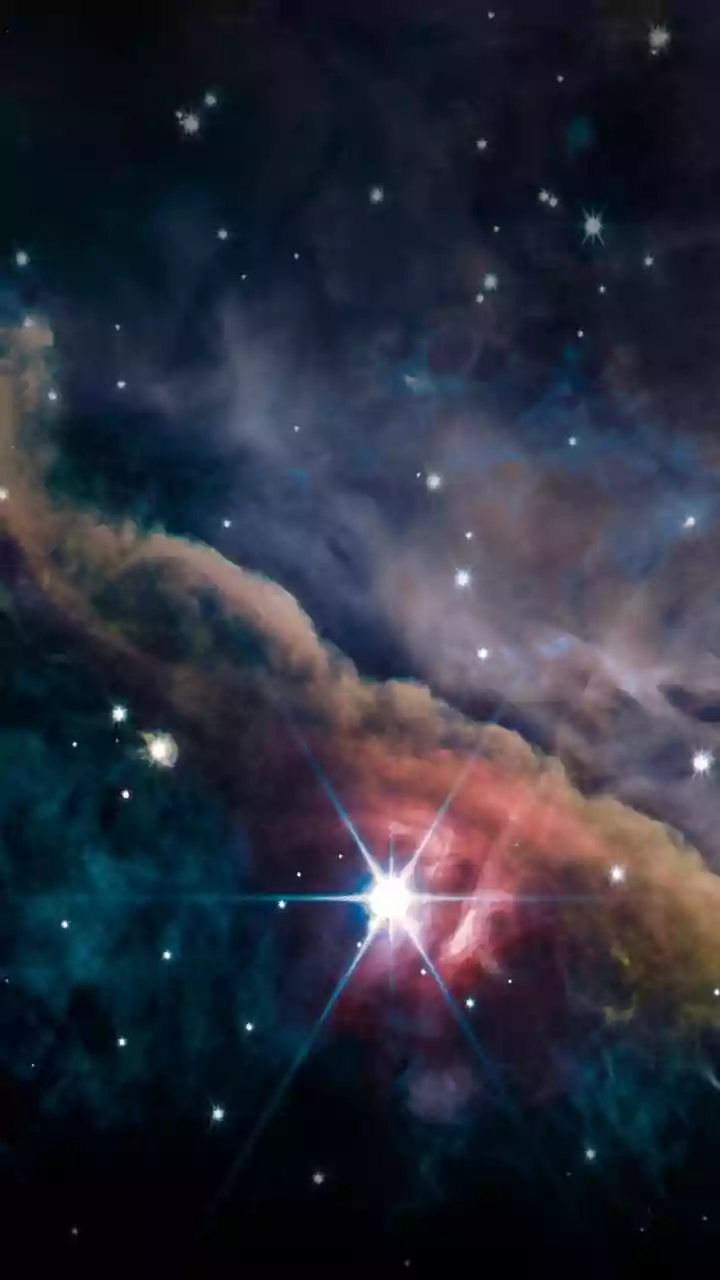
Enter the James Webb Space Telescope (JWST). With its unprecedented ability to peer into the infrared spectrum, it can see the faint light from the universe's earliest epochs. Recently, astronomers using JWST have been studying 'protoclusters'—the term for galaxy clusters in their infancy. One recent study of a protocluster called XLSSC 122, seen as it was just 3.4 billion years after the Big Bang, revealed a structure so massive and concentrated that it looked like a cluster from the nearby, modern universe. Another observation found a dense gathering of at least six galaxies in the process of merging when the universe was even younger, about 1.5 billion years old. These aren't just random collections; they are active, bustling construction sites where galaxies are coming together far more rapidly and violently than previously thought.
Making Sense of 13 Billion Years
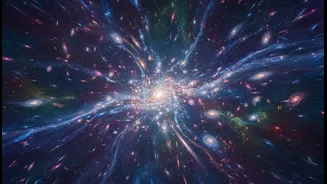
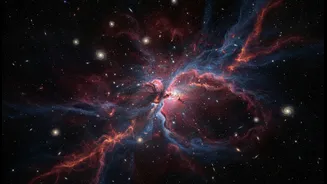
This is where 'deep time' begins to click. The new JWST observations are showing that the early universe wasn't a slow, quiet place. In certain dense regions of the cosmic web, the process of cluster formation was incredibly efficient and accelerated. Instead of a slow trickle of galaxies coming together, these protoclusters appear to be chaotic hubs of activity, with galaxies merging and growing at a furious pace, fueled by rivers of gas flowing along cosmic filaments. The discovery of such advanced structures so early on forces scientists to revise their models. It suggests that the seeds of these giant clusters were planted very early, and their growth was kick-started in a way that models are only now beginning to accommodate. The picture is shifting from slow, steady growth to one of rapid, dramatic assembly in crowded cosmic neighbourhoods.
From Distant Galaxies to Us
While these events happened billions of light-years away and billions of years ago, they are part of our own origin story. The elements in our bodies, the iron in our blood—it was all forged in stars. And the formation of galaxies and galaxy clusters created the very environments where stars could form in such abundance. By observing these young clusters, we are essentially watching the assembly of the universe's first great stellar nurseries. Each new discovery by telescopes like the JWST not only refines our scientific models but also deepens our connection to the cosmos. It’s a powerful reminder that the human drive to understand where we come from is capable of reaching across billions of years to witness the birth of the universe's most magnificent structures.