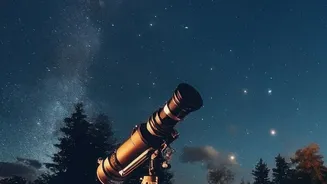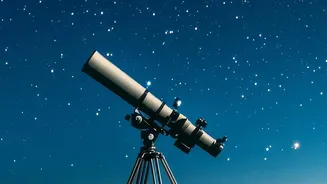




The Science of a Sharper Sky
The primary reason winter skies are so clear is simple: cold air cannot hold as much moisture as warm air. During India's hot and humid months, the atmosphere is laden with water vapour. This vapour acts like a soft-focus filter, scattering faint starlight
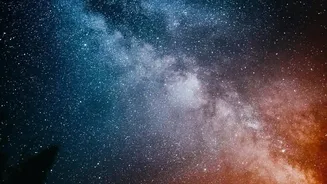
and creating a subtle haze that washes out the deep blackness of space. In winter, the drier air means there are fewer water molecules to get in the way of light travelling from distant stars and galaxies. This results in what astronomers call better 'transparency,' allowing you to see fainter objects and appreciate the true contrast between the pinpricks of light and the dark canvas behind them.
Less Twinkle, More Clarity
A star's twinkle might be poetic, but for astronomers, it is a sign of a turbulent atmosphere. This twinkling, known as 'scintillation', is caused by moving pockets of air at different temperatures and densities, which bend and distort the light as it passes through. During winter, especially on calm nights, the atmosphere is often more stable. The cooler ground reduces the rising heat currents that cause much of this atmospheric churning in summer. This steadier 'seeing' means stars appear as sharp, concentrated points of light rather than shimmering blobs, making it easier to resolve fine details on planets or distinguish between close double stars.
Your Winter Celestial Itinerary
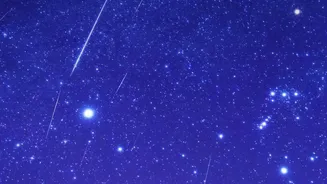
The winter sky over India is a treasure trove of celestial wonders. The most dominant constellation is Orion, the Great Hunter, easily recognisable by the three bright stars in his belt. Following Orion is his faithful companion, Canis Major, which contains Sirius, the brightest star in the night sky. Look for the V-shaped face of Taurus the Bull, marked by the fiery red eye of the star Aldebaran, and the beautiful star cluster known as the Pleiades, or Seven Sisters. These constellations, along with Gemini and Auriga, form the backbone of the winter sky and are magnificent sights even with the naked eye.
India’s Premier Dark-Sky Havens
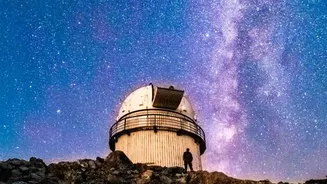
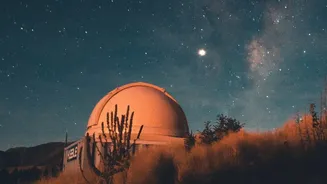
To truly experience the magic of the winter sky, you need to escape the light pollution of the cities. India is home to several outstanding locations for stargazing. The ultimate destination is the Hanle Dark Sky Reserve in Ladakh, located at a high altitude with exceptionally clear and dark skies, making it home to the Indian Astronomical Observatory. Getting there is an adventure, but the views are unparalleled. For more accessible options, consider Coorg in Karnataka, where coffee estate stays offer dark grounds away from city lights. The Rann of Kutch in Gujarat provides a unique, flat horizon under a vast sky, while places like Munsiyari in Uttarakhand and parts of Spiti Valley also offer pristine conditions, especially from October to March.
Gearing Up for a Cold Night Out
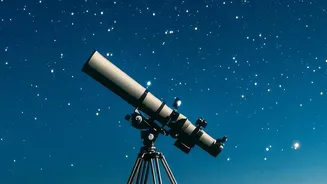
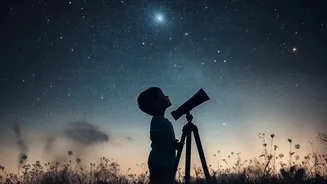
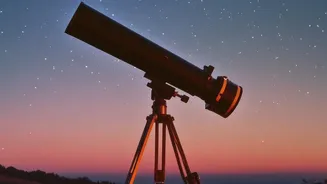
The secret to a successful winter stargazing session is staying warm and comfortable. The same cold air that clears the skies can quickly cut your night short if you are not prepared. Dress in multiple layers, starting with a thermal base layer and adding fleece or wool mid-layers, topped with a windproof and waterproof outer jacket. Do not forget insulated trousers, warm socks, gloves, a beanie, and a scarf. A flask of a warm beverage like tea or hot chocolate is a welcome companion. Also, allow your eyes at least 20 minutes to adapt to the dark to see the faintest stars. Use a red-light torch to read charts or adjust equipment, as red light is less likely to spoil your night vision.