





You settle into your seat on a long-distance express train, the anticipation of the journey ahead matched only by your hunger. The meal arrives, but as you take the first bite, something feels… off. It’s not bad, just not what you expected.
The Wall of Sound
One of the
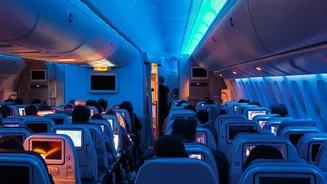
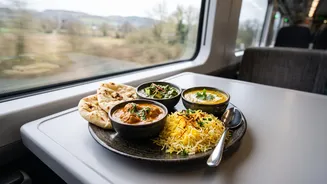
biggest culprits behind your muted meal is noise. A train cabin is a symphony of sounds: the rhythmic clatter of the wheels on the tracks, the hum of the air conditioning, the murmur of fellow passengers, and periodic announcements. This constant background noise, often reaching levels of 85 decibels, is more than just a minor distraction; it actively changes your perception of taste. Research has consistently shown that loud, broadband noise suppresses our ability to perceive sweet and salty flavours. It’s as if the noise is hogging your brain's attention, leaving fewer resources to process the signals coming from your tongue. This is why a sweet lassi might seem less satisfying and a savoury curry might feel like it's missing its usual punch.
The Umami Exception
Interestingly, not all tastes are dampened by the racket. While sweetness and saltiness take a hit, the perception of umami—the rich, savoury flavour found in tomatoes, mushrooms, and soy sauce—is often enhanced by loud noise. This might explain why dishes with a strong savoury base, like a rich tomato soup or a hearty dal, can sometimes taste surprisingly robust and satisfying on a train journey. This phenomenon, known as cross-modal correspondence, reveals how our senses are deeply interconnected. The auditory information from the engine's roar is literally changing the flavour profile on your plate. There’s even a neurological basis for this: branches of the facial nerve that process taste actually pass through the ear on their way to the brain, suggesting a hardwired link between what we hear and what we taste.
Motion and Distraction
Beyond sound, the constant motion of a train plays a subtle role. The gentle (and sometimes not-so-gentle) rocking and vibrations can be mildly disorienting. This constant vestibular stimulation, combined with the visual blur of the landscape speeding by, creates a multisensory environment that is far from the stability of a restaurant. Your brain is busy processing this movement, which can detract from the focus required for a full flavour experience. Eating becomes a more functional, less mindful activity. In a relaxed dining setting, your senses are centred on the plate. On a train, your senses are split between the meal and the journey itself. This division of attention means you're less likely to savour the complex aromas and textures of your food.
The Psychology of the Journey
Our state of mind and expectations have a tremendous impact on taste. A meal in a restaurant is an event. We anticipate it, we're in a relaxed mood, and the entire environment—from the lighting to the plating—is designed to enhance enjoyment. On a train, the context is entirely different. Food is often seen as fuel for the journey rather than a destination in itself. The meal might be served in a functional plastic tray, routines are disrupted, and the experience is hurried. This psychological framing prepares us for a functional meal, not a flavourful feast. The social context also matters; we often perceive food as tasting better when eaten in an enjoyable group setting, a relaxed atmosphere that is hard to replicate in the transient community of a train compartment.
Air, Aroma, and Preparation
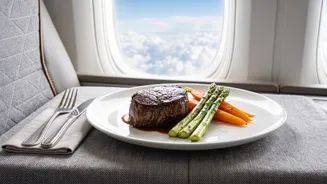
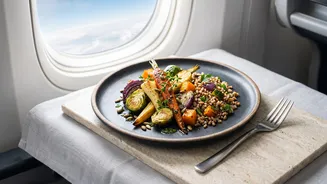
Finally, the very air inside a train carriage affects what you smell, and smell accounts for up to 80% of what we perceive as flavour. The confined space and air-conditioning can alter humidity and circulate a mixture of scents, from cleaning products to the food of other passengers, creating an olfactory background noise that competes with your own meal. Furthermore, the food served on trains is often designed for mass catering, reheating, and stability over long periods. While caterers do their best, a meal cooked to order in a restaurant kitchen with fresh ingredients will almost always have a more vibrant texture and flavour profile than one that has been prepared hours in advance.