





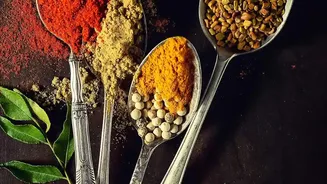

Turmeric: The Golden Healer
A staple in every Indian kitchen, turmeric (haldi) becomes even more crucial during the monsoon. Its power comes from curcumin, a compound with potent anti-inflammatory and antiseptic properties. During a season when infections are common due to increased
humidity, turmeric helps bolster your body's natural defences. A little extra in your daily dal, sabzi, or a warm glass of haldi doodh before bed can help keep seasonal colds and flu at bay. For maximum benefit, always pair it with a pinch of black pepper, which enhances curcumin absorption.
Ginger: A Warming Digestive Aid
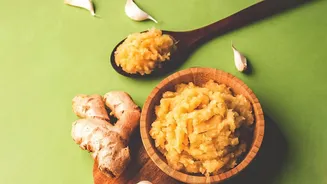
That cup of adrak chai is more than just a comforting ritual; it's a health booster. Ginger is a warming spice that stimulates digestion, which tends to be sluggish during the damp monsoon months. The active compound, gingerol, has powerful antioxidant and anti-inflammatory effects that can soothe an upset stomach and relieve a sore throat. Adding freshly grated ginger to soups, curries, or simply sipping on warm ginger water can help kindle your digestive fire (Agni) and keep you feeling light and energetic.
Garlic: Nature's Antibiotic
Garlic is highly valued for its natural antibacterial and antiviral capabilities. Crushing it releases a compound called allicin, which actively helps the body fight off germs. This makes it particularly effective against the waterborne illnesses that can spike during the rainy season. Incorporating more garlic into your daily cooking—whether in tadkas, chutneys, or soups—can help boost the activity of your white blood cells, which are your body's first line of defence against infection.
Seasonal Gourds: Light and Easy to Digest
Ayurveda recommends eating vegetables that are light and easy on the stomach during the monsoon, and gourds fit the bill perfectly. Vegetables like bottle gourd (lauki), ridge gourd (turai), and bitter gourd (karela) are not only in season but are also packed with essential nutrients and dietary fibre. They help maintain a healthy digestive tract and prevent issues like bloating and acidity. While karela’s bitterness might be an acquired taste, its strong antiviral and antibacterial properties make it a monsoon champion for cleansing the system.
Moong Dal: The Protein Powerhouse
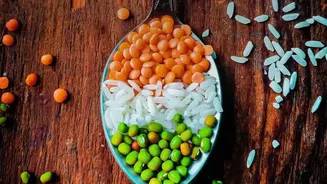
When your digestion feels weak, moong dal is one of the most recommended foods. It is incredibly light, easy to digest, and provides high-quality plant-based protein without feeling heavy on the gut. This makes it an ideal food for the season. A simple bowl of moong dal or a wholesome khichdi is often considered the perfect monsoon meal in both Ayurveda and modern nutrition. It’s nourishing, comforting, and gives your digestive system a much-needed break.
Black Pepper: The Bioavailability Booster
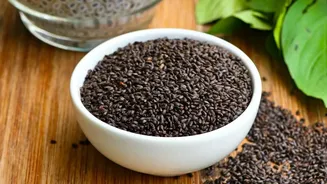
Often used alongside turmeric, black pepper (kali mirch) is a potent spice in its own right. It is known to enhance digestion and promote gut health. Beyond that, its key compound, piperine, significantly increases the absorption of nutrients from other foods, including the curcumin in turmeric. A pinch of black pepper in your soups, salads, or even your tea can help combat colds and respiratory issues, which are common during this time.
Amla: The Vitamin C Shot
The Indian gooseberry, or amla, is one of the most concentrated sources of Vitamin C, containing significantly more than an orange. This vitamin is crucial for the production of white blood cells, which fight infection. With immunity generally weaker during the monsoon, incorporating amla can be highly beneficial. You can have it as a juice shot, in a chutney, or as a murabba. Its powerful antioxidant properties also help protect the body from damage caused by stress and illness.