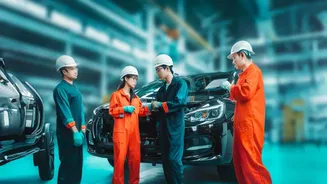








IT: From System Maintenance to AI Orchestration
The traditional IT department, once focused on maintaining servers and troubleshooting network issues, is undergoing a profound evolution. AI is automating many of the routine, repetitive tasks that once consumed much of an IT professional's day. System
monitoring, basic diagnostics, and even some cybersecurity alerts are now handled by intelligent algorithms. This automation doesn't make IT roles obsolete; it elevates them. The focus is shifting from hands-on execution to strategic oversight. Today's valuable IT professionals are those who can design, implement, and manage complex AI systems. Their work involves ensuring data quality for machine learning models, governing AI usage ethically, and orchestrating how different AI tools integrate into the company's technology stack. The role is becoming less about fixing what's broken and more about building and refining the intelligent systems that power the business.
Marketing: Data-Driven Strategy Over Manual Execution
In marketing, AI has moved from a niche tool to a core component of the modern strategy. AI-powered platforms can now generate content drafts, optimize ad spending in real-time, and deliver hyper-personalized customer experiences at a scale previously unimaginable. This has led to a significant change in the marketer's daily responsibilities. Tasks like manual A/B testing, scheduling social media posts, and basic campaign reporting are increasingly automated. As a result, companies are hiring for strategic judgment rather than pure execution. The most sought-after marketers are those who can interpret the vast amounts of data generated by AI tools, derive actionable insights, and build creative campaign strategies that AI can then help execute. They are the human strategists guiding the AI, focusing on brand narrative, customer journey mapping, and aligning marketing efforts with larger business goals.
The Rise of the AI-Augmented Professional
The emerging consensus is that AI is not a replacement for human workers but an augmentation tool. The most successful professionals will be those who learn to work alongside AI, leveraging its power to enhance their own abilities. This human-AI collaboration requires a new set of skills. We're seeing the rise of roles like 'AI-Augmented Software Engineer' and a growing demand for skills across all sectors. Professionals are no longer valued just for the volume of their output, which AI can easily replicate, but for their judgment, adaptability, and critical thinking. In this new paradigm, an employee's value lies in their ability to ask the right questions, identify the weaknesses in an AI-generated draft, and apply human creativity to solve complex problems that go beyond pattern recognition.
Upskilling: The New Career Imperative in India
This global trend is particularly potent in India, which is experiencing an AI training boom. Recognizing the shift, professionals at all career stages are actively seeking to upskill. A 2026 study noted that over 40% of enrolments in AI programs came from senior professionals with more than 15 years of experience, highlighting that this is a mainstream career requirement, not a niche for tech newcomers. The demand is not just for technical skills like machine learning or data science. So-called 'soft skills' are becoming critically important. These include AI literacy, critical thinking, clear communication, and ethical judgment. Government initiatives like the Skill India Mission and PMKVY 4.0 are also integrating AI training to prepare the workforce. These programs aim to build a national framework for AI skilling, ensuring that the workforce can adapt to and thrive in an AI-driven economy.