




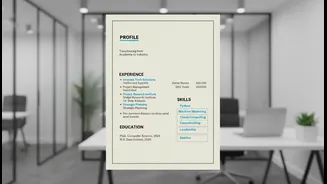




The Great Translation Challenge
An academic CV is designed to showcase scholarly expertise and is a comprehensive record of your research, publications, and teaching history. In the corporate world, however, a resume is a marketing document, often scanned in under 10 seconds. Recruiters
are not looking for a complete history; they are looking for a direct solution to their company's needs. The jargon, length, and focus of a standard academic CV can obscure the valuable skills a candidate possesses. The first step is to accept that you are not just editing your CV—you are creating a new, targeted document that speaks the language of impact.
Lead With Outcomes, Not Process
Industry hiring managers care less about the niche topic of your research and more about what you achieved. Your resume needs to shift from describing your duties to highlighting your accomplishments. Every bullet point should answer the question, "What changed because of my work?" Quantify your achievements whenever possible. Instead of stating you "conducted research on X," reframe it as, "Developed a new analytical method that reduced data processing time by 30%." Think in terms of money saved, efficiency gained, or problems solved. Grant writing, for example, isn't just an academic task; it's evidence of persuasive communication and securing funding. This change in framing demonstrates your potential business value immediately.
Translate Your Academic Skills
You have a warehouse of skills that are highly valuable in a corporate setting, but they need to be relabeled. Skills like "teaching" and "research" are too broad. Break them down into industry-friendly terms. Teaching experience demonstrates public speaking, the ability to explain complex topics clearly, and stakeholder engagement. Your research experience is not just about your thesis; it's about project management, data analysis, critical thinking, and problem-solving. Create a skill inventory by listing your academic activities and then translating each into a business-relevant competency. For example, a literature review is akin to market research, and managing a lab project is a form of project and budget management.
Frame Yourself as a Problem-Solver
Companies hire people to solve problems. Your resume should position you as a capable and effective problem-solver. A powerful tool for this is the STAR method (Situation, Task, Action, Result). For each major project or accomplishment on your resume, structure it as a mini-story. Briefly describe the situation or challenge, explain the task you were assigned, detail the specific actions you took, and, most importantly, state the positive result. For example, instead of a vague bullet point, a STAR-framed point might read: "Led a three-year research project (Situation/Task) by managing a cross-functional team of five (Action), resulting in findings that contributed to a patent application and secured a new round of funding (Result)." This structure makes your contributions concrete and impactful.
Putting It All Together
Once you have reframed your content, the final step is a new format. An industry resume should be concise, ideally one to two pages long. It should start with a strong professional summary—a short, three-to-five sentence paragraph that outlines your key skills and career goals, tailored to the job you want. Use a clean, easy-to-read, reverse-chronological format. Remove long lists of publications unless a few are highly relevant to the role, in which case you can create a small, curated section. Remember to incorporate keywords from the job description throughout your resume to pass through Applicant Tracking Systems (ATS), which many companies use for initial screening.