




Meet Nature's Tiny Sponges
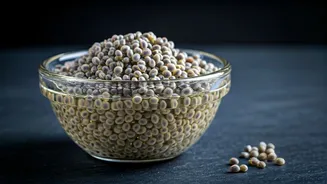
Sweet basil seeds, known across India as sabja, are the tiny black seeds of the sweet basil plant, Ocimum basilicum. Often mistaken for chia seeds, they are a distinct ingredient with a long history in Ayurvedic medicine and Indian cuisine. When you look
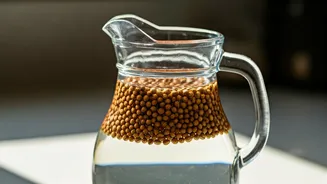
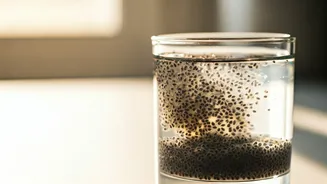
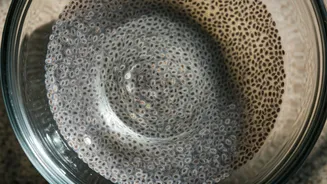
at them dry, they are small, black, and unassuming. But their magic begins the moment they touch water. Within minutes, they absorb liquid and swell up, forming a gelatinous, translucent coat around a crunchy black centre. This unique ability to absorb water is the key to their famed properties. You’ve likely seen them suspended in drinks like falooda or sherbet, where they add a delightful texture and are believed to impart a cooling effect.
Decoding 'Gut Cooling'
The term 'gut cooling' is rooted in traditional wellness systems like Ayurveda, which classify foods as 'heating' or 'cooling' based on their effect on the body's metabolism and internal balance, not their physical temperature. Sabja seeds are considered a premier 'cooling' ingredient. While modern science doesn't use this exact terminology, the principle aligns with tangible benefits. The high soluble fibre content in soaked sabja seeds forms a gel-like substance that can soothe the digestive tract. This gel adds bulk, which can aid in regular bowel movements and help alleviate discomfort from acidity. Furthermore, because they absorb so much water, consuming them is an excellent way to boost hydration, which is crucial for overall bodily function and maintaining a comfortable internal temperature, especially in hot climates. So, while not 'instant' in a clinical sense, the soothing, hydrating effect can be felt quite quickly.
The Soaking Hack: A Simple Guide
Preparing sabja seeds couldn't be easier, making this a truly accessible wellness hack. There's no cooking or complex prep required. Here’s all you need to do: 1. **Measure:** Start with one to two teaspoons of dry sabja seeds per person. 2. **Add Water:** Place the seeds in a glass or bowl and pour about half a cup of water (room temperature or cold) over them. 3. **Wait and Watch:** Stir them once to prevent clumping. You will see them start to swell almost immediately. For them to become fully hydrated and gelatinous, let them soak for about 15-20 minutes. You’ll know they’re ready when they have a translucent grey coating and have expanded to many times their original size. 4. **Strain (Optional):** If you've used a large amount of water, you can strain the excess, but it's often easiest to just add the soaked seeds, along with their water, directly into your chosen beverage.
How to Enjoy Your Soaked Sabja
Once your sabja seeds are plump and ready, they can be added to almost any cool liquid. They have a very mild flavour, so they won't overpower your drink; they mostly just add a wonderful, slippery-smooth texture. * **Simple Infused Water:** The easiest way is to add the soaked seeds to a glass of water with a squeeze of lemon or a few mint leaves. It’s a simple, ultra-hydrating drink. * **In Milk or Yogurt:** Stir a spoonful into a glass of cold milk, a smoothie, or a bowl of yogurt. Add a touch of rose syrup or a sprinkle of cardamom for a traditional flair. * **Lemonade and Juices:** Elevate your homemade nimbu paani or any fresh fruit juice by adding a tablespoon of soaked seeds. It turns a simple drink into a more substantial and satisfying beverage. * **As a Dessert Topping:** Spoon over kulfi, ice cream, or a fruit salad for a textural contrast and a nutritional boost.
Beyond Cooling: Other Key Benefits
While the gut-soothing properties are its most celebrated feature, sabja seeds pack a broader nutritional punch. They are rich in soluble fibre, which promotes a feeling of fullness and can help in managing appetite. This fibre also acts as a prebiotic, feeding the beneficial bacteria in your gut. The seeds are also a plant-based source of alpha-linolenic acid (ALA), a type of omega-3 fatty acid, which is important for overall health. Their mineral content, including iron, calcium, and magnesium, adds another layer of benefit, making them more than just a remedy for a hot day but a valuable addition to a balanced diet.