






What Do 'Karat' and Purity Really Mean?
The term 'Karat' (K) is a measure of gold's purity. Think of it as a scale out of 24 parts. Pure gold, with no other metals mixed in, is 24 Karat or 24K. This means all 24 out of 24 parts are gold, making it 99.9% pure. You'll often see this stamped as '999'.
On the other hand, 22K gold means 22 parts are pure gold, and the remaining two parts are other metals like silver, copper, or zinc. This makes it approximately 91.6% pure gold, which is why it's widely known in India as '916 gold'. These added metals are not a flaw; they are intentionally mixed in to change the gold's properties.
The Case for 24K Gold: The Pure Investor's Choice
Because 24K gold is 99.9% pure, it holds the highest intrinsic value. This makes it the global standard for investment purposes. When you buy gold purely to store wealth, you want the maximum amount of gold for your money, which is what 24K offers. This is why gold bars and coins are almost always made from 24K gold. However, this purity comes with a significant drawback: softness. Pure gold is extremely malleable, meaning it can bend, dent, and scratch very easily—it's even softer than a fingernail on the Mohs hardness scale. This softness makes it impractical for crafting jewellery meant for regular wear.
Why 22K Gold is the Jeweller's Favourite
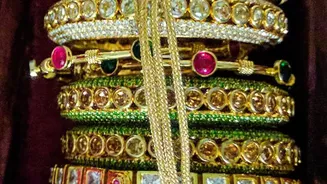
This is where 22K gold shines. By adding a small amount (about 8.4%) of stronger metals like copper and silver, jewellers create an alloy that is significantly more durable than pure 24K gold. This added strength is crucial for making jewellery that can withstand daily wear and tear without losing its shape. It allows for the creation of intricate and delicate designs, which are a hallmark of traditional Indian jewellery. 22K gold strikes the perfect balance: it retains the rich, deep yellow colour and high value of gold while being strong enough to be crafted into lasting ornaments. This blend of durability and purity is why 22K is the most popular choice for jewellery in India.
Durability vs. Value: The Core Trade-Off
The choice between 24K and 22K ultimately comes down to a trade-off between purity and practicality. If your goal is purely financial investment with no intention of wearing the gold, 24K bars or coins are the logical choice as they offer maximum value and are easy to trade. However, for jewellery that you want to wear and enjoy, durability is just as important as value. A 24K gold ring would quickly become misshapen, and any gemstones set in it would be at risk of falling out. 22K gold provides the necessary strength to hold its form and secure precious stones, making it the practical and preferred option for wearable assets.
A Word on Other Purities and Hallmarking
While 24K and 22K are the most discussed, you will also encounter 18K (75% pure gold) and 14K (58.3% pure gold) gold. These alloys are even more durable and are often used for modern, lightweight designs or for jewellery studded with diamonds, as the harder alloy provides a more secure setting. Regardless of the karat, always look for the BIS hallmark when buying gold in India. This certification from the Bureau of Indian Standards guarantees the purity of the gold. A hallmarked piece will have the BIS logo, the karat and fineness mark (e.g., 22K916), and a unique HUID code, ensuring you are getting exactly what you paid for.