



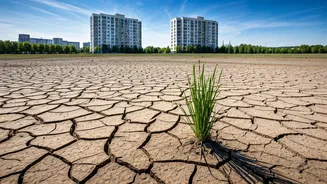




A Generation on the Frontline
For young people across India, climate change is not a distant, abstract threat. It is a daily reality. A recent survey revealed that a staggering 94% of Indian youth feel their lives have been directly impacted by climate change, from school closures
due to extreme weather to health issues and rising eco-anxiety. They are not just seeing headlines about melting glaciers; they are experiencing breathing difficulties, disruptions to their education, and watching their local environments transform. This lived experience creates a powerful, intrinsic awareness. The generation that makes up the world's largest youth population is on the frontlines of a global crisis, making their understanding and engagement a national imperative.
The Gap Between Experience and Education
Despite this firsthand exposure, a significant gap exists between what young Indians experience and what they are formally taught. While environmental studies have been part of the curriculum for years, progress on integrating meaningful, context-specific climate education has been slow. Many students and educators find that textbooks provide inadequate or overly scientific content, failing to connect with local realities. Policies like the National Education Policy 2020 support environmental learning, but implementation often treats the subject as an add-on rather than a core civic skill. The result is a generation that feels the effects of the crisis but lacks the structured knowledge and tools to fully comprehend its causes, complexities, and potential solutions.
More Than Just Textbooks
To be effective, climate explainers for young readers must go beyond dry facts and figures. The challenge isn't just to teach the science of greenhouse gases, but to do so in a way that is empowering, not paralyzing. This means focusing on solutions, highlighting innovation, and telling stories of resilience. It requires content that is deeply local and culturally resonant. A child in a coastal village in Odisha needs to understand mangrove protection, just as a student in Delhi needs to grasp the nuances of air pollution and urban heat islands. This is where creative formats come in: comics that illustrate sustainable practices, video series featuring young Indian innovators, interactive apps that track local environmental data, and stories written in regional languages that bring the climate narrative home.
From Anxious to Activated
The goal of better climate explainers is not to create a generation of worriers, but a generation of changemakers. While eco-anxiety is a real and growing concern, studies also show that a significant number of young people are motivated to take action and pursue green careers. They are already organising, innovating, and advocating for change through grassroots movements and digital campaigns. Providing clear, accessible, and empowering information is the support system they need. It validates their concerns, equips them with knowledge, and transforms their anxiety into focused, constructive action. By explaining the 'why' behind the crisis and the 'how' of the solutions, we can empower them to become not just victims of climate change, but powerful agents in the fight for a sustainable future.