





An Unplanned but Fortunate Collision
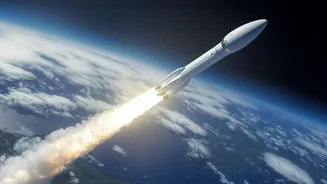
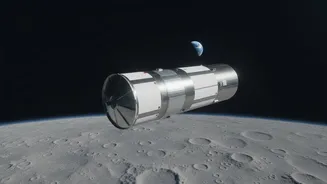
On August 5, 2026, the upper stage of a SpaceX Falcon 9 rocket slammed into the Moon at approximately 5,400 miles per hour. The impact was not originally on the mission docket. The rocket stage had completed its primary job back in January 2025, successfully
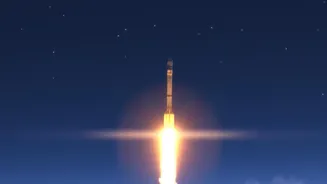
deploying two lunar landers. Afterwards, it was left in a long-term orbit. Over the following 18 months, the combined pull of gravity and pressure from solar radiation gradually altered its path, putting it on a collision course with the Moon. While SpaceX stated the company followed all appropriate regulations for disposal, this orbital evolution led to an unexpected outcome. Astronomers first identified the new trajectory, and NASA’s Center for Near Earth Object Studies later confirmed a 100% chance of impact. This turned a piece of space debris into a subject of intense scientific interest.
Creating a Crater for Science
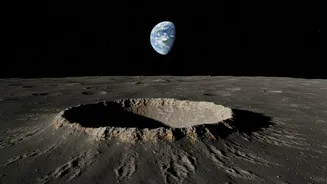
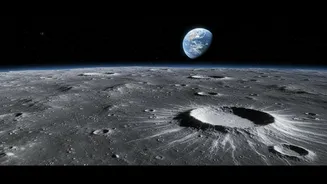
So, why the excitement over a crash? Because scientists know the rocket's size, mass, and velocity, the impact provides a controlled experiment on a celestial scale. It was expected to excavate a new crater up to 100 feet wide, blasting tons of lunar rock and soil, known as regolith, out from beneath the surface. Observing this plume of ejected material gives researchers a rare glimpse into the composition of the Moon's subsurface without having to land a probe and drill. Preliminary observations from the European Southern Observatory's Very Large Telescope detected sodium and lithium in the debris plume moments after the impact. The sodium is likely from the lunar soil, while the lithium may have come from the rocket itself. A full analysis will provide more definitive answers, offering new clues about the Moon's makeup.
Listening for Moonquakes
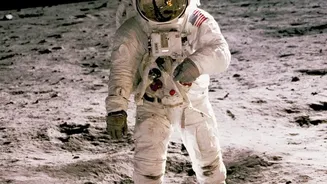
Beyond analysing the debris, the impact itself is a major geological event. The collision was predicted to generate seismic waves—a 'moonquake'—that ripple through the Moon's interior. During the Apollo missions, astronauts left seismometers on the surface and deliberately crashed their spent Saturn V rocket stages to create similar artificial quakes. The data from those experiments revolutionised our understanding of the Moon's internal structure, including its crust, mantle, and core. Unfortunately, those seismometers are no longer active, so this event won't be recorded in the same way. However, the impact underscores the value of seismology in lunar science. Future missions, like China’s Chang’e-7 planned for late 2026 and NASA’s upcoming Artemis program, will carry new seismometers to the surface, potentially using similar impact events to probe for resources like water ice.
A New Chapter in Lunar Research
This Falcon 9 impact is a perfect example of how the new era of commercial spaceflight is creating novel scientific opportunities. While this event was accidental, it highlights how spent hardware can be repurposed for valuable research. Instruments like NASA’s Lunar Reconnaissance Orbiter are tasked with finding and imaging the new crater, which will take time but will allow for detailed before-and-after studies of the impact site near Einstein Crater. This data will help refine models of crater formation and the physics of lunar dust, which is critical for the safety of future crewed missions and the construction of any potential moonbase. The event also raises important conversations about the growing amount of human-made debris around the Moon as exploration ramps up.