



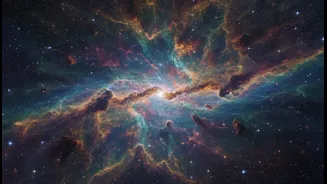


A New, Crystal-Clear View of the Cosmos
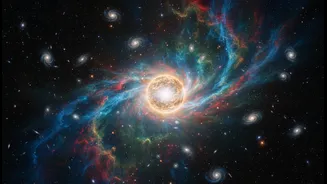
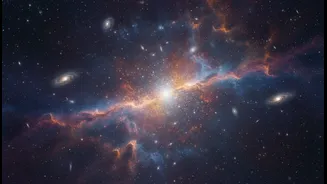
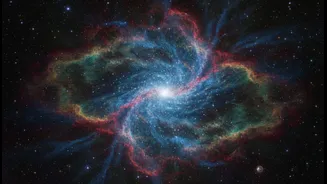
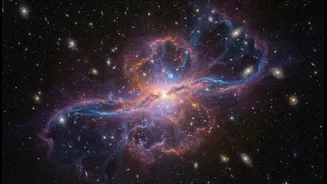
The European Space Agency's (ESA) Euclid telescope and the James Webb Space Telescope (JWST), a partnership between NASA, ESA, and the Canadian Space Agency, are releasing a steady stream of breathtaking images that are changing our understanding of the universe.
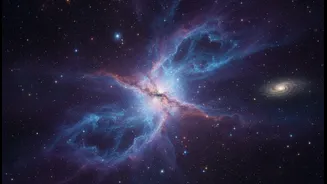
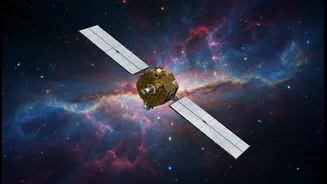
Unlike older images, these new pictures are captured with unprecedented detail and clarity. Euclid, which began its science mission in February 2024, is designed to create a vast 3D map of the universe, capturing huge areas of the sky in crisp detail. Meanwhile, JWST uses its powerful infrared vision to peer through cosmic dust, revealing newborn stars and the atmospheres of distant planets. Recent images have showcased everything from the swirling heart of our own Milky Way galaxy, packed with over 60 million stars, to cosmic fireworks in star-forming regions like FS Tau. These aren't just pretty pictures; they are scientific data made beautiful and accessible to the public.
Why These Images Are a Game-Changer for Beginners
So, what makes these images different for a first-time skywatcher? It comes down to a few key factors. Firstly, the sheer resolution and depth allow you to see structures and phenomena clearly. Webb's images, for example, reveal previously invisible areas of star birth, turning dense dust clouds into glittering landscapes. Secondly, many of these images are released with extensive explanations and annotations that act as a guided tour. Scientists point out features like gravitational lensing, where massive objects bend light, or the distinct colours that signify different chemical elements. This is like having an expert astronomer pointing out the highlights. Thirdly, the online portals where these images are hosted, like ESA's ESASky, are designed for exploration, letting you zoom and pan across vast cosmic mosaics, making discovery a personal and interactive experience.
Your First Steps Into the Universe
Ready to start exploring? It's easier than you think. The first place to go is the source. Both the official NASA Webb Telescope and ESA websites regularly post their latest images. Many of these releases are accompanied by articles and videos explaining the science behind what you're seeing in plain language. You can download high-resolution versions of the images to explore on your own screen. For example, ESA has released enormous mosaics from Euclid that you can get lost in for hours, spotting millions of galaxies in a single frame. Start by looking for famous objects that have been newly imaged, like the Pillars of Creation or the Carina Nebula, to see how these new telescopes are revealing them in a new light.
What to Look For
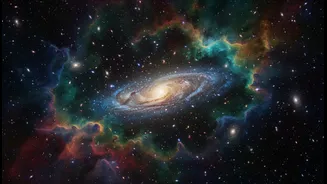
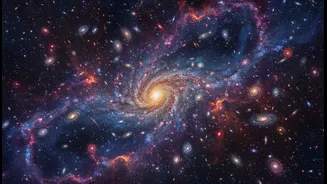
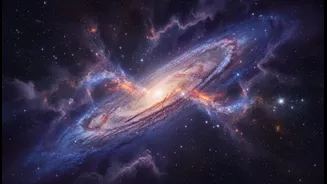
As you browse, train your eye to spot key astronomical features. Look for the tell-tale spiral arms of distant galaxies or the dense, bright core of globular clusters, which are ancient collections of stars. In images of nebulae, try to identify the vibrant pink and red glows that indicate regions of active star formation, where new stars are being born from clouds of gas and dust. Another fascinating phenomenon is gravitational lensing, where the gravity of a massive foreground galaxy cluster warps and magnifies the light from galaxies behind it, often creating distorted arcs and rings of light. Reading the descriptions provided with the images will help you connect these visual patterns to the incredible physics happening billions of light-years away.
Join a Community of Stargazers in India
Exploring these images is a fantastic start, but astronomy is also a wonderful community hobby. India has a vibrant and growing network of amateur astronomy clubs and organizations. Groups in cities like Pune, Mumbai, Chennai, and Delhi regularly host star parties, observation nights, and workshops. These events are perfect for beginners, offering a chance to look through a real telescope and have experienced members guide you through the night sky. Organizations like SPACE India also provide educational programs and workshops for students and adults, helping to foster a grassroots passion for space science. Joining a local group can help you take your new-found digital hobby and apply it to the real night sky above you.