





Decoding 'Value' in the Kitchen
When we talk about the 'value' of a cooking oil, it's easy to think only of the price per litre. But in a real Indian kitchen, value is a much richer concept. It's about performance, versatility, and suitability for our unique cooking methods. An oil that
smokes too quickly, overpowers the spices in a curry, or breaks down during deep-frying offers poor value, no matter how inexpensive it is. The true test is a blend of factors: how it handles heat, what flavour it adds (or doesn't add), its nutritional profile, and how well it fits your family's palate. A slightly more expensive oil that gives you a perfectly crisp samosa and doesn't fill the house with smoke provides far greater value than a cheaper one that fails the test.
The Heat Test: Smoke Point is Crucial
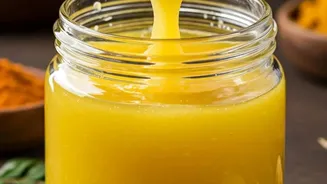
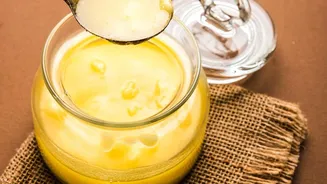
Indian cooking is a masterclass in heat management, from the gentle simmering of a korma to the roaring heat of a kadhai for deep-frying puris. This is where an oil's smoke point—the temperature at which it starts to burn and break down—becomes critical. Using an oil past its smoke point not only creates a bitter taste and a smoky kitchen but can also release harmful compounds. For high-heat tasks like frying pakoras or making tadka, you need an oil with a high smoke point like ghee (around 250°C), refined groundnut oil (230°C), or rice bran oil (230°C). These oils remain stable, ensuring your food cooks properly without burning. For lower-heat applications like light sautéing, other oils might be more suitable.
The Flavour and Aroma Factor
Edible oils are not just cooking mediums; they are ingredients that contribute to the final taste and aroma of a dish. Some oils are chosen specifically for their distinct character. Think of the pungent, sharp kick of kachi ghani mustard oil in North and East Indian cuisine, which is essential for dishes like pickles and certain fish curries. Similarly, the nutty aroma of groundnut oil is central to many Western and Southern Indian recipes, while coconut oil lends a signature sweetness to coastal dishes. On the other hand, neutral oils like sunflower or rice bran oil are prized for their ability to step back and let the spices shine, making them versatile workhorses for a wide range of preparations where you don't want the oil to impart its own flavour.
The Health Equation: A Balanced Approach
No single cooking oil is nutritionally perfect. Each has a unique profile of saturated, monounsaturated (MUFA), and polyunsaturated (PUFA) fats. For instance, mustard oil is rich in MUFAs and has a beneficial omega-3 profile, while rice bran oil contains a compound called oryzanol, which may help manage cholesterol. This is why many nutrition experts, including the Indian Council of Medical Research (ICMR), recommend rotating your cooking oils. Using just one type of oil means you get the same fatty acid profile every day. By switching between two or three different oils—say, mustard oil for tadkas, groundnut oil for general cooking, and sunflower oil for occasional frying—you provide your body with a more balanced spectrum of fats and nutrients. Cold-pressed oils often retain more nutrients compared to their refined counterparts.
The Verdict: Your Kitchen Knows Best
Ultimately, the labels and the expert advice can only guide you. The final decision rests in how an oil behaves in your pan, with your recipes, for your family. Does it make your dosas crisp? Does it allow the flavour of your dal tadka to come through? Can it handle the heat for your favourite fried snacks? Building a small, smart 'oil pantry'—perhaps with a flavourful traditional oil, a neutral high-heat oil, and ghee—is a practical approach for most households. This allows you to match the right oil to the right task. Trust your experience. If an oil consistently delivers the taste, texture, and performance your cooking demands, it has proven its value right where it matters most: on your plate.