



Mistake 1: Ignoring Vehicle Preparedness
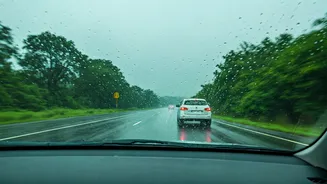
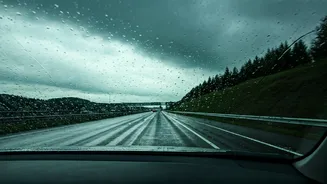
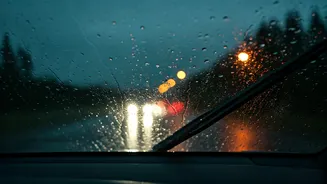
The most critical errors often happen before you even turn the key. Driving in wet, dark conditions demands a car that is fully prepared. Worn-out wiper blades that leave streaks can severely impair vision, a problem that is magnified at night. [3, 5]
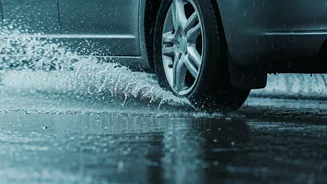
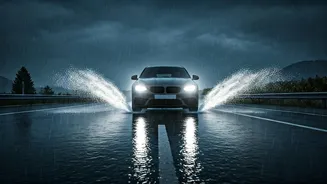
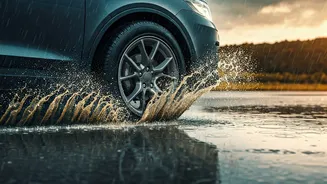
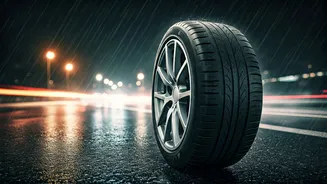
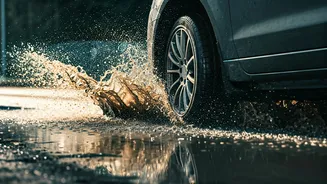
Similarly, tyres with insufficient tread depth are a primary cause of hydroplaning, where a layer of water builds up between the tyre and the road, leading to a loss of traction and control. [16] At night, it's harder to see the standing water that triggers this. Furthermore, ensure all your lights—headlights, taillights, and indicators—are clean and functioning perfectly. [14] Dim or foggy headlights drastically reduce your ability to see potholes and other hazards, while also making you less visible to others. [5]
Mistake 2: Using the Wrong Lights (Or None at All)
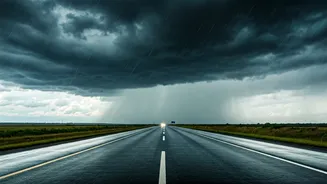
Reduced visibility is the single biggest challenge of night-time monsoon driving. [11] A common mistake is not turning on headlights at all during light rain or assuming daytime running lights are sufficient. [24] In heavy rain, full headlights are essential for being seen. [12] An equally dangerous error in India is the misuse of hazard lights while moving. [12] Hazard lights are designed for stationary vehicles in an emergency; using them while driving confuses other motorists, as they can't tell if you are braking or turning. [20] The correct approach is to use your low-beam headlights. High beams can reflect off the raindrops and create glare, further reducing your own visibility and blinding oncoming drivers. [14]
Mistake 3: Misjudging Speed and Following Distance
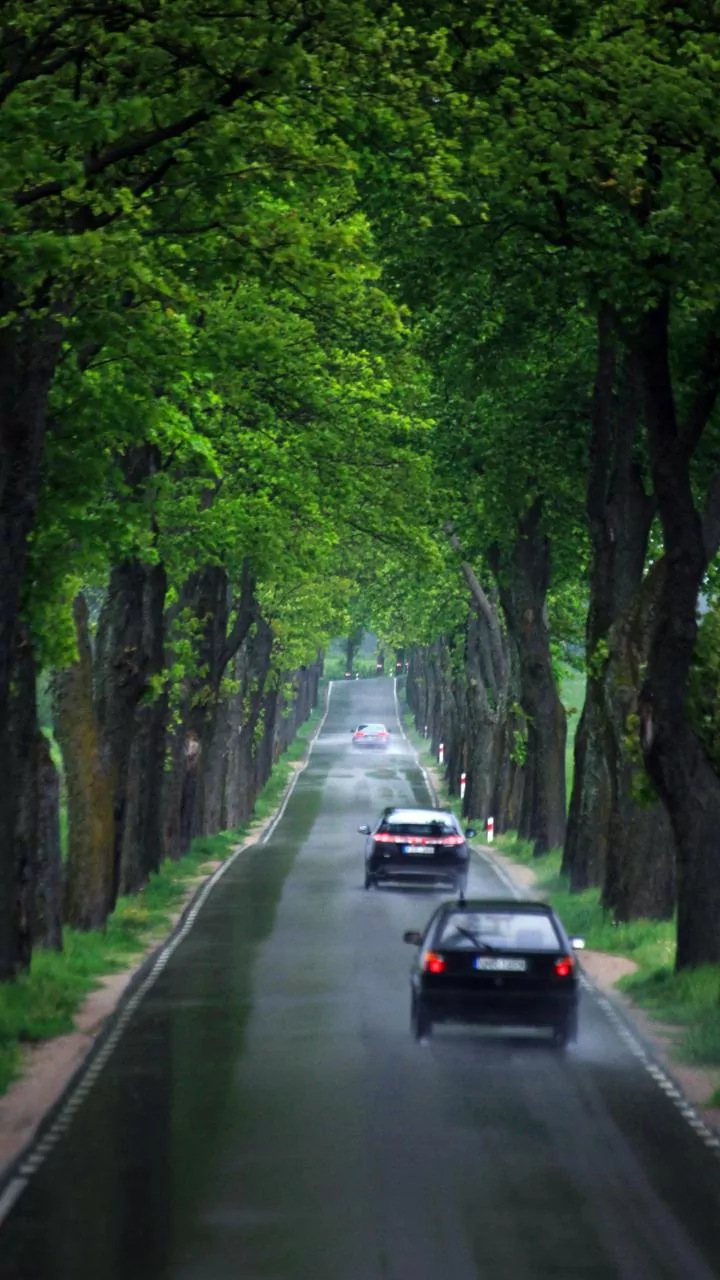
Speed limits are designed for ideal, dry conditions. In wet weather, especially at night, your stopping distance increases significantly. [24] Yet, many drivers maintain their usual speed, treating a wet road like a dry one. [26] It’s crucial to slow down to give yourself more time to react. [2] Compounding this is the error of tailgating. Following too closely is always risky, but at night in the rain, your ability to judge distance is already compromised. [9] A safe rule of thumb is to double your usual following distance, aiming for at least a 5-second gap between you and the vehicle ahead. [12, 24] Never use cruise control in wet conditions, as it can cause your wheels to accelerate if you start to hydroplane, making it harder to regain control. [21]
Mistake 4: Underestimating Waterlogged Roads
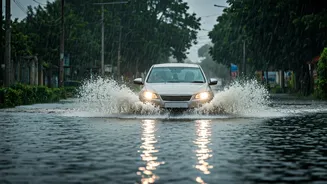
A puddle that looks shallow in the daylight can be a deep, vehicle-damaging hazard at night. It's nearly impossible to accurately judge the depth of standing water in the dark. [27] Driving into a waterlogged area risks your engine stalling if water enters the air intake, a condition known as hydrolock which can cause catastrophic engine damage. [25] If you can't see the road markings underneath the water, it's too deep to cross safely. [27] The safest option is always to turn around and find an alternative route. [10] If you must proceed, do so slowly and steadily in a low gear, creating a small 'bow wave' in front of your vehicle without stopping, which can help keep water from flooding the engine bay. [27]
Mistake 5: Panicking During a Skid or Hydroplane
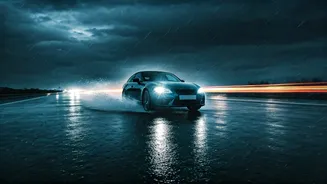
Losing traction on a wet, dark road is a frightening experience, and the instinctive reaction is often the wrong one. Slamming on the brakes when your car begins to skid or hydroplane can lock the wheels and make the situation worse. [19, 24] If you feel the car begin to slide, the correct response is to ease your foot off the accelerator. [19] Do not brake suddenly. Keep a firm grip on the steering wheel and steer gently in the direction you want the car to go until you feel the tyres regain traction with the road. [19, 22] Staying calm and making smooth, gentle inputs with the steering and pedals is key to regaining control. [14]