








The world of automation is buzzing with unprecedented investment in humanoid robots. But as valuations soar into the tens of billions, a crucial question is emerging: When, and how, will these incredible machines actually deliver a return in the workplace?
The Billion-Dollar Bet on Bipedal Bots
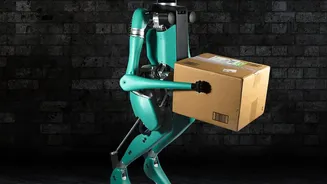
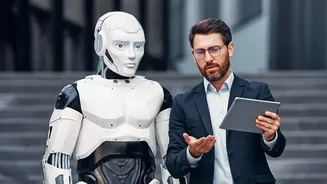
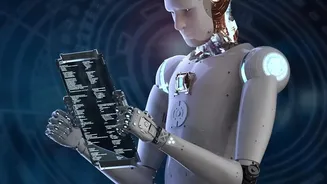
The scale of recent investment in humanoid robotics is staggering. In 2026 alone, venture capital funding has surged past $11 billion, more than doubling the record set in 2025. Companies like Figure AI have seen their valuations skyrocket, raising over a billion dollars in a single funding round and attracting capital from tech giants like Microsoft, Nvidia, Amazon, and Jeff Bezos. On another front, Agility Robotics recently became the first publicly-listed pure-play humanoid robotics company in the US, securing approximately $465 million in capital and reporting over $300 million in committed orders for its 'Digit' robot. The promise driving this gold rush is a machine built in our own image, capable of operating in warehouses, factories, and logistics centres without requiring expensive redesigns of the existing environment. The goal is to create a general-purpose worker that can tackle labour shortages and handle repetitive or dangerous tasks.
The Alluring Promise of Payback
Investors are not just chasing science fiction; they are following a compelling economic argument. Projections from firms like Goldman Sachs see the humanoid robot market growing to $38 billion by 2035. The cost of the robots themselves is falling dramatically, with some analyses showing a 40% year-on-year drop in manufacturing costs. While high-end models can still be very expensive, Tesla has consistently stated a long-term price target of around $20,000 to $30,000 for its Optimus robot. At these prices, the return on investment becomes highly attractive. Some analyses suggest that under ideal, high-utilization scenarios, a humanoid robot could pay for itself in under two years, and potentially as little as six months. This calculation becomes even more powerful in developed economies facing aging populations and rising labour costs in key sectors like manufacturing and logistics.
Reality Bites: The Hurdles to ROI
Despite the impressive demos and bullish forecasts, the path from prototype to profitable, large-scale deployment is fraught with challenges. The core variable is not just the robot's price tag, but the actual value of the work it can deliver reliably and consistently. Several major technical hurdles remain. Battery life is a critical bottleneck, with most current humanoids operating for only a few hours per charge, far short of a full work shift. Actuator reliability—the durability of the motors and joints—is another major concern for sustained industrial use. Furthermore, the robot's ability to manipulate objects with human-like dexterity and generalize its skills to unfamiliar situations are still significant software and hardware problems. Finally, safety is a massive open question. A 70 kg robot moving autonomously through a busy workspace presents risks that current industrial safety standards, written for stationary machines, do not fully address.
Redefining Work or Repeating History?
The ultimate question is what this means for the future of work. Proponents argue that humanoids will augment human labour, taking over dull, dirty, and dangerous tasks and freeing up people for higherer skilled, more creative roles. However, history shows that automation can also displace workers and put downward pressure on wages for certain jobs. One MIT study found that for every industrial robot added per 1,000 workers, wages declined by about 0.42% and jobs were lost. The impact of more versatile humanoids could be even more significant. While the technology may create new roles in robotics engineering and maintenance, it could also hollow out middle skill physical labour jobs. The real world impact will likely depend on how companies choose to deploy this technology—as a tool to support workers or simply as a way to replace them.