






What is Barrier-Free Tolling?
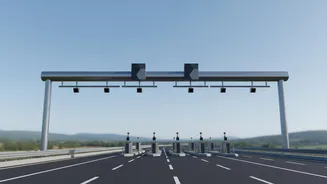
Barrier-free tolling, officially known as a Multi-Lane Free Flow (MLFF) system, is exactly what it sounds like: a way to collect tolls without physical booths or boom barriers. Instead of slowing down or stopping, vehicles can travel at highway speeds
while overhead gantries equipped with advanced technology handle the tolling process automatically. The National Highways Authority of India (NHAI) has already started implementing this system on key stretches, such as the Delhi-Jaipur highway, to eliminate queues, reduce travel time, and improve fuel efficiency. This shift represents the next evolution from the FASTag system, aiming for an even more seamless travel experience across the country.
How the New System Works
The magic behind this system lies in a combination of technologies. The MLFF framework uses high-speed Automatic Number Plate Recognition (ANPR) cameras that capture your vehicle's license plate. This is combined with the existing FASTag infrastructure, where RFID readers scan your tag as you pass under the gantry. Some advanced versions also use satellite-based technology, like a Global Navigation Satellite System (GNSS), to track a vehicle's journey and calculate the toll based on the exact distance travelled. The goal is to create a redundant and highly accurate system that identifies your vehicle and deducts the correct toll without any manual intervention or need to stop.
Is This the End of FASTag?
Not yet. While the long-term vision includes a nationwide satellite-based system, the current barrier-free rollout heavily relies on the existing FASTag ecosystem. The government has clarified that a decision on a full-scale replacement of FASTag with a purely GNSS-based system has not been made. For now, the MLFF system works in tandem with FASTag. The ANPR cameras act as a supplementary layer to identify vehicles and ensure toll collection. Therefore, having a functional FASTag with a sufficient balance remains crucial for travelling on these new barrier-free corridors.
The Reality: Payments are Still Your Duty
The removal of physical barriers does not mean toll collection has become optional. The system is designed for strict enforcement. If you pass through an MLFF gantry with an invalid FASTag or insufficient balance, the ANPR cameras will record your vehicle's details. An electronic notice (E-Notice) will then be sent to you via SMS or email. According to the amended National Highways Fee Rules, you have a 72-hour window to pay the original toll amount. If you fail to do so, the penalty is steep: the toll fee will be doubled. To ensure compliance, the system is linked to the VAHAN database, and persistent non-payment could lead to restrictions on vehicle-related services.
Why This Change is Happening
The primary driver for this ambitious infrastructure upgrade is efficiency. By eliminating stops at toll plazas, the government aims to drastically reduce traffic congestion and the long queues that have become common on busy highways. This has a direct impact on the economy and the environment. Uninterrupted travel saves significant amounts of fuel and reduces carbon emissions from idling vehicles. For commuters, it means shorter and more predictable travel times. For the logistics industry, it promises to lower costs and improve the speed of moving goods across the country, which is a key goal for making India a more competitive economic power.