


The Moon’s Hidden Treasure
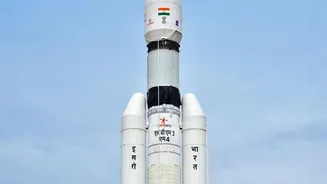
For decades, scientists speculated about the presence of water on the Moon. It was India’s Chandrayaan-1 mission in 2008 that provided definitive proof, detecting water molecules. Subsequent missions confirmed that vast quantities of this water are locked
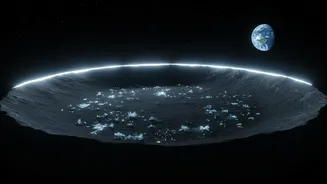
away as ice in Permanently Shadowed Regions (PSRs) near the lunar poles. These are craters and depressions that haven't seen direct sunlight for billions of years, making them some of the coldest spots in our solar system. Recent studies, including analysis from ISRO's Chandrayaan-2 orbiter, suggest there could be 5 to 8 times more ice buried a couple of metres beneath the surface than what's on top, a finding that makes excavation a top priority.
ISRO’s Extraction Strategy
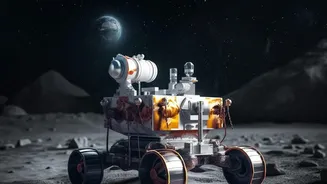
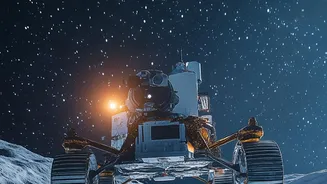
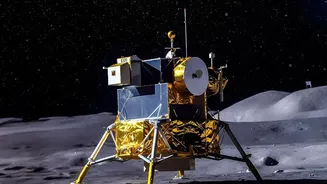
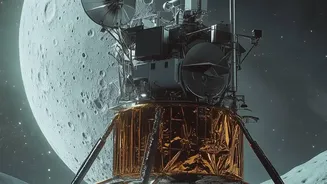
Extracting this buried ice is a complex engineering puzzle, and ISRO is at the forefront of developing solutions. The concept is known as In-Situ Resource Utilisation (ISRU), which essentially means living off the land. Future missions, like the joint ISRO-JAXA LUPEX (Lunar Polar Exploration) mission, are designed to prospect for this ice. The core idea involves a robotic rover equipped with specialised payloads. These could include drills to dig into the frozen regolith (lunar soil) and instruments to analyse the ice content on the spot. While specific payloads for an extraction mission are still under development, the leading methods being explored globally involve either direct heating or microwave technology to turn the ice into vapour.
How to Mine the Moon
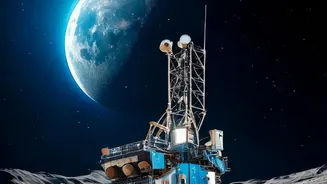
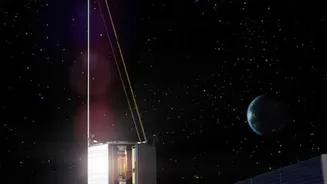
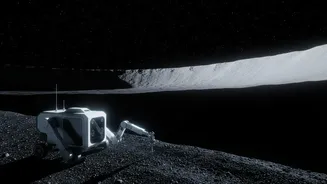
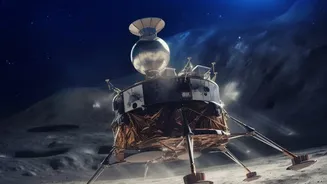
Imagine a robotic miner landing near a promising crater. It would navigate into the extreme cold and darkness of a PSR. Once it identifies a location with high ice concentration, it would deploy its tools. One possible method involves drilling into the icy soil and heating it. The ice would turn directly into water vapour in the Moon's vacuum, a process called sublimation. This vapour would then be captured in a cooled container, where it would condense back into liquid water or refreeze into pure ice. Another advanced technique being researched is using microwave beams to heat the regolith from within, which could prove more efficient at releasing the trapped water molecules on a larger scale. This extracted water is the real prize.
The Ultimate Resource
Why go to all this trouble for water? Because on the Moon, water is everything. It can be purified for astronauts to drink and to grow food, reducing the enormous cost of shipping these supplies from Earth. More importantly, water (H₂O) can be split into its basic components: hydrogen and oxygen, through a process called electrolysis. The oxygen can be used to create breathable air for lunar habitats. Together, liquid hydrogen and liquid oxygen form a potent rocket propellant. This transforms the Moon from a desolate stopover into a cosmic refuelling station, enabling more ambitious missions to Mars and beyond. It’s the key to making a long-term human presence on the Moon sustainable.
India’s Role in the New Space Race
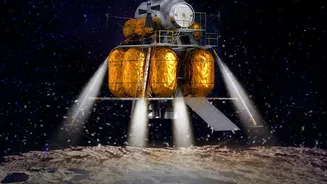
ISRO's focus on ice extraction technology places India in a leading position in the new global space race. While missions like Chandrayaan-4 are currently focused on returning lunar samples to Earth, the technologies developed for landing, docking, and robotics are direct stepping stones toward ISRU. Successfully demonstrating the ability to mine lunar water would be a monumental achievement, providing India with significant leverage in international space partnerships and the emerging lunar economy. This pioneering work not only builds on the legacy of previous missions but also paves the way for India to play a central role in humanity’s next great leap: becoming a multi-planetary species.