


A Monumental Achievement
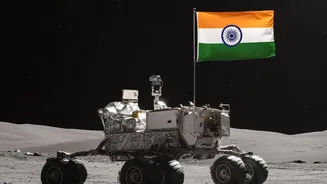
The successful return of the Chandrayaan-4 capsule marks India's entry into an elite club of spacefaring nations. Only the United States, the former Soviet Union, and China have previously accomplished the incredibly complex task of returning samples
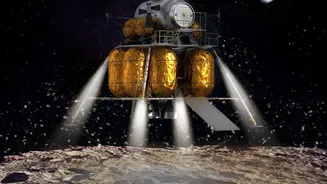
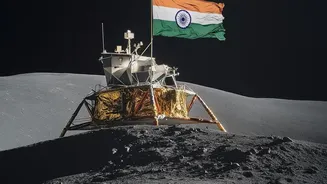
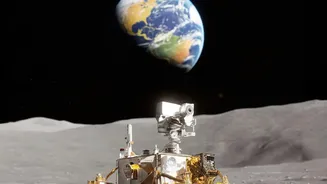
from the lunar surface. This mission, however, goes a step further by specifically targeting and retrieving materials from the Moon's enigmatic south pole—a region believed to be rich in the resources that will power the next generation of space exploration. The feat required a series of perfectly executed manoeuvres, including a soft landing, robotic sample collection, a launch from the Moon's surface, and a high-speed atmospheric re-entry and landing back on Earth.
Why Lunar Ice is a Game-Changer
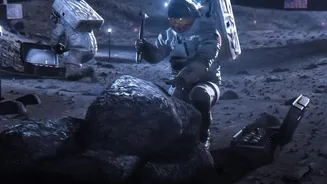
The true prize of the Chandrayaan-4 mission is not just lunar soil, but the water ice mixed within it. For decades, scientists have theorized about the presence of water ice in permanently shadowed craters at the lunar poles, a theory India's own Chandrayaan-1 mission helped confirm. This ice is considered the 'holy grail' of lunar resources. Once extracted, it can be purified for drinking water and split into its constituent elements: hydrogen and oxygen. These provide breathable air for astronauts and, critically, can be combined to create powerful, efficient rocket propellant. Having access to these resources on the Moon itself dramatically reduces the cost and complexity of future missions, as spacecraft would no longer need to carry all their water, air, and return fuel from Earth.
The Intricate Dance of Technology
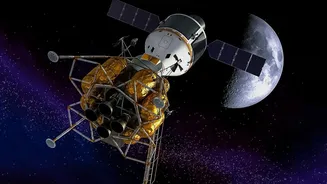
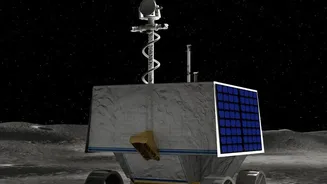
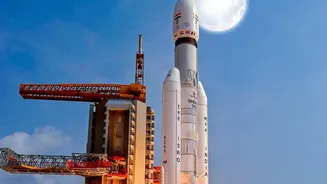
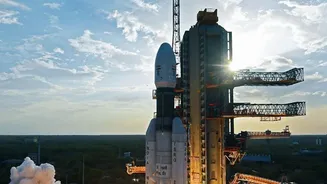
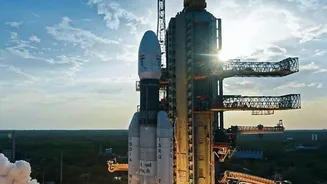
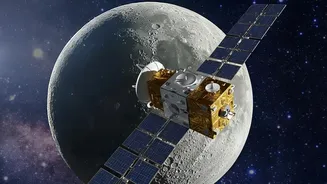
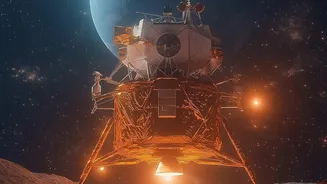
Bringing a piece of the Moon to Earth is one of the most complex challenges in spaceflight. ISRO's Chandrayaan-4 mission involved five separate modules launched on two of its most powerful rockets. After landing near the south pole, the lander deployed a robotic arm and a drill to collect both surface and sub-surface soil, sealing it in a container to preserve its pristine state. The sample was then transferred to an ascent module, which performed a historic launch—the first for India from another celestial body. This module then had to perform an autonomous rendezvous and dock with the transfer module waiting in lunar orbit, a key technology ISRO recently demonstrated with its SPADEX mission. The sample was transferred one last time to a re-entry capsule for its fiery but safe journey home.
India's Newfound Space Sovereignty
This success is more than a single scientific victory; it is a declaration of India's 'space sovereignty'. By mastering complex procedures like lunar ascent and orbital docking, ISRO has demonstrated an end-to-end capability that is crucial for ambitious future projects. These include the planned Bharatiya Antariksh Station (Indian Space Station) by 2035 and sending an Indian astronaut to the Moon by 2040. This mission solidifies India’s position not merely as a participant, but as a leader in the new space race—one focused on sustainable presence and resource utilization. The ability to retrieve and analyse lunar samples on home soil gives Indian scientists a direct hand in shaping the future of lunar science and exploration.