


Start With Just Your Eyes
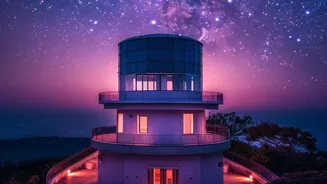
Your journey into amateur astronomy should begin with the most fundamental instrument you own: your eyes. Before spending a single rupee, spend a few nights simply observing. Find a spot away from bright city lights, let your eyes adjust to the darkness
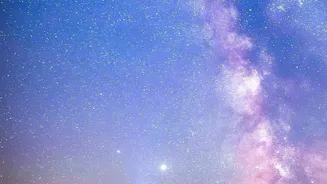
for about 15-20 minutes, and see what you can see. You’ll be surprised by how much is visible, from the steady light of planets to the faint, milky band of our own galaxy. You can see all the planets out to Saturn with your eyes alone. This initial step is crucial. It builds patience and a foundational appreciation for the sky. You’ll learn to notice the apparent movement of stars as the Earth rotates and spot the brightest objects that serve as your first celestial landmarks.
Learn the Celestial Landmarks
The night sky is like a vast ocean, and without a map, it’s easy to feel lost. The next step is to learn the major constellations and bright stars visible in October. You don't need to memorize everything, just a few key patterns. A great way to start is by downloading a stargazing app. Apps like Star Walk 2, SkyView Lite, or Stellarium Mobile can use your phone's GPS and compass to show you exactly what you're looking at in real-time. Just point your phone at the sky, and it will overlay the names of stars, constellations, and planets. This month, look for prominent constellations and take note of bright planets like Saturn, which is at its brightest. Learning these patterns will give you the confidence to navigate the cosmos on your own.
Try Binoculars Before a Telescope
Many seasoned astronomers advise beginners to start not with a telescope, but with a good pair of binoculars. Binoculars are more affordable, easier to use, and more versatile than most beginner telescopes. They offer a wider field of view, which makes it easier to scan the sky and find objects. A standard pair of 7x50 or 10x50 binoculars is ideal. The first number is the magnification, and the second is the diameter of the main lenses in millimetres. This size provides bright images and is lightweight enough to hold steady. You'll get stunning views of the Moon's craters, see the four largest moons of Jupiter, and resolve dense star clusters into individual points of light. Binoculars are the perfect intermediate step, enhancing your view without the steep learning curve of a telescope.
October's Can't-Miss Celestial Events
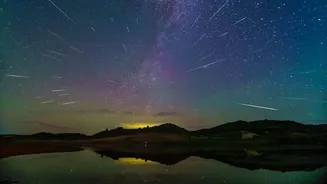
October 2026 is a fantastic month for sky-watching. Saturn will be at opposition on October 4, meaning it will be at its closest and brightest to Earth, visible all night long. While you'll need a telescope to see its rings clearly, its brightness makes it an easy naked-eye target. The main event for many will be the Orionid meteor shower, which is active from early October to early November. It is expected to peak on the night of October 21-22. These meteors are bits of debris left by Halley's Comet, known for being bright and fast. For the best view, find a dark spot away from city lights and look up in the hours before dawn. While a bright moon will be present, it sets a few hours before dawn, leaving a window of dark sky for the show.
Ready for a Telescope? Know the Basics
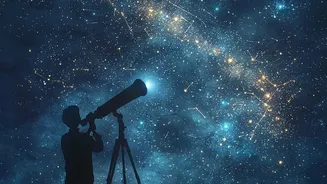
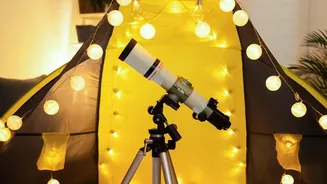
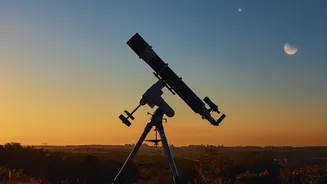
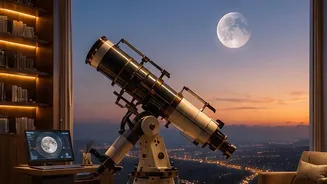
If you've followed the steps above and are still captivated by the cosmos, then you might be ready for a telescope. The most important specification to consider is not magnification, but aperture—the diameter of the telescope's main lens or mirror. Aperture determines how much light the telescope can collect, which dictates how faint of an object you can see. A good starting point for a beginner is a telescope with a 4 or 5-inch aperture. Many experts recommend a Dobsonian reflector telescope for beginners. They are relatively simple, stable, and offer the largest aperture for the price, providing great views without the complexity of computer-controlled mounts. Remember, the best telescope is the one you will use most often, so consider portability and ease of setup.