








An Ancient Solution for Modern Gardens
Neem oil is a vegetable oil pressed from the fruits and seeds of the neem tree (Azadirachta indica), a tree native to the Indian subcontinent. For centuries, it has been a cornerstone of traditional Ayurvedic medicine and agriculture. For the modern urban
gardener, its value lies in being a potent, biodegradable, and non-toxic pest and disease controller. Its primary active ingredient, azadirachtin, works not by killing pests on contact, but by disrupting their hormonal systems. It repels them, inhibits their feeding, and interferes with their growth and reproduction, making it a highly effective and multi-pronged defence for your precious plants.
Why Humidity is Your Plant’s Enemy
While many popular foliage plants like Monsteras, Philodendrons, and Syngoniums love humidity, the stagnant, damp air of a balcony in a city like Mumbai or Kolkata, especially during monsoon, creates a perfect breeding ground for problems. High humidity combined with poor air circulation invites fungal diseases like powdery mildew, black spot, and root rot. It also encourages sap-sucking pests like mealybugs, spider mites, and aphids, which thrive in these warm, moist conditions. These issues can quickly overwhelm a plant, causing yellowing leaves, stunted growth, and eventually, death. Prevention is always better than cure, and this is where neem oil shines.
The Triple-Action Power of Neem
Neem oil is celebrated for its three-in-one functionality. It acts as an insecticide, fungicide, and miticide. As an insecticide, it is effective against over 200 species of chewing and sucking insects. As a fungicide, it is highly effective in preventing and controlling common fungal issues like powdery mildew, rust, and leaf spot. The oil creates a coating on the leaves that prevents fungal spores from germinating. Finally, as a miticide, it specifically targets and controls mite populations, like the dreaded spider mites that can quickly spin webs and drain the life out of your leaves. This comprehensive protection makes it the single most useful item in an organic gardener’s toolkit.
How to Mix Your Own Neem Spray
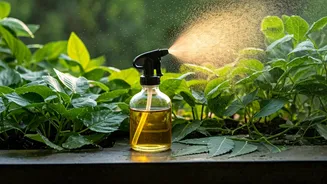
Creating your own neem oil spray is simple and cost-effective. Commercial pre-mixed solutions are available, but making it fresh ensures maximum potency. You will need three things: high-quality, cold-pressed neem oil (which is the most potent), a mild liquid soap or horticultural soap, and a spray bottle. The soap acts as an emulsifier, allowing the oil to mix with water. **The Recipe (for 1 litre):** 1. Take 1 litre of lukewarm water in your spray bottle. Warm water helps the oil mix better. 2. Add 1 teaspoon (5 ml) of cold-pressed neem oil. 3. Add ½ teaspoon (2-3 ml) of mild liquid soap. 4. Close the bottle and shake vigorously until the mixture looks milky and is well combined. You will need to shake it periodically during application as the oil will try to separate from the water.
Best Practices for Application
How you apply the spray is as important as the spray itself. First, always do a patch test. Spray a small, inconspicuous leaf and wait 24-48 hours to ensure your plant doesn't have an adverse reaction. The best time to spray is in the early morning or late evening, as spraying in direct, hot sunlight can cause the oil to burn the leaves. When you spray, be thorough. Cover all surfaces of the plant—the tops and undersides of leaves, the stems, and the point where leaves join the stem. Pests love to hide in these nooks and crannies. For soil-borne issues like fungus gnats, you can also drench the soil with the same solution.
A Schedule for Healthy Plants
Consistency is key. For preventative maintenance, especially during humid seasons, spray your plants every 14-21 days. This will create a protective barrier that deters pests and prevents fungal spores from taking hold. If you are dealing with an active infestation or disease, you need to be more aggressive. Spray your affected plants thoroughly once every 5-7 days until the problem is completely gone. Continue with preventative sprays afterwards to avoid a recurrence. Always mix a fresh batch before each application for the best results, as the active compounds in neem oil can break down over time.