
Why Rolling Reigns Supreme
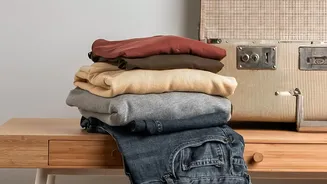
For generations of travelers, the debate has been fierce: fold or roll? While folding is familiar, rolling is a true space-saver for most garments. By tightly rolling clothes, you compress the fabric and squeeze out trapped air, creating dense, compact
bundles that take up significantly less room. This technique allows you to pack more gear or, even better, opt for a smaller, lighter backpack. Beyond just saving space, rolling has other major advantages. It allows you to see all your clothes at a glance without disrupting neatly folded stacks, making it easier to find that one specific t-shirt. Furthermore, unlike folding, which creates hard creases, rolling minimizes sharp lines and can significantly reduce wrinkles, especially on casual wear.
The Basic Roll: Your Everyday Go-To
This is the foundational technique that works perfectly for t-shirts, shorts, casual dresses, and leggings. Start by laying the garment flat on a smooth surface. For a t-shirt, fold the sleeves in to create a uniform rectangle. For trousers or shorts, fold them in half lengthwise. Now, starting from the bottom hem, begin to roll the garment as tightly and neatly as possible, smoothing out the fabric as you go to prevent wrinkles from setting in. The goal is to create a firm, cylindrical bundle. This simple method is quick, easy, and dramatically more efficient than stacking folded squares, allowing you to file your clothes vertically in your pack for easy access.
Level Up: The Secure Ranger Roll
For items that need to stay extra compact and secure, the Ranger Roll (also known as the Army Roll) is a game-changer. This military-inspired technique creates a self-contained bundle that won't unspool in your bag. To start, lay a t-shirt flat and fold the bottom hem inside-out by about five centimetres, creating a 'cuff' at the base. Next, fold the left and right sides of the shirt toward the center to form a narrow rectangle. Now, starting from the collar, roll the shirt down tightly toward the cuffed base. Once you reach the end, take the inside-out cuff you created and wrap it back over the entire roll, securing it like a sausage casing. The result is a highly compressed, stable clothing burrito that maximizes every inch of space.
A Four-Day Backpacking Pack-Out
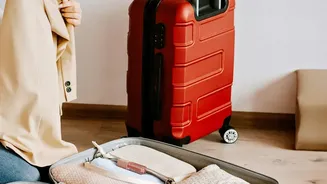
So, how does this apply to a four-day trip? Let's build a sample packing list. For four days, you might pack: four t-shirts, one pair of trousers, one pair of shorts, four pairs of socks and underwear, a lightweight fleece, and a packable rain jacket. Use the Ranger Roll for all your t-shirts, socks, and underwear to create dense, organized bundles. Use the basic roll for your shorts. For your trousers, which might be bulkier, a careful fold or a looser roll might work best. Bulky items like a fleece or jacket should be folded flat and placed against the back of the pack or compressed at the very bottom. By rolling the majority of your items, you'll find you have ample space for toiletries and other essentials without straining your zippers.
Beyond the Roll: Smart Companions
While rolling is incredibly effective, it works even better when combined with other smart packing strategies. Packing cubes are a backpacker's best friend. You can group your rolled items into different cubes—one for tops, one for bottoms, one for underwear—to create a modular, perfectly organized system. This prevents your neatly rolled clothes from shifting and unravelling in transit. For items that wrinkle very easily, like a linen shirt, you might still opt to fold them carefully and place them on top of everything else. Combining methods is key; use rolling for compressibility and organization, and strategic folding for delicate or bulky items.