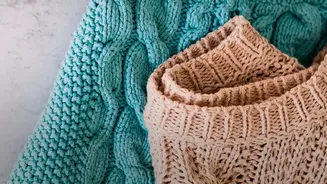







As seasons turn, packing away winter clothes is a familiar ritual. But simply stashing them can do more harm than good. The secret to longevity lies in how you store them, especially when it comes to your favourite heavy knits.
The Problem with Hanging
It might seem like the easiest
option, but hanging heavy sweaters is the fastest way to ruin them. Garments made of wool, cashmere, and other chunky knits have a delicate, looped structure. When placed on a hanger, the sheer weight of the sweater pulls downwards, a force that good old-fashioned gravity magnifies over months in storage. This constant strain causes the fibres to stretch irreversibly, leading to saggy hemlines, distorted necklines, and those dreaded pointy bumps on the shoulders. Folding provides even support across the garment, eliminating this structural stress and preserving its intended shape.
The Art of the Perfect Fold
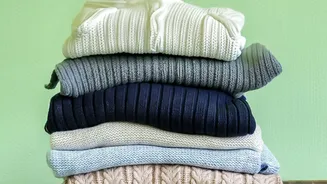
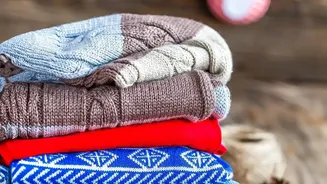
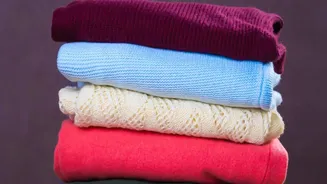
Folding a sweater properly is about more than just neatness; it's about protecting your investment. The goal is to create a compact, uniform rectangle that can be stacked without causing deep creases. Start by laying the sweater face down on a flat surface. Fold one sleeve across the back, then the other. Finally, fold the body of the sweater in half or into thirds. For those short on shelf space, there's a clever hanger trick: fold the sweater in half vertically, lay a hanger's crossbar in the 'armpit' area, and then drape the sleeves over one side and the body over the other. This method supports the sweater's weight without stressing the shoulders.
Cleanliness Is Key
Before any item goes into storage, it must be clean. This is a non-negotiable step. Invisible traces of body oils, perfume, or small food spills can set into stains over time and, more importantly, they attract pests. Clothes moths are drawn to the natural fibres in wool and cashmere, but specifically to areas soiled with organic matter. Wash or dry-clean everything according to its care label, and ensure every piece is completely dry before it's packed away. Trapped moisture is a recipe for mould and mildew.
Choose the Right Home
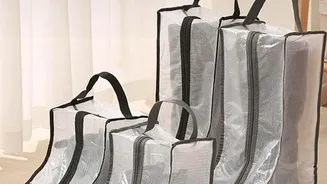
Where you store your clothes is just as important as how you prepare them. The ideal environment is cool, dark, dry, and well-ventilated. Avoid attics and basements where temperature and humidity can fluctuate dramatically. While plastic bins with airtight lids offer great protection from moisture and pests, breathable cotton or canvas garment bags are better for natural fibres like wool and leather, as they prevent moisture from getting trapped inside. Avoid cardboard boxes, which can attract insects. Whatever container you choose, don't overstuff it; clothes need room to breathe to maintain their shape.
Deter Unwanted Guests
To give your clothes an extra layer of protection against moths, natural repellents are an effective choice. Cedar is a classic for a reason; its oils repel moths and help absorb excess moisture. You can use cedar blocks, chips, or sachets inside your storage containers. Just be sure to keep them from directly touching delicate fabrics to avoid oil transfer. Sachets of dried lavender, rosemary, mint, or cloves also work well as natural deterrents. If you use cedar, remember to lightly sand it every year to refresh its potent scent.
A Final Winter Checklist
Before you seal those containers, do a final check. Heavy coats and structured blazers should be hung on sturdy, wide hangers to support their shape. Lighter cotton - blend sweaters can often be hung without risk , but when in doubt , fold . Winter boots should be wiped clean and stored in a way that helps them keep their shape — stuffing them with old shirts or acid - free paper works well . Lastly , label your containers clearly . Future you will be grateful when the first cold snap arrives and you can easily find your favourite cosy jumper .