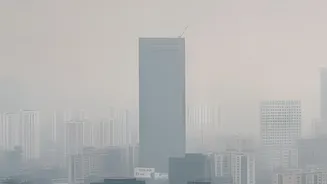




When thick smog blankets the city, our first instinct is to shut the windows and doors, creating a barrier against the polluted air outside. But how much protection does that really offer? The truth is, it's a critical first step, but not a complete solution.
The Sobering Reality of 'Airtight' Homes
Even with windows and doors firmly shut, your home is not a perfectly sealed bubble. Microscopic pollutants, particularly dangerous PM2.5 particles, can easily infiltrate your living space. These fine particles, which are 30 times smaller than a human hair, seep in through tiny, often invisible cracks and gaps in walls, window frames, and door seals. Studies show that when outdoor air quality is poor, the indoor PM2.5 level can still be 55% to 60% of the outdoor concentration, and in some cases, much higher depending on the age and construction of your home. This means that even when you are indoors, you are still breathing in a significant amount of harmful pollution from outside.
The Dangers That Build Up Inside
Sealing your home from the outside creates another problem: it traps pollutants generated from within. Everyday activities contribute to a cocktail of indoor air contaminants. Cooking, especially frying, releases particulate matter. Cleaning products, air fresheners, and even furniture can emit Volatile Organic Compounds (VOCs), which are harmful chemicals. Furthermore, with poor ventilation, the carbon dioxide (CO2) we exhale can accumulate. While not acutely toxic in most homes, elevated CO2 levels (above 1,000 parts per million) can cause headaches, drowsiness, and a decline in cognitive function. In a tightly sealed room overnight, CO2 can easily reach levels that impair sleep quality, leaving you feeling groggy and unfocused in the morning.
The Gold Standard: HEPA Filtration
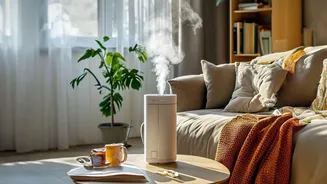
To truly clean the air inside your home, filtration is key. The most effective solution is an air purifier equipped with a High-Efficiency Particulate Air (HEPA) filter. Developed in the 1940s, HEPA is a standard, not a brand. A 'True HEPA' filter is certified to capture at least 99.97% of airborne particles that are 0.3 micrometres in size. This is the benchmark for effectively removing viruses, bacteria, dust, pollen, and, most importantly during smog, PM2.5 particles. When choosing a purifier, look for its Clean Air Delivery Rate (CADR), which tells you how quickly it can clean a room of a specific size. A higher CADR means faster purification. Standard air conditioners, even those with filters, are not designed to remove these microscopic particles; they primarily recirculate and cool the air.
Effective and Budget-Friendly Alternatives
If a high_end air purifier isn't an option,' you can still take effective measures.' A popular and proven Do_It_Yourself (DIY) solution is the Corsi_Rosenthal Box.' This device,' made from a standard box fan and several high_quality furnace filters (rated MERV_13 or higher),' has been shown to be highly effective at reducing indoor particulate matter.' Studies have found these DIY units can be as effective as some commercial air cleaners,' reducing PM2.5 levels significantly.' While they lack the features and polish of commercial units and don't typically filter out gases or VOCs,' they provide a powerful,' low_cost way to filter particles from the air in a room.'
Smarter Habits for Cleaner Air
Beyond filtration,' simple habits can make a big difference.' The EPA recommends a three_pronged strategy:' source control,' improved ventilation,' and air cleaning.' First,' reduce pollution at its source.' Avoid burning candles or incense,' and use an exhaust fan when cooking to vent pollutants outside.' Opt for low_VOC cleaning products and paints.' Second,' practice strategic ventilation.' Monitor the local Air Quality Index (AQI) and open windows for a short period to air out your home only when the pollution levels are lower.' Finally,' keep your home clean.' Dusting with a damp cloth and vacuuming regularly with a machine that has a good filter can help remove settled particles before they become airborne again.'