


The Problem with Today's Batteries
Virtually every rechargeable device you own, from your smartphone to an electric vehicle (EV), runs on a lithium-ion battery. This technology, while revolutionary, has its limits. Inside these batteries, lithium ions travel through a liquid or gel-like
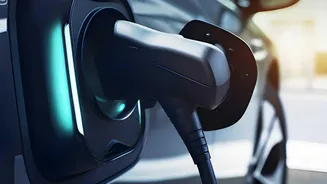
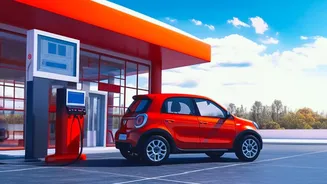
substance called an electrolyte to generate power. This liquid component is the source of several key weaknesses. It's flammable, posing a safety risk if the battery is damaged or overheats. The liquid also contributes to the formation of tiny, spiky structures called dendrites, which can grow over time, pierce internal barriers, and cause the battery to short-circuit and fail. Furthermore, pushing too much electricity too quickly through a liquid electrolyte to speed up charging can accelerate this degradation and damage the battery's lifespan. This is why fast-charging an EV today still takes around 30 minutes to get to 80% capacity, a far cry from a five-minute petrol fill-up.
The Solid-State Advantage
Solid-state batteries, as the name suggests, replace the flammable liquid electrolyte with a solid, stable material. This simple change has massive implications. First and foremost, it significantly enhances safety by removing the flammable liquid. But the real game-changer is performance. A solid electrolyte can be made of ceramic or polymer materials that are far more resistant to the formation of dendrites. This stability unlocks the potential to use a pure lithium metal anode, which has ten times the energy capacity of the graphite anodes used in today's batteries. The result is a battery that is not only safer but can also store significantly more energy in the same amount of space, promising EVs with much longer driving ranges—potentially over 1,000 kilometres on a single charge.
The Ten-Minute Charging Breakthrough
For years, the promise of solid-state technology was hampered by challenges in manufacturing and durability. But recent announcements from major players like Toyota, Samsung, and research institutions have signalled a turning point. Toyota has outlined a roadmap to commercialise solid-state batteries by 2027-2028, claiming a 10-minute DC fast charge time from 10% to 80% capacity. The automaker, in partnership with petroleum giant Idemitsu Kosan, is focusing on a sulphide-based solid electrolyte, which they claim will deliver not only rapid charging but also a range of up to 1,200 km. Similarly, researchers at Harvard's John A. Paulson School of Engineering and Applied Sciences have developed a lithium metal battery that can be recharged in minutes and withstand at least 6,000 charge cycles, far more than current batteries. Their innovation involves using micron-sized silicon particles in the anode to constrain the lithium plating process and prevent dendrite formation. These breakthroughs are not just about one single discovery but a combination of new materials and clever engineering to overcome long-standing hurdles.
More Than Just Speed and Range
While sub-10-minute charging and massive range gains grab the headlines, the benefits of the latest solid-state advancements extend even further. Longevity is a key factor. The stability of the solid electrolyte drastically reduces the degradation that batteries suffer during each charge and discharge cycle. While a typical EV battery today might be warrantied for around 2,000-3,000 cycles, some solid-state prototypes are demonstrating capabilities of 10,000 cycles or more. This could mean a battery that lasts for the entire 10-to-15-year lifespan of a vehicle without needing replacement, significantly improving the total cost of ownership and reducing waste. Furthermore, these batteries are proving to be more resilient in extreme temperatures, a known weakness of current lithium-ion technology, maintaining performance in both freezing cold and intense heat.
The Road to Your Next Vehicle
While these breakthroughs are exciting, don't expect to find a solid-state battery in a budget-friendly hatchback tomorrow. The road from a successful lab prototype to mass production is complex and expensive. Major automotive and battery manufacturers like Toyota, BYD, and CATL are targeting the 2027-2028 timeframe for the initial commercial rollout, likely starting in premium or luxury vehicles where the higher initial cost can be more easily absorbed. Mass-market adoption is expected to follow in the early 2030s as manufacturing processes are scaled and costs come down. For the Indian market, this timeline aligns with the nation's growing push towards electric mobility, suggesting that the next generation of EVs to hit Indian roads could benefit from this revolutionary leap in battery technology, fundamentally changing the ownership experience.