






A Hero Without Superpowers
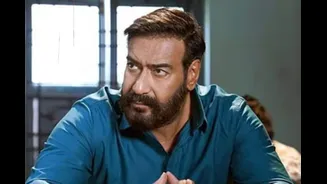
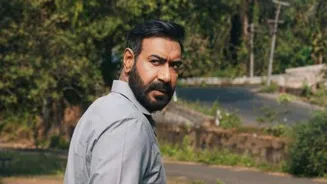
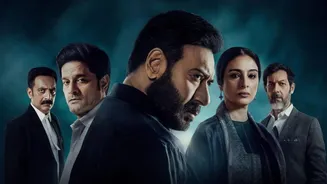
The protagonist of the Drishyam saga, Georgekutty in Malayalam (Mohanlal) and Vijay Salgaonkar in Hindi (Ajay Devgn), is a middle-class cable operator. His defining characteristic isn’t physical strength but his love for his family and cinema. He’s an ordinary
man thrust into an extraordinary crisis when his family is implicated in a crime. This relatability is the franchise's secret weapon. Audiences don't see a larger-than-life hero; they see a father pushed to his absolute limit, using his wits, not his fists, to navigate a corrupt and powerful system. His 'superpower' is his mind, sharpened by countless hours of watching movies, which he uses to stay two steps ahead of the police. It’s a powerful narrative hook that connects on a deeply emotional level, making his fight for his family’s survival feel personal to the viewer.
Plot as the Ultimate Special Effect
Where other films invest in CGI, Drishyam invests in its screenplay. The brilliance of writer-director Jeethu Joseph’s original story is that the audience knows the 'who' and 'what' from early on. The tension comes from the 'how'—how will Georgekutty/Vijay construct an alibi so perfect that it can withstand the full force of a police investigation led by the victim's own mother, a high-ranking officer? The films are masterclasses in slow-burn suspense, where mundane items like bus tickets, hotel bills, and movie showtimes become crucial pieces of a psychological puzzle. The narrative doesn't rely on shocking twists for the sake of it; instead, it builds suspense by revealing the meticulous layers of the protagonist's plan. The spectacle isn't an explosion; it's the dawning realisation of just how clever the plan is. This is storytelling as a chess match, and the audience is leaning in, captivated by every move.
A Story That Crossed Every Border
The true test of a great plot is its universality. The core story of Drishyam was so powerful that it became one of India’s most successfully remade franchises. It was adapted in Kannada, Telugu, Tamil, and most famously, Hindi. Each version was a blockbuster, proving the story's emotional core and thrilling suspense resonated with audiences regardless of language or culture. The franchise's success didn't stop at national borders; it was also remade in Sinhalese as 'Dharmayuddhaya' and in Chinese as 'Sheep Without a Shepherd', both of which were major hits. The success of the Hindi franchise, which culminated in a record-breaking run for all its instalments, showed that audiences across the country were hungry for a compelling narrative. The Hindi conclusion even took a different route from the Malayalam original, earning praise for its sharp writing.
A Lesson in a Spectacle-Obsessed Industry
The success of the Drishyam films serves as a powerful counter-narrative to the prevailing belief in Indian cinema that bigger is always better. While studios pour hundreds of crores into CGI-heavy epics and large-scale action sequences, Drishyam proved that a water-tight script is the most valuable asset a film can have. It didn't need a bloated budget or extravagant set pieces; its power came from a simple, universal idea: how far would an ordinary person go to protect their family? The franchise created a new sub-genre of 'family thriller', proving that a film could be intense and suspenseful without alienating a family audience. Its legacy is a potent reminder to filmmakers and studios alike that while visual spectacle can draw an audience in, it is a masterfully told story that will keep them captivated and make a film truly unforgettable.