



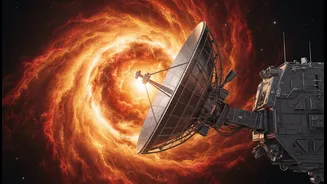


From Solar Flares to Earthly Effects
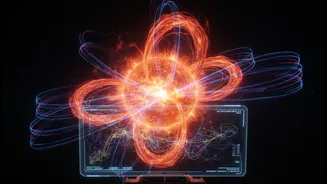
Space weather refers to the changing conditions in space, driven primarily by the Sun's activity. Think of it like terrestrial weather, but instead of wind and rain, it involves phenomena like solar flares, coronal mass ejections (CMEs), and the solar wind.
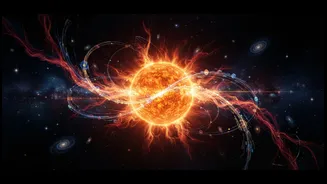
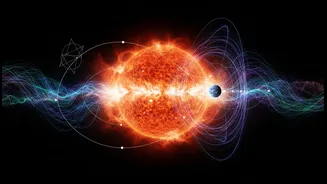
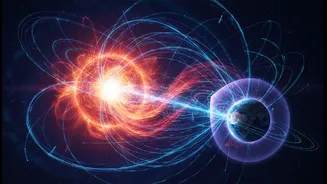
Solar flares are intense bursts of radiation, while CMEs are massive eruptions of plasma and magnetic fields from the Sun's outer atmosphere, the corona. This stream of charged particles constantly flows from the Sun, but during these events, it becomes much more intense. While Earth's magnetic field, the magnetosphere, protects us from the worst of it, strong solar storms can breach these defences, leading to significant consequences.
Why Modern Technology Is Vulnerable
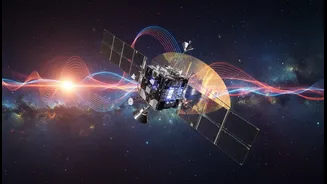
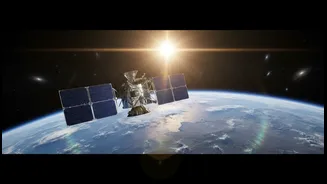
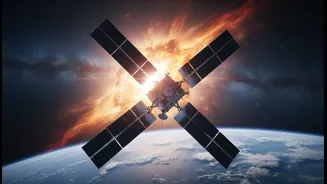
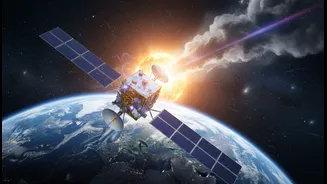
Our reliance on technology makes us susceptible to space weather in ways previous generations were not. A powerful geomagnetic storm can have wide-ranging effects. It can induce extra currents in power grids, potentially causing blackouts, and interfere with high-frequency radio communications used by aviation. Satellites are particularly at risk. The increased radiation can damage their electronics, disrupt operations, and affect GPS and other navigation systems like India's NavIC, reducing their accuracy. A recent example highlighted these risks when GalaxEye, an Indian spacetech startup, lost contact with its 'Mission Drishti' satellite in July 2026 after a powerful geomagnetic storm. This underscores the urgent need to monitor and forecast these solar events.
The Rise of the Space Weather Professional
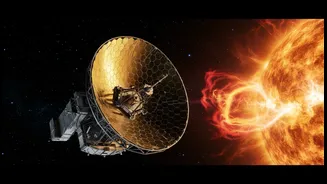
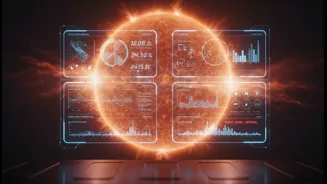
This is where the career bridge between solar physics and technology truly forms. Understanding the fundamental science of the Sun (solar physics) is no longer just an academic pursuit; it is the foundation for a practical, in-demand profession: the space weather forecaster or analyst. These professionals use data from space-based observatories like the Solar Dynamics Observatory and ground-based instruments to monitor the Sun's activity. Their job is to translate complex physics into actionable forecasts, providing warnings to satellite operators, airlines, power grid managers, and government agencies so they can take protective measures. It’s a field that directly safeguards our critical infrastructure.
Building Your Career: Skills and Roles
A career in space weather requires a unique blend of skills. A strong foundation in physics, atmospheric science, or astronomy is essential, typically starting with a bachelor's degree. However, technical skills are just as crucial. Proficiency in programming languages like Python or MATLAB for data analysis and modeling is highly sought after. Job titles in this field are diverse and include Space Weather Forecaster, Space Systems Engineer, Data Scientist, and Testbed Scientific Programmer. These roles can be found in government agencies like the Indian Institute of Geomagnetism (IIG) and ISRO, as well as in the rapidly growing private space sector, which includes hundreds of startups in India. Soft skills like analytical thinking and clear communication are also vital to convey complex information to non-specialist stakeholders.
A Sector with a Bright Future in India
The demand for space weather expertise is growing, especially in India. The nation's space economy has expanded significantly, with projections suggesting it could reach over $40 billion by 2033. The government's decision to open the sector to private enterprise in 2020 has led to a boom in startups, with the number of private space companies soaring from just a handful to over 400 by 2024. This growth in satellite manufacturing, launch services, and Earth observation creates a direct need for professionals who can ensure these expensive assets are protected from solar storms. Recent breakthroughs by Indian scientists in mapping the ionosphere more accurately further cement the country's growing role in this global field, creating more opportunities for local talent.