


The Weight of Maradona's Shadow
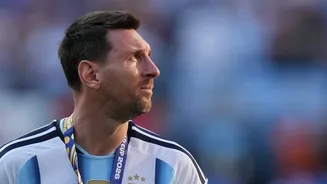
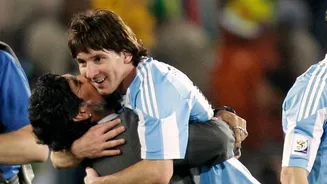
From the moment a young, prodigiously talented Messi debuted for Argentina in 2005, he was not just another player; he was the heir to Diego Maradona’s throne. This comparison was both a blessing and a heavy burden. For years, Messi’s otherworldly success
at the club level with Barcelona stood in stark contrast to his frustrations with the national team. Critics at home often questioned his passion, suggesting he was more Catalan than Argentine. Despite his quiet demeanor, he carried the immense weight of a nation’s expectation: to replicate Maradona’s 1986 heroics and bring home the World Cup. This pressure defined the first chapter of his international career, a period marked by dazzling individual brilliance but collective disappointment.
A Journey of Pain and Heartbreak
For Argentina, the Messi era was long defined by a series of agonizing near-misses. The loss to Germany in the 2014 World Cup final was followed by consecutive defeats in the Copa América finals of 2015 and 2016, both on penalties to Chile. The 2016 loss was a breaking point. A devastated Messi announced his retirement from the national team, stating, “For me, the national team is over.” That decision, however, sparked a national outcry. Fans, politicians, and even Maradona himself pleaded for his return. His brief retirement revealed the depth of Argentina's dependence on him, and his subsequent return signaled that his story with the Albiceleste was not yet finished. It was a painful chapter, but one that ultimately strengthened the bond between him and the fans.
Redemption at the Maracanã
The narrative began to shift dramatically in 2021. Leading Argentina to a 1-0 victory over Brazil in the Copa América final at the iconic Maracanã Stadium, Messi finally secured his first major senior international trophy. The image of his teammates rushing to celebrate with him before anyone else was powerful. It symbolized not just the end of a 28-year trophy drought for the country, but the lifting of an immense personal burden for their captain. This victory was the turning point. It vindicated his perseverance and silenced the remaining doubters. For the first time, Messi was not just a global superstar who played for Argentina; he was an undisputed national champion.
The Final Coronation in Qatar
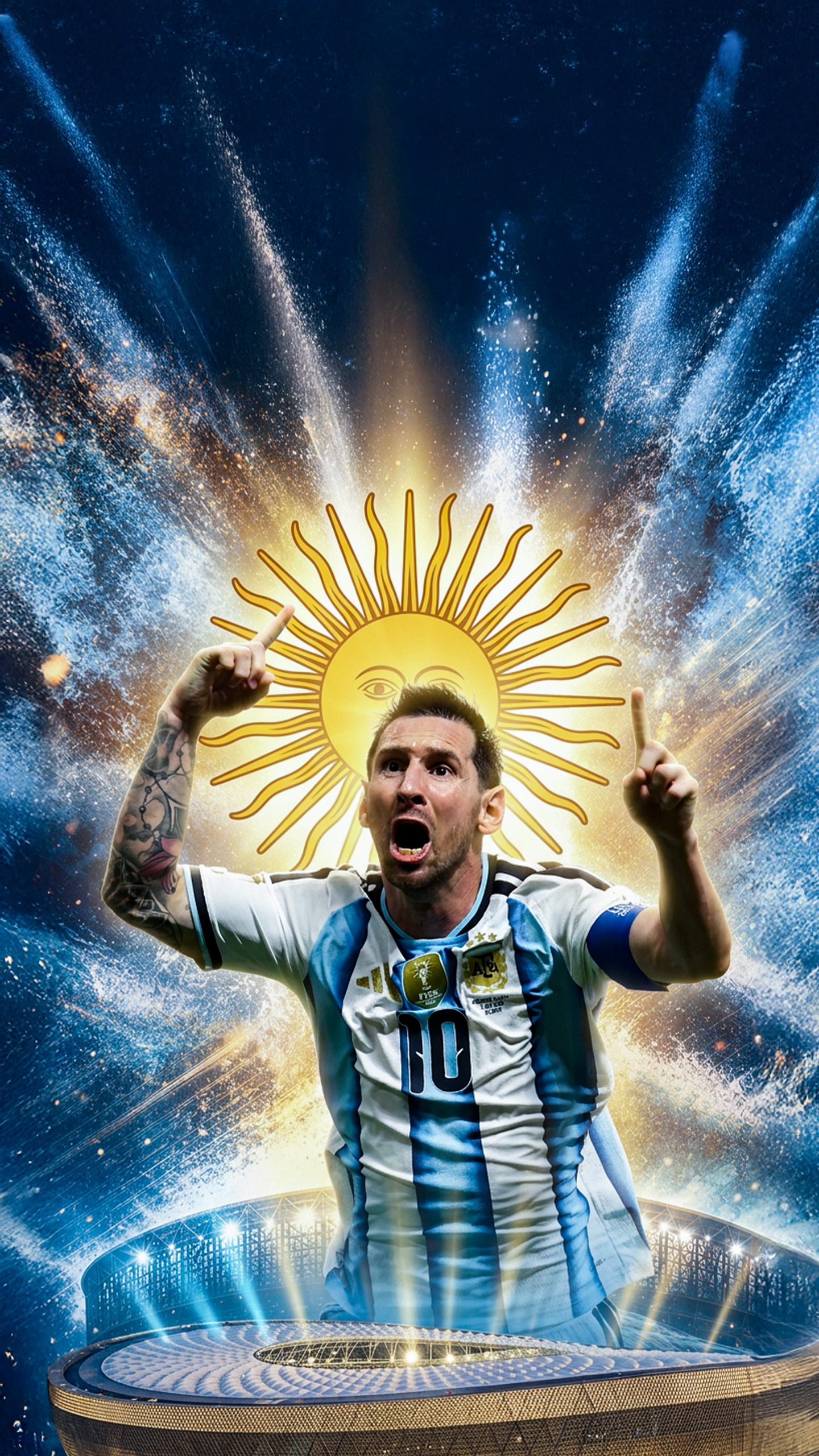
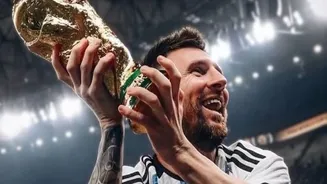
If the Copa América was the redemption, the 2022 FIFA World Cup in Qatar was the coronation. In what was widely seen as his last chance, Messi delivered one of the greatest individual tournament performances in history, leading Argentina to its first World Cup title in 36 years. He scored in the group stage, the round of 16, the quarter-final, the semi-final, and twice in the breathtaking final against France. The victory sent a nation, battered by economic hardship, into a state of pure ecstasy. It was a fairy-tale ending that completed his legacy. He had finally matched Maradona by bringing home football’s ultimate prize, uniting the country in a wave of joy and national pride.
More Than Just a Footballer
What makes Messi the pride of Argentina is not just the trophies, but the journey. His story is one of resilience, of falling and getting back up, of enduring years of criticism to finally achieve his dream. Unlike the boisterous Maradona, Messi led with quiet determination and humility. He became Argentina's all-time leader in both appearances and goals, shattering records along the way. In a country often marked by division, he became a unifying figure—a global symbol of Argentine excellence who never forgot where he came from. His legacy is cemented not only in the record books but in the hearts of a generation who watched him fight for the blue and white shirt until he had nothing left to give.